For less than $100 you too can whip together a pocket cam rig to film test users of your mobile app and spot trouble areas. From the Artefact blog:
Staring over your participant’s shoulder isn’t creating the most natural situation when testing user experiences. You get less than ideal viewing angles, participants can’t get into a flow and it’s hard to get good video of it all. So how do you get around that? I’ll introduce to you a few key pieces of hardware and software that can make your life a little easier. Maybe even the coolest researcher in your department, in less than an hour.
The two year Finnish adventure is coming to a close so the wheels are in motion to pack up the Helsinki apartment and ship things back to California. Not everything though.
I put together a list of things to sell, mostly appliances, with several big ticket items such as a big screen TV and a drier and lots of ceiling lights. I need them through to the end of May but on around May 25th they will be available for pickup.
Click through to http://bit.ly/StuffForSale and let me know if anything interests you or if you have questions about anything by leaving a comment below.
Flickr’s Camera Finder tells us that the traditional point-and-shoot cameras are on the way out while, as a whole, camera phones are on the way in. As the saying goes, the best camera is the one you have in your pocket. What if one were to go with this trend and merge what’s best about a digital SLR with the best things on a mobile phone?
Seattle-based Artefact rethink the camera phone form factor into one that combines the high quality features of a DSLR (interchanging lens, focus, aperture control) with the flexibility of a modern, touchscreen phone (connected, programmable, flexible UI). Just a design concept at this point but something this is a production version of hacks that we’re already seeing in the wild.
The inevitable layoffs announced today at Nokia (where I work) were not as bad as expected. The trick of how to keep the Symbian development teams churning away when you’ve already announced that you’ll be ramping it down was solved by shifting a block of 3,000 employees over to Accenture where they can continue to work or re-deploy their talents on to other Accenture projects.
Nokia CEO Stephen Elop did an great job on Finnish TV this evening easing worries, popping conspiracy theory bubbles, and boosting confidence. The entire 20-minute interview is on the YLE site. YLE is the state-funded broadcast network, similar to Japan’s NHK or the BBC in the UK.
Addressing dead on the nagging concern Symbian engineers had about future employment is a brilliant tactical move. This takes the wind out of Finnish employees and press who were bracing for bad news or worse, something suspiciously too optimistic. This keeps the teams’ eye on the ball which is to ship 150 million devices, not look for work elsewhere.
Finns love to rally around stories of the bleakness and unfairness of life. This is something Jim Jarmusch nailed in his 1991 movie Night on Earth clipped below. I encourage you to watch both parts if you want to get an insight into Finnish culture.
Back in 1997, when Apple was $4 a share, the CEO at the time, Gil Amelio, left journalists unsatisfied with his half-answers to their burning questions. It took Apple years to find it’s way again and only then, with the return of their iconic co-founder. Hopefully Mr. Elop’s transparency and directness will shortcut the process for Nokia’s return.
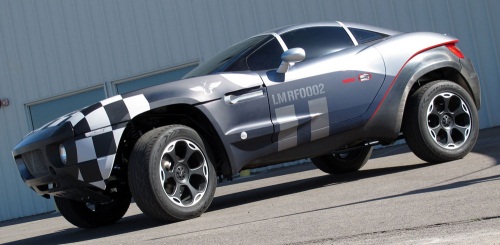
I just listened to a TWiST interview with John “Jay” Rogers, President and CEO of Local Motors, a Southern California company that has set up a platform for a vibrant community of car enthusiasts to share and vote on each other’s car designs. There first car, the Rally Fighter, is coming off the line and already has waiting list of back-orders. Several highlights from the interview:
– Local Motors taps into a passionate audience, “Everyone thinks they are right when it comes to cars.” It’s easy to spin up a passionate thread about a new design. The value-add of the Local Motors company is that they vet the designs and pick and chose which ones to incorporate “Not a crowd-designed car, it’s a car who’s design came from the crowd.” After a year, they have over 70,000 Creative Commons licensed designs.
– Jay paraphrases Chris Anderson, editor of Wired, described the automobile industry as a glass full of rocks. The large auto companies are the rocks and Local Motors is a niche car company that acts as sand between the rocks. There is room for a company, that is building specialty cars on spec, to be profitable with small production runs.
– Jay is good friends with the founders of Threadless (a crowd-sourced t-shirt company) and his company is built on the same model. Many of the designers in the Local Motors community come from the automotive industry which only productizes a handful of designs each year. Imagine Local Motors as a company that sifts through the best of the rest to come up with winning designs that may not meet the large scale appeal of a Ford or Toyota but still be something “game-changing.” They also provide budding transportation design students a platform to showcase their portfolio.
– Local Motors’ mission statement, We will create game-changing cars with an unprecedented level of customer service. What this means in practice is that the process of delivery and manufacturing is transparent and hands on. You not only put together your custom order, you are also asked to come to the factory and actually build your car. All designs, down to the CAD drawings and build instructions are online for review and customization.
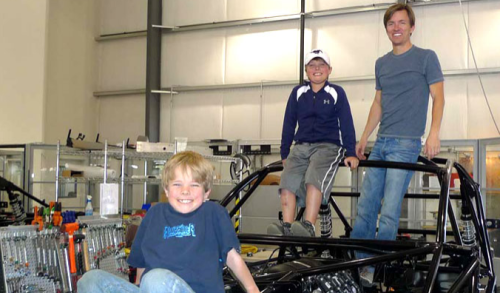
– The US Department of Transportation allows you to drive cars that you build yourself (and register as a “Specialty Constructed Vehicle”) which is why, included in the $60k cost of delivery of their first car, the is two long weekends at the “micro-factory” learning how to build your car and putting it together with the Local Motors team. You not only get a car, you learn, from the inside out, how your car is put together.
Local Motors Build Experience
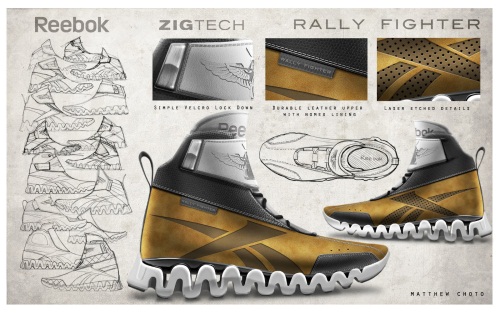
– The Local Motors model is working so well, that they have branched out. Reebok commissioned the community to design a shoe (winning design below). During the interview, Jay mentioned that they are thinking of opening up the community to other things that need to be designed and built.
The problem with climbing the North Face of the Eiger is that in addition to getting up 6,000 vertical feet of crumbling limestone and black ice, one must climb over some formidable mythology. The trickiest moves on any climb are the mental ones, the psychological gymnastics that keep terror in check, and the Eiger’s grim aura is intimidating enough to rattle anyone’s poise.
With that in mind, take a look at the video below which shows Ueli Steck, a swiss climber, running up Eiger in two hours and forty-seven minutes!
Part of the joys of packing (I’m due to move back to California from Helsinki at the end of May) is you go through stuff and figure out what you can pitch. Last night I ran across a trove of old clippings that I never got around to scanning in and adding to my old Big Sell Out site. Big Sell Out was one of the first web sites built when I was living in Tokyo. It was a collection of scans of mostly American actors and sports celebrities advertising (usually awkwardly) for Japanese products.
The whole experience of American movie stars earning some extra cash from a Japanese sponsor was famously portrayed by Bill Murry in the movie, Lost in Translation.
Anyway, a few months back I ran across an old digital backup of the images and put them up again. Last night, I spend a couple of hours scanning these new images in and have added them to the Celebrity Endorsement archive for you, dear reader.
OK. Making fun of Sharp’s Touch Wood phone’s naming was an amateurish cheap shot. Mea culpa. NTT’s advertising campaign for the phone is pure, beautiful, brilliance.
Advantage NTT docomo!
Cookie Consent
We use cookies to improve your experience on our site. By using our site, you consent to cookies.
Used to determine whether a user is included in an A / B or Multivariate test.
18 months
_ga
ID used to identify users
2 years
_gali
Used by Google Analytics to determine which links on a page are being clicked
30 seconds
_ga_
ID used to identify users
2 years
_gid
ID used to identify users for 24 hours after last activity
24 hours
_gat
Used to monitor number of Google Analytics server requests when using Google Tag Manager
1 minute
_gac_
Contains information related to marketing campaigns of the user. These are shared with Google AdWords / Google Ads when the Google Ads and Google Analytics accounts are linked together.
90 days
__utma
ID used to identify users and sessions
2 years after last activity
__utmt
Used to monitor number of Google Analytics server requests
10 minutes
__utmb
Used to distinguish new sessions and visits. This cookie is set when the GA.js javascript library is loaded and there is no existing __utmb cookie. The cookie is updated every time data is sent to the Google Analytics server.
30 minutes after last activity
__utmc
Used only with old Urchin versions of Google Analytics and not with GA.js. Was used to distinguish between new sessions and visits at the end of a session.
End of session (browser)
__utmz
Contains information about the traffic source or campaign that directed user to the website. The cookie is set when the GA.js javascript is loaded and updated when data is sent to the Google Anaytics server
6 months after last activity
__utmv
Contains custom information set by the web developer via the _setCustomVar method in Google Analytics. This cookie is updated every time new data is sent to the Google Analytics server.
2 years after last activity
You can find more information in our About Me and .


 in which he writes,
