OpenAI’s DevDay keynote had the look and feel of all Silicon Valley product announcements – a well-scripted parade of announcements, a couple live demos, and even a “one more thing” that is revealed with low-key fanfare but, by it’s placement at the end of the talk, signals to the world that this is the game-changer.
That thing was the app store for custom AI chatbots. To make it easier to grok and talk about, OpenAI has co-opted the acronym for the rather technical mouthful that is “Generative Pre-trained Transformers” and made it into a product name. Custom versions of ChatGPT are now GPTs. This makes it easier for the broader public to understand and makes it a whole lot easier for marketers to fold into their campaigns in the same way, “There’s an App for that” became a catch phrase for Apple’s app ecosystem, I can see “Just GPT it!” becoming a verb for leveraging AI to do some grunt work for you.
That’s my 30,000 foot view before diving in and playing around more. Stratechery has a much more informed deep dive on the significance of what was announced and I recommend reading Ben Thompson’s analysis which includes important observations around the significance of OpenAI using Microsoft’s infrastructure and what that partnership means for the market going forward.
As a teaser, I found this passage thought-provoking,
This has two implications. First, while this may have been OpenAI’s first developer conference, I remain unconvinced that OpenAI is going to ever be a true developer-focused company. I think that was Altman’s plan, but reality in the form of ChatGPT intervened: ChatGPT is the most important consumer-facing product since the iPhone, making OpenAI The Accidental Consumer Tech Company. That, by extension, means that integration will continue to matter more than modularization, which is great for Microsoft’s compute stack and maybe less exciting for developers.
“This changing weather pattern is the result of climate change, and the sad reality is our climate is changing faster than our infrastructure can respond.”
The Mayor asked citizens to unclog any drains to help drain the streets. Some places were so inundated with water that the drains turned into full on whirlpools
New York City is starting to prepare for storm surges by constructing enormous sea walls around the perimeter of Manhattan. It gives me Game of Thrones vibes.
It’s ten feet high and set a bit inland; instead of hugging the waterline precisely, it approximately traces the outer rail of the FDR, perhaps 30 or 40 paces from the shoreline for much of its length. For those skeptical that a wall can stop the force of a coastal storm surge, there’s more to the gates than what’s aboveground: The foundations go deep and incorporate waterproof barriers to stop water from seeping past them from below. Their design life is specified at 100 years. They have enough structural strength to support an added three feet of height on top, should the worst projections of sea rise come into play. But it’s worth keeping in mind that they are meant to protect against one kind of storm but not another. They won’t be able to do anything about the immensely heavy rainstorms we’re now getting, including Ophelia, the storm we just had in late September. The gates weren’t closed for Ophelia, because that flooding came from above, not across.
I’m always looking for excuses to explore a new neighborhood so when I read about 239 Play, also known as “Dan’s Parent’s House,” I knew I had to check it out and visit City Island.
I took the ferry from 34th Street two stops to Ferry Point Park by Throgs Neck, just a 30 minute trip up the East River. At one point, we were directly under the flight path of the landing jets at LaGuardia Airport. I didn’t get a photo by the views of the Manhattan & Brooklyn skyline was pretty impressive as well.
Flight landing at Laguardia Airport
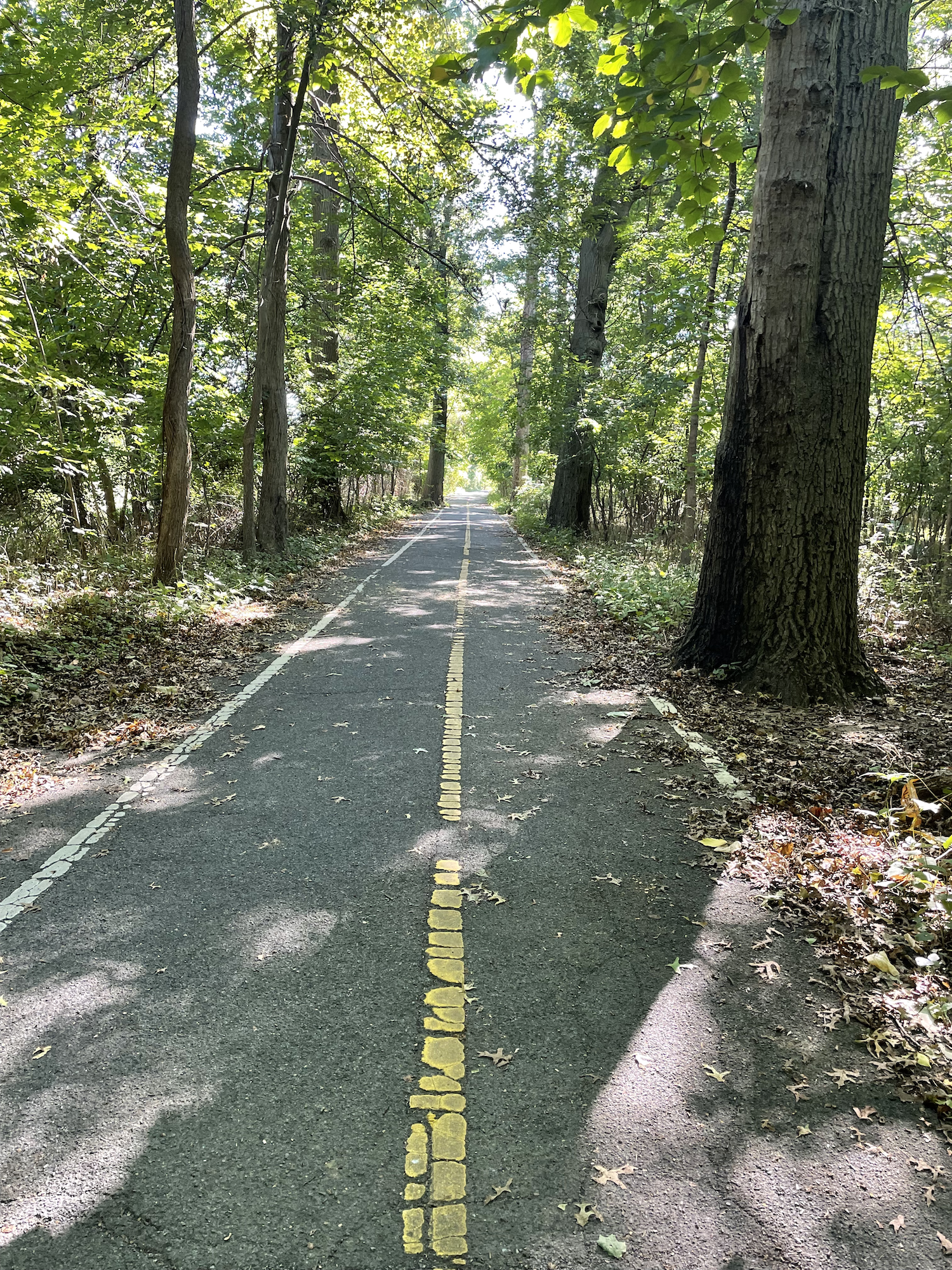
I have an old beater mountain bike that I ride around on. I wouldn’t want to ride it too far but it’s fine for 30 – 50 mile exploration rides and the shocks are great for urban riding. After getting off the ferry (where I met someone who gave me some pointers on where to ride) I headed up past a Trump golf course and a couple of malls next to a freeway until I got into Pelham Bay Park which had some nice bike paths on the way towards City Island.
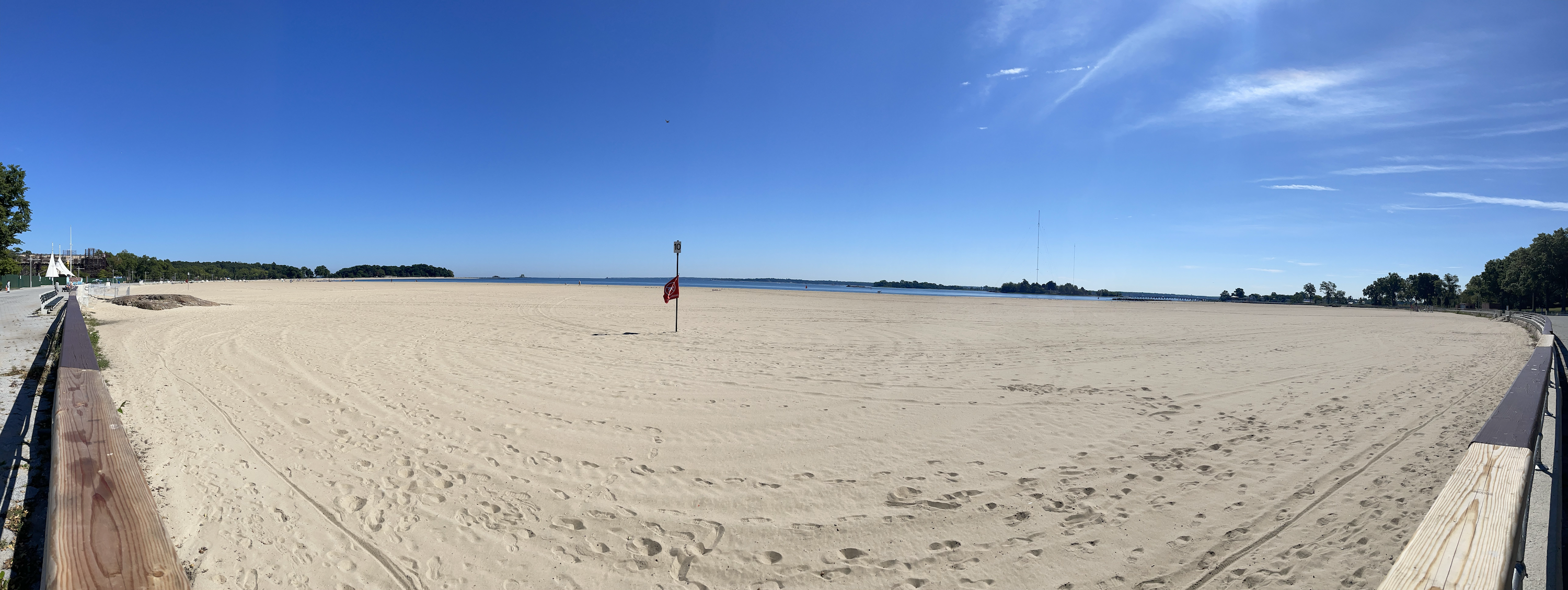
On the way back, I took a detour to check out Orchard Beach which was totally empty,
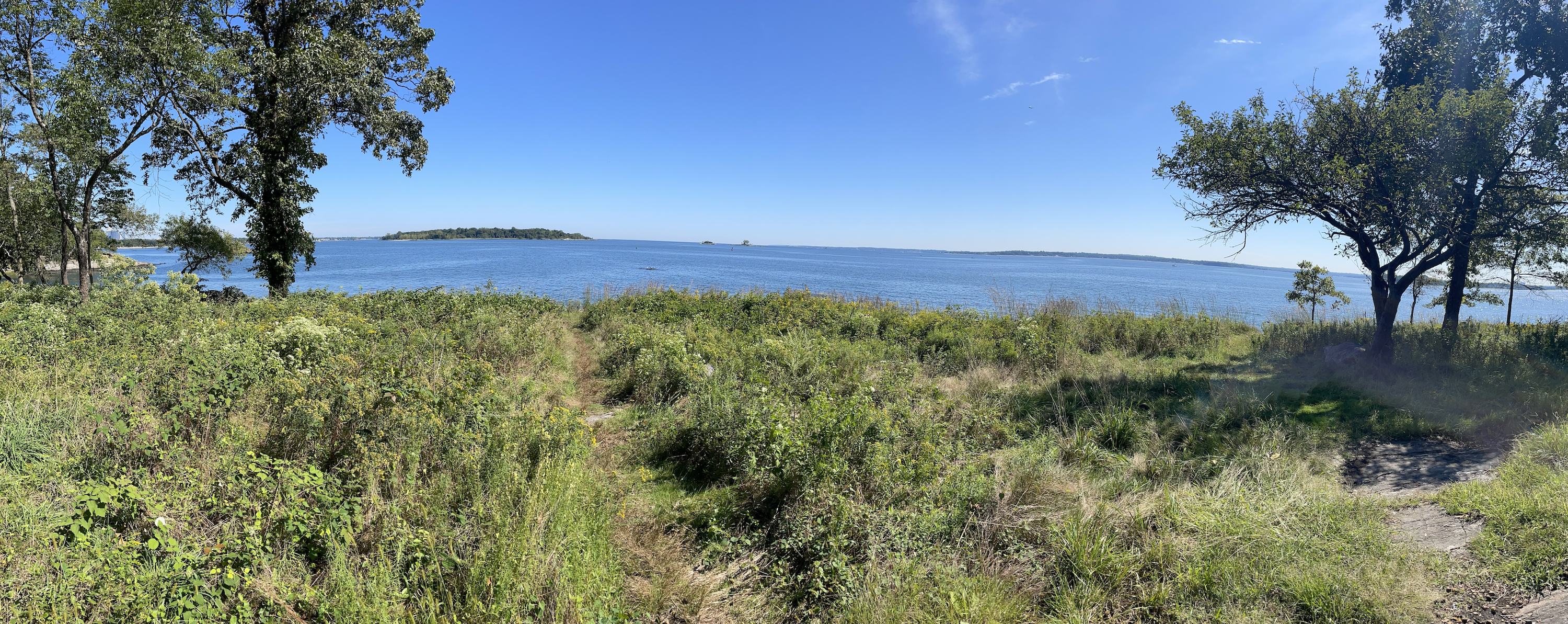
and then took a little back trail and stumbled across a scene that felt like rural Maine.
The journey is half the fun. I rode home instead of taking the ferry just to see how long it would take. Amazing to think all this greenery is only a 90 minute ride from midtown Manhattan.
John Battelle has a wonderful reminisce about what’s lost as information moves from analog to digital. He specifically writes about the college course catalog and what’s lost as these guides have moved online in Digital is Killing Serendipity. In the comments, I shared an experience I had with a printed catalog at the Edinburgh Festival Fringe and found there was more I wanted to share about that experience so here we are.
In the ’90s, I toured Europe by bicycle and one evening rolled into Edinburgh, Scotland during a three week festival called Festival Fringe. I did not know it at the time (I had to ask why all the hostels were booked solid) but this is the largest performing arts festival in the world. For three weeks there are literally hundreds of performances of stand up comedy, theater, dance, musicals, opera, children’s plays, spoken word, circus acts, street performers and everything else.
What inspired me to share this story is that my entry into the Fringe performances was via their printed catalog which was found in stacks around town. The guide was the size of a small phone book and had hundreds of entries with details of the where/what but also a few lines written (usually by the performer or producer) to entice people to come. As someone who has spent many long days solo, on the road, I was gobsmacked at the richness of what was on offer and overwhelmed with choice.
Festival Fringe programme entry, 1994
I was in town for three days and I realized I had spend most of the morning of the first day just reading the guide. In some effort to give my days a rhythm and theme, I went to the index (which was also a wonder in its variety) and chose “Vincent Van Gogh.” Over the course of three days, I was going to see several plays about Vincent Van Gogh.
Being a lone traveler it was easier to meet people and during those three days I had the chance to fall in with a group of Australian performers that had an excess of energy and talent. They were in town for a performance but they wanted to do something else on the side. The idea was they wanted to put on a cabaret to curate and showcase all the talent that was in town. One of them had a friend that had a space with a stage that was empty during the day so all we needed to do was line up some talent and we could sell tickets at the door.
Each of us pulled in people we had met during our stay. One guy had his haircut by a barber that told hilarious jokes so he was invited, I invited a busker who was popular around town, others performed short bits from their plays or performances as teasers for their scheduled acts.
I forgot what we called this extemporaneous cabaret show and couldn’t even tell you where the venue was but I do remember having the best time because the whole thing was totally chaotic in a wonderfully theatrical way. The audience was part of it, we all wanted to make it work. The show must go on! I remember a bunch of burly rugby guys were in the front row and getting antsy because the barber got stage fright and the punchlines to his jokes were falling flat. One of our group ran on stage and explained that he was actually really funny and, perhaps, if anyone would like to come up on stage to get their hair trimmed for free, it might calm the barber’s nerves so he could deliver his jokes. It worked brilliantly, the rugby team calmed down and someone got a free haircut.
On another night, I was in a pub and the band didn’t show up or maybe the electricity went out. Anyway there was no music or entertainment. Somebody jumped into the fray and started reciting a sports commentary of an entire soccer match of as if it were live. I don’t know if he was reciting a famous match from memory or just making it up as he went but as he described the skillful blocks of the back line, pinpoint passes and near misses hitting the crossbar in such wonderful detail that the entire audience in the pub was right there with him, “oohing” an “ahhing” at each turn it up as we could all see in our collective mind exactly what he was describing. Somebody later borrowed a couple of spoons and made music for awhile and, of course, there was singing. It was a night to remember, one reminding me that humanity is always able to entertain itself.
There were so many things I experienced during those three days in Edinburgh and the printed catalog was my trusty guide the whole time. There were things happening all around me and I loved the fact that I could thumb through the listings and immediately find something interesting. There’s something about the printed magazine form factor, rolled up in your back pocket but immediately available with calendars, listings, reviews of places to eat, maps, and other pages designed to quickly tell you what you need to know. The heft of the pages made you appreciate the expanse of the festival. I’m sure there’s an app that puts this all into a screen on your phone with drop down menus but it’s just not the same.
Update: Looks like they are still printing the “programme” and you can even request one via mail. The festival also uploads all 350+ pages of each year’s guide into a PDF viewer so you can see what last year’s guide looks like and they even have an archive of all guides back to the festival I stumbled on in 1994. It’s nice to see they’ve recognized that print information design is sometimes better than online.
Simon Willison has been hacking on technology for years and blogging about it in his excellent blog where he posts on how to recreate his innovations and follow along on his adventures. He was a speaker at this year’s WordPress WordCamp US 2023 conference and gave a talk that I would highly recommend to anyone who wants to spend an hour to catch up on all the latest developments in the world of gen AI and LLM.
Posting this here today because I expect that I’ll be sending this link to people for weeks to come.
Large Language Models are the technology behind ChatGPT, Google’s Bard and more. They are weird and somewhat intimidating pieces of technology: we’re still trying to figure out how they work and what they can do, in a field that changes radically on an almost weekly basis.
In this talk I’ll break down how they work, what they’re useful for, what you can build with them and how to dodge their many pitfalls.
Last week, I was double-booked in conferences. Wednesday & Thursday I was in Philadelphia for the beginning of the Online News Association conference, a gathering of journalists who work with words online. Friday & Saturday, I was in Washington DC for WordCamp, a gathering of people who work with WordPress, the CMS software that powers many of the websites journalists use to publish their news online.
Hopping between these two worlds, the editorial and technical, gave me a unique perspective of the change sweeping online media. Everyone agrees that AI Chat Bots, specifically generative AI from Large Language Models (LLMs), will have an enormous impact on what we read online. But, depending on who you’re talking to, it’s going to result in either the horror or something wonderful.
It’s still very early but a long Amtrak train ride home gave me some time to project out where we’re headed and ponder what we might need to make it work in a way that both publishers and AI Chat Bot companies feel comfortable.
Those that fear AI view it as something that will strip mine websites of their facts and process them into the bland, robotic responses that power AI Chat Bots. This characterization echoes the publishing industry’s initial reactions to Google search. In 2006, French and Belgium newspapers demanded to be removed from Google News only to come back begging for inclusion in 2011 after they experienced a precipitous drop in traffic.
Are we seeing the same thing play out with AI? Isn’t an AI chat bot just the conversational form of the Google SERP? Microsoft Bing Chat and Google Bard are crawling the web for tidbits to power their conversational engine. Concern about Bing and Bard abstracting facts without sending users back to a publisher’s site exposes a flaw in the publishing business model where a website is compensated by readers looking for answers on a page in adorned with advertisements designed to distract and harvest attention.
It’s time to upgrade this business model. Instead of asking people to browse a bunch of search links, AI Chat Bots bring information to the reader, aggregated, summarized in a conversational tone. To a certain extent, this is an evolution of what has been happening for years.
If the reader no longer goes to the publisher’s site, they will end up spending time with the product providing the answers, not the source. Back then it was Google, today, it’s the AI Chat Bot.
The AI Chat Bot is the latest step in a journey that was started a long time ago. Bringing answers into a conversational UI is just improving on user experience for those in search of quick answers to their question.
Bing Chat AI
This new conversational UI is under rapid development. I’m not even sure a conversational is where we’ll end up. Microsoft is leading the way with Bing Chat AI results sprinkled with attributions that give credit and links back to the source material. From what I can tell, Microsoft is also is paying for this attribution in an early experiment in what I would call “licensing of facts.” Google’s Bard is following Microsoft’s lead and is also starting to add attribution to its SGE results, something that was missing at launch. I’d be curious to know if they are paying publishers for these links.
Microsoft is embedding Bing AI in not only into their Edge Browser but has also announced extensions for Chrome and Firefox. Bing Chat is also available as an Enterprise service as well as on their mobile app and Skype.
The pressure is on and Google is responding in kind with their version of generative AI chat, SGE, which is running in Google Labs.
If generative AI is the next generation of search, I can think of a number of things that are needed to build a relationship between the publisher and AI vendor that is transparent, trustworthy and thus, sustainable. Allow me to riff a bit.
Honor Robots.txt Open AI already announced that they would honor robots.txt and not crawl sites that declare themselves off limits. This is now extended to optimize which sections of your site you want to make available to the AI Chat Bots. The New York Times, CNN, and others are already adopting this method to control what they make available.
This is a step in the right direction as it builds trust but more granular control over what is made available for the crawl is necessary. Within a restaurant review, maybe the address & phone number will be valued one way while the reviewer’s opinion valued another way.
Sitemaps for AI A sitemap is a file that instructs a web crawler where to look for new pages. A sitemap for AI could be an intentional declaration by a site owner of what specific facts and information you want to make available and what link you want to serve up for the attribution. Addresses can be fielded and formatted one way, quotes another way so that they travel along with the name of the person quoted.
Ads.txt was developed to make programmatic advertising more transparent. What I’m thinking of is something in between a sitemaps.xml and ads.txt, a lightweight, machine-readable way for publishers to declare what they make available to the Chat Bot crawlers.
Real time Fact Exchange The technology that enables the real time auction for ad impressions on sites in milliseconds is some the most impressive technology developed for the internet in the past couple of decades. The incredible revenue machines of the ad industry have fueled the advancements in this technology.
It’s time for a similar exchange for the facts which will be the new commodity. When looking for answers via a chat bot that has access to everything, maybe the deciding factor is the quality of the information or the party that is making it available. If every fact is distinct in the aforementioned Sitemap for AI, why not also attach a value to that fact that can inform the AI chat bot which information it can afford to share. If it’s a high value reader then more expensive information from higher quality sites might be presented. We are already headed down this path as both search results and social media links that go to paywalled sites attempt to capture subscriber budget.
Is it finally time to create a marketplace of micro-transactions brokered by the Chat Bot UI? Instead of subscribing to a bunch of subscription sites, maybe the AI is where “pay” for tidbits of information with either advertising or payment tiers and that revenue is shared by the Chat Bot companies with the companies providing the information?
In order for the Chat Bot AI ecosystem to grow, the publishers need to be fairly compensated and the Chat Bot vendors need a marketplace for the content they need to provide a quality experiences. Maybe the Real Time Fact Exchange is a far-fetched but I would have never thought the simple banner ad would have evolved into the complex ecosystem we have today.
How do you get a First Person View of Tomas Slavik as he races the Red Bull Valparaiso Cerro Abajo? Shot in 2022, Red Bull hired the best FPV drone pilots and set up some hovering signal relay drones to put together this amazing video all done in a single take.
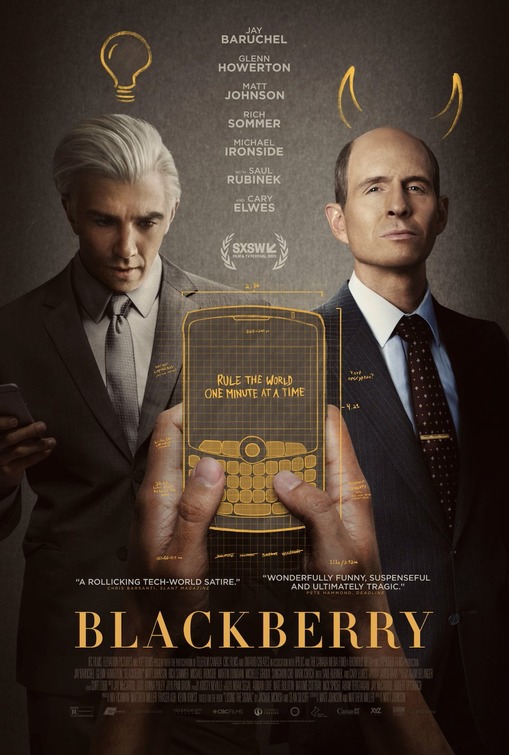
There’s a scene in the BlackBerry movie (I rented it of Amazon) where Jim Balsillie, played by “It’s Always Sunny in Philadelphia” star Glenn Howerton, goes off on the NHL board over a decision he does not like.
It’s a full-blown meltdown with a bizarre line thrown in there that sticks in the back of your mind because it’s so strange but not too out of character because it almost fits Howerton’s character to go off like that.
“I’m from Waterloo, where the vampires hang out!!!”
Tyler picked up on this line immediately as it was an easter egg referring to a video that went viral 11 years ago.
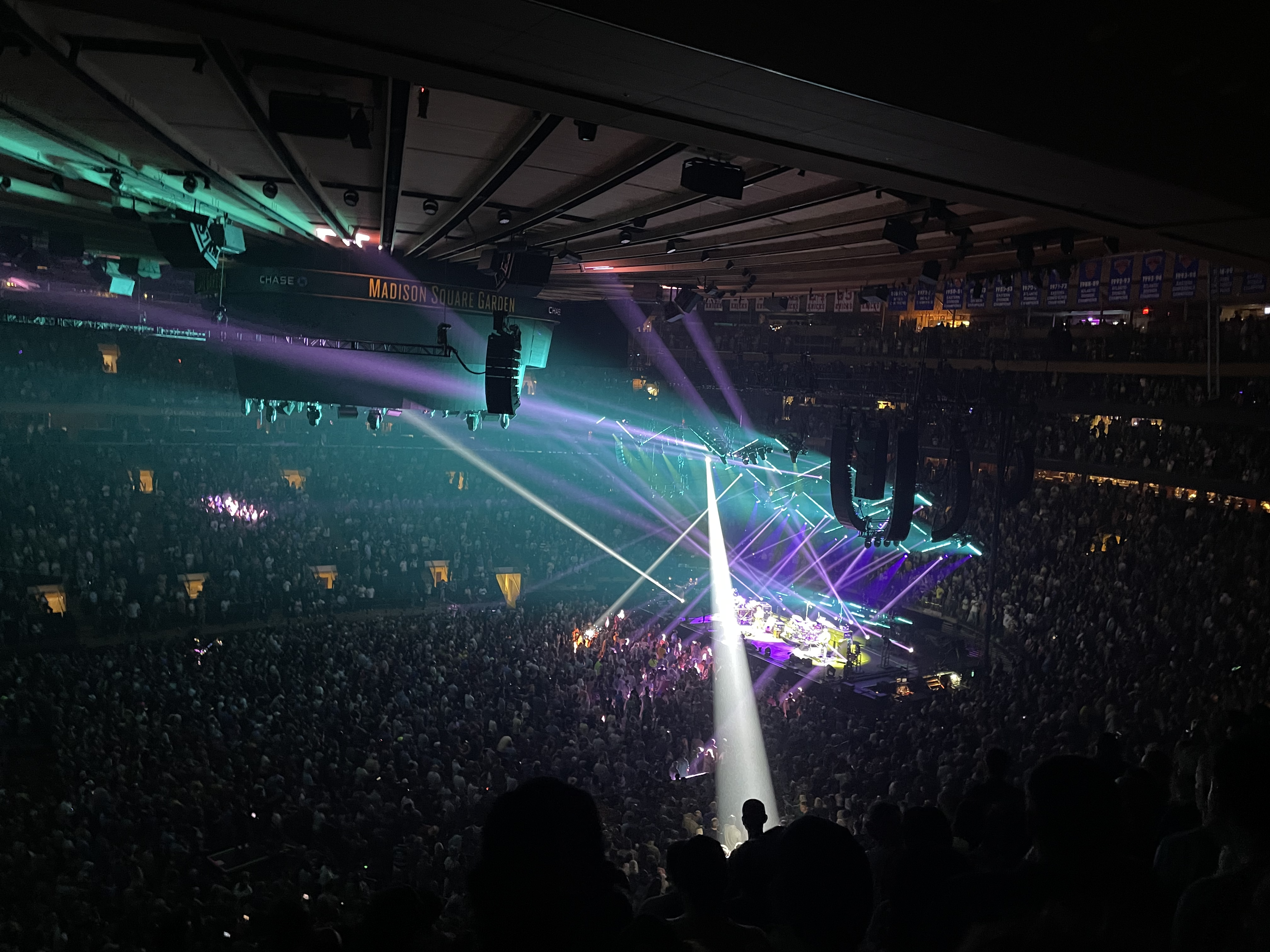
The more I learn about this crazy band the deeper I sink into the mythology. I caught the last two nights of Phish’s seven day “residency” at Madison Square Garden last week. The usual superlatives apply about how the band is playing better than ever. The guy who does the lights even had a profile piece done on him in the New York Times. Phish has now played the Garden 88 times, surpassing Sir Elton John and only second to Billy Joel (who probably sleeps in the tunnels below).
Phish’s 13-night run at the Garden in 2017, what is known as The Baker’s Dozen, was the stuff of legend and, like all feats remarkable that take place in this city, endeared them to New Yorkers, fans or not.
Across 13 nights — from July 21 to August 6, 2017 — the Vermont jam band performed 237 distinct songs without repetition, with each night taking on a specific donut-flavored theme. With a run time of around 34-and-a-half hours across 26 sets, the group served up 176 originals, 61 covers, 19 debuts and 23 bust outs (with a gap of 50 shows or more). To fans, Baker’s Dozen marked one of the band’s finest runs since the late-1990s. However, the run earned recognition from the outside world as well, with the quartet earning a banner in the rafters of MSG for their record-breaking residency.
This most recent run did not disappoint. There was outstanding improvisation from all five members of the band (I’m including Kuroda, the lighting guy) performing at the peak of their talent. But let me talk about Guy Forget (pronounced, in French as “gee-forjet”)
On the seventh and final night, in the middle of a long jam out of a song called Tweezer, Trey starts singing the line,
“I’ve never met a man that I could not forget except for Guy Forget”
I had no idea what I was hearing and I had to tug on this thread later to find out what that was all about. As I suspected, there was a story there and I sure wasn’t disappointed.
This is a band delights playing with words. They turned the phrase “moment ends” into Moma Dance and swapped the word “mangled” for mangos to nonsensical effect. So who was Guy Forget? A Moroccan-born pro tennis player who played in France during the 80s. Why is he the subject of a Phish song? Why not?
Of course there was much controversy within the Phish nerd-verse over exactly where “Guy Forget” ended and the Tweezer jam begin. People wanted to make sure to set the historical record straight.
I just love the fact this band can drop a one-liner, inside joke into the middle of a song and their fanbase knows exactly what is going on. It’s a privilege to have such a dedicated following and this band has certainly earned it.