Last week NYC erupted with over 1,000 small pop-up events across the city, loosely curated by the NY Tech Week team on this calendar. I would describe this as a decentralized SXSW where the events are hosted without much central control which results in an explosion of activity and an opportunity for participants to expose themselves to a wide range of ideas while visiting workspaces all across the city.
The events begin to come together in the months leading up to the annual event. Most of them are invite-only so you need to sign up in advance. Sign-up forms on Partiful ask you to add your LinkedIn profile so the organizers can vet & curate who attends.
I only had time in my schedule to make a few afternoon or evening events but it was nice to sample a few, meet some new people and check out some cool spaces.
Here’s what I learned.
“Influencers are toast” said someone after seeing the demo of Mirage Studio an “AI-powered video generation platform that allows you to create lifelike talking-head videos without traditional production.”
Part of me is happy to bid goodbye to social media influencers shilling products they didn’t truly like, understand, or appreciate. The founder made the argument that their platform would open up access to imaginary personalities to help explain or position their product and would level the playing field for all companies allowing for smaller companies to punch above their weight.
I’m still not sure how I feel about this development, especially after seeing what people are doing with Google’s Veo 3. Further, if the key to communicating to create a sense of empathy, what happens when we give the keys to this rich protocol to a series of APIs? What becomes of human dialog and communication or, more philosophically, what is real?
Then someone leaned over to tell me about Nucleus Embryo. In their words,
When undergoing IVF, couples typically have several viable embryos to choose from.
Nucleus Embryo provides information on the disease risks and traits of each of these embryos, helping parents make an informed choice on which embryo they want to implant.
On the way to the next event, strange new world thoughts spinning in my head, David J’s song, Stop this City was playing on repeat.
Thankfully, my last event of the day was about the power of community and face-to-face collaboration at a shared workspace in an old factory in Tribeca at Fabrik.
Later, New York Governor Kathy Hochul sat down to speak about state initiatives such as Empire AI but also, about what was on everyone’s mind, the challenges of dealing with the Trump administration.
The next day, on the 82nd floor of 30 Hudson Yards, Brand Strategist George Scribner, shared his perspective of Branding in the Age of AI.
The outlook for Google is not great as they had neglected to evolve its brand beyond a functional search utility. Scribner’s view is that there is not enough brand loyalty and that people will flock to a better tool as the new conversational search experiences of the AI platforms have leveled the playing field. I would have to agree but user lock in is a powerful thing and Google’s recent push with AI Mode will work even better for those with lots of data and history stored with Google.
I also dropped by a mixer for Japanese businesses and sat in on a presentation by a representative from the City of Yokohama that has a local NY office to woo startups to Japan.
On Thursday, I dropped in on a round table with several SEO people talking about Generative AI chatbots and the future of discovery in this new world. There’s enough there for another post which will follow.
Simon Willison has been hacking on technology for years and blogging about it in his excellent blog where he posts on how to recreate his innovations and follow along on his adventures. He was a speaker at this year’s WordPress WordCamp US 2023 conference and gave a talk that I would highly recommend to anyone who wants to spend an hour to catch up on all the latest developments in the world of gen AI and LLM.
Posting this here today because I expect that I’ll be sending this link to people for weeks to come.
Large Language Models are the technology behind ChatGPT, Google’s Bard and more. They are weird and somewhat intimidating pieces of technology: we’re still trying to figure out how they work and what they can do, in a field that changes radically on an almost weekly basis.
In this talk I’ll break down how they work, what they’re useful for, what you can build with them and how to dodge their many pitfalls.
A couple of weeks ago, I had the good fortune to attend the Media Party conference in Chicago. As with previous, early-stage “what is this technology?” conferences, I found the three days in Chicago a great way to connect with others who are also stumbling around and learning about Generative AI (genAI), Large Language Models (LLMs) and other AI-based technologies and techniques that are poised to forever change the way we work and communicate.
The biggest takeaway from the conference for me is that we are all still learning the practical applications of genAI and that no one is an expert. Most of the subject matter experts do not have experience in real world applications and those of use working at the intersection of media and technology are only now beginning to understand the complexities of building production-ready genAI systems (how do you QA unexpected results?)
There were no dumb questions – everyone had something to add to the conversation so, in that sense, the conversations were refreshingly equitable. I mentioned to more than a few people that the collaborative atmosphere at the conference (there were about 100-150 of us there) reminded me of the BloggerCon conferences from the early-2000s when blogging was getting started.
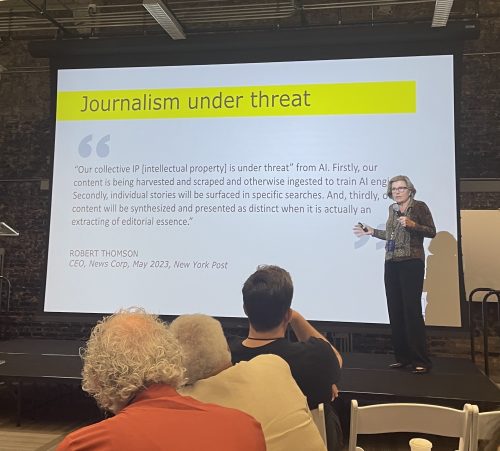
While there were the expected skeptics that were tolling the bell of caution that genAI was going to steamroll journalists out of existence,
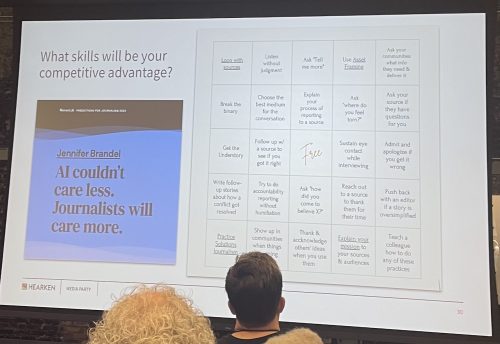
there was also a faction of proponents that ranged from the embrace-or-become-extinct clan to the this-tech-will-give-me-superpowers crowd. The message that had the most resonance with me was from Jennifer Brandel who coined the term AE (Actual Experience) as the thing that journalists, particularly local news journalists, bring to the table that is often forgotten.
Indeed, what people are craving, particularly post-Covid, is human connection to a community. As information sources, local News organizations are well-positioned to be the focal point of their community in a way that an AI can never replicate. This past weekend, I took a long bike ride through the side streets in Brooklyn and Queens and saw pick-up basketball games complete with DJs and announcers, “uh oh, looks like the eighth graders are here to play!”) that showed off the best of community in action.
Maybe we are at the tail end of an old model of journalism that is heading for “hospice” The new genAI systems have trained and perfected how to more efficiently deliver commoditized “news” so the new type of journalism that is only now organizing itself will be one that is resistant to automation.
What follows are some unstructured notes and a collection of shared links that I found useful.
The Practical Guides for Lange Language Models – besides a continually updated table of LLMs, their license restrictions and what corpus of data was used in the training set, this guide also references this cool, evolutionary tree of LLMs.
Thank you to everyone that put this event together. It’s particularly valuable to collaboratively learn about a new technology together. There is another Media Party event taking place in Buenos Aires in October, if you are in the area and interested in the intersection of AI and Journalism, it’s worth checking out.
One of the more chilling tracks from this year’s SXSW were the sessions about misinformation, specifically political misinformation that derailed our elections. During the first day, I attended a session titled Fact v. Fiction: Fighting Election Disinformation a panel featuring, among others, Chris Krebs, noted cybersecurity expert, and Jena Griswold, former Secretary of State for Colorado.
Krebs shared his fear that our media ecosystem, while open to any and all to participate, is easily exploited by well-funded state actors. While the internet and open-source publishing platforms such as WordPress have leveled the playing field, opening access to anyone, it has also put the burden of fact-checking and verifying sources on to the reading public.
too many people are making “insane amounts of money” from disinformation campaigns
Chris Krebs @ SXSW 2022
On Facebook and Twitter all posts tend to look the same. Reduced to a headline, thumbnail image, and snippet, a sponsored post or advertorial written by a paid shill looks no different from a site with more stringent journalistic standards. Production values are no longer an arbiter of quality. Super-charged distribution is built into the business model of these platforms so, with a little bit of budget, a false narrative can be boosted and drown out competing narratives.
The infiltration of “fake news” sites in our media ecosystem is well-documented. What used to be a fenced-off network of identifiable Press Releases has been replaced by networks of “pay-to-play” sites that where lightly re-writing paid messages are turned into into thinly-veiled news stories interlinked to increase their SEO designed to flood the zone.
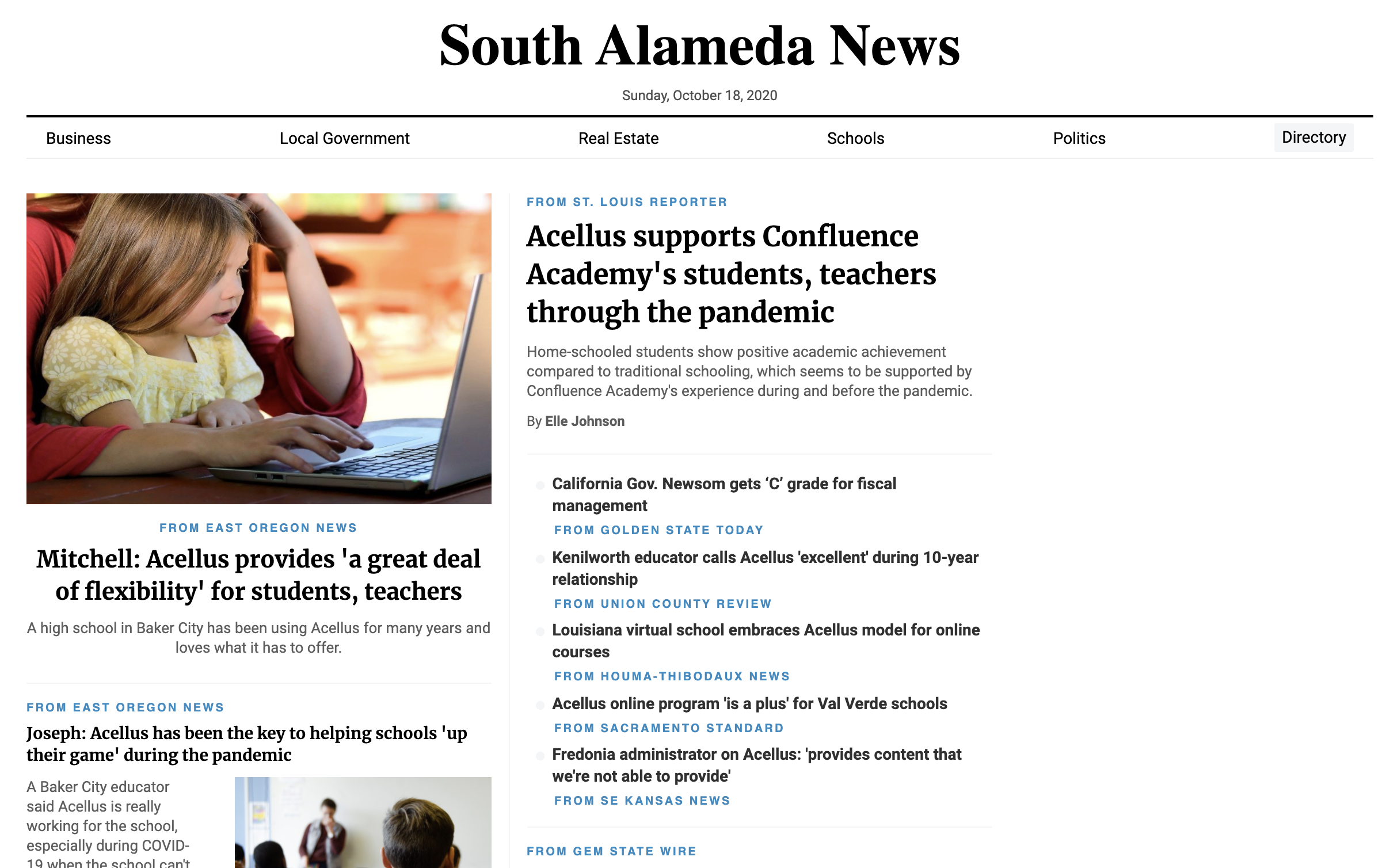
To illustrate my point in an aside, I uncovered one coordinated campaign designed to promote an online learning program to the Alameda School District. I used to live in Alameda and am familiar with its geography. Imagine my surprise when I saw the identical story across three publications that I had never heard of before. East Alameda is not even a neighborhood – everyone who has lived in Alameda knows it’s called the East End. That was the tell.
Clearly what happened is that the vendor of the online learning system was trying to swing public opinion to win a contract. Thankfully, they were thwarted but this shows you how easy it is to plant a message.
Even more chilling was Krebs’ statement that the 2020 Presidential Election was just a dry run or, as he says, an a/b test. Americans were sophisticated enough to suss out foreign disinformation but with movements such as Stop the Steal, QAnon, and the January 6th insurrection, we are still uncovering the depth and extent of deception. Domestic misinformation worked very well to power the Big Lie movement and we are sure to see more domestic misinformation in future elections.
I look at the last election as an a/b test. A – foreign, B – domestic. We learned that A doesn’t really resonate, B was effective so we’ll see more of that.
Chris Krebs at SXSW 2022
Jena Griswold, Secretary of State in Colorado, shared a chilling episode that took place as she oversaw the counting of ballots in the last election. Griswold discovered one of her election workers turned off cameras monitoring the ballot machines and invited an unauthorized person linked to the QAnon movement into the room, sharing motherboard passwords giving privileged access to the ballot computers and opening the ports to the internet, exposing the votes to tampering.
This person, Colorado county clerk Tina Peters, is now running against Griswold for Secretary of State despite having 10 indictments for election tampering filed against her. The Secretary of State is responsible for election integrity and most people do not bother to look into the background of individuals running for this position, in fact, many run unopposed. This firewall around free and fair elections could likely be undermined by a coordinated campaign to put “Big Lie” sympathizers into office that could throw the next presidential election.
Terrified yet? Here’s what you need to do according to the panel.
support non-partisan organizations that are working to get people to the polls
get familiar with the people running to protect elections in your county
talk to your “crazy uncle” or neighbor – try to get thru to them, empathize, sample what they are reading and look for common issues or facts upon which you can both agree
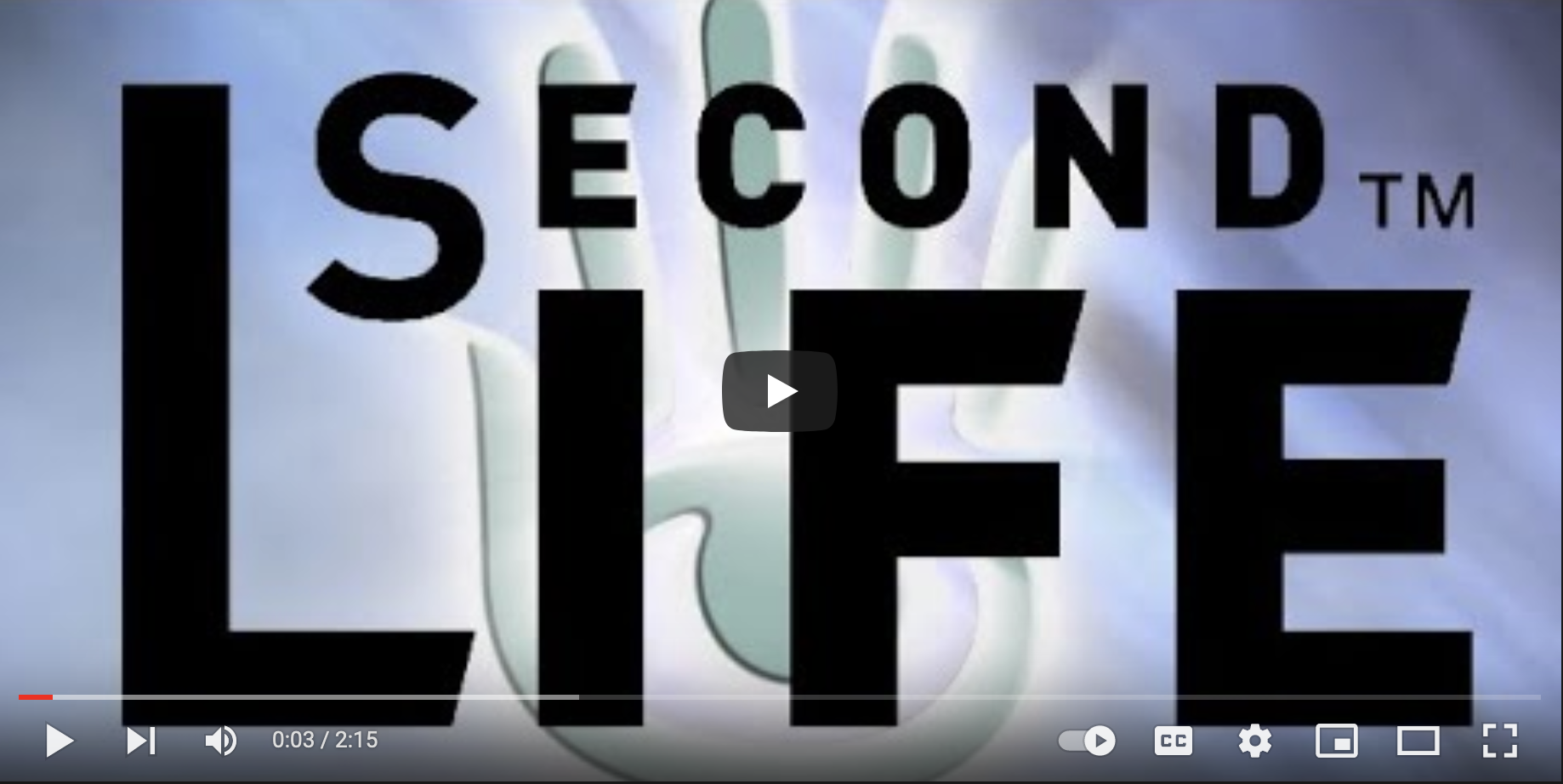
The video above circulated in 2005 when Second Life was the new hotness. As a pioneer in virtual worlds, they attracted buzz from futurists that saw the platform as the next generation of the internet. Companies flocked to the platform, eager to engage with their audience. Reuters opened a bureau and someone made a documentary. Looking back at it now, it looks so cheesy, “Meet thousands of people!”
There are echos of this when we see the latest push to the new virtual platform by the company formerly known as Facebook, Meta. Second Life is still around, going strong with 600,000 monthly users, a third of them coming back each day. Through it all, Wagner James Au has been covering Second Life as spectator, participant, and critic.
I’ve been waiting for someone to check in with Wagner James Au to see what he thinks about Meta, the latest run at virtual reality, and if there are any lessons to be learned from the 15+ years that he’s been there.
Lessons From 19 Years in the Metaverse, a conversation between Wagner James Au and Charlie Warzel is well worth a read. In it, I found this tidbit which is wise counsel to all those out there thinking about how their company or brand can participate meaningfully in the Metaverse.
But first, here’s a quote from the first time around:
To play in Second Life, corporations must first come to a humbling realization: in the context of the fantastic, their brands as they exist in the real world are boring, banal, and unimaginative.
And now from the Warzell interview. Same as it ever was:
Back then, people saw those brand failures and concluded that the metaverse isn’t real or ready for primetime. I fear that might happen again. But the problem is not the users. It’s these companies not meeting these metaverse communities halfway. They’re bumbling their way into the community instead of finding ways to fit inside the community and make use of the platform to bring the magic to life.
My visit this year was abbreviated because of other commitments but I am grateful that I did get to spend at least some time at one of my favorite gatherings. It was also fun this year because I got to introduce XOXO to my colleague at work, Vincent Chang, who has a side gig as a game designer.
Vincent’s game is available at a local bookshop
I was happy to hear that the organizers decided against a repeat of last year’s experiment to hold the conference in the cavernous Veterans Memorial Coliseum and returned to the more intimate grounds of Revolution Hall. I applaud their attempt to be more inclusive with the larger venue but, ultimately, something is lost when you host intimate talks in a cavernous hockey rink.
This was my third XOXO (post from 2018). Each time I go, I gain a deeper appreciation for what Andy & Andy are building. I confess that I do not feel marginalized as some of the presenters but, as an Asian-American, it is helpful to learn about the struggles described in some of the talks. Empathy comes from understanding and I thank all the presenters for being so brave to share their stories and the audience in being so collectively supportive.
Against the backdrop of fascinating talks about the etymology of Ms. and the hegemony inflicted upon us by culturally one-dimensional restaurant reviewers , this year I focused on the attendees and their interesting And varied backgrounds. We were encouraged to spend 80% of our time listening and 20% talking. Moving beyond the standard conference introductions such as, “Where do you work, what do you do?” and spending time to uncover a person’s inner fire was immensely rewarding.
Some people I met included
a couple that was deep into Japanese Pro-Wrestling as an art form. They turned me on to Hoodslam, a world I’ve never heard about, taking place right in my backyard.
a recent migrant to San Francisco who was now working on a secret VR/AR project
a woman who took the last year before she turned 31 to take advantage of Australia’s Working Holiday program
I also learned more about anxiety and had an open conversation with those that experience it, what it is like and what are things that I can say that can help someone having a severe anxiety attack. I learned about Box Breathing.
Video
Estelle Caswell (Earworm) showed her video exploration into the male falsetto in popular music and answered questions about the process to make the video presenting her findings. FYI: she made a Spotify playlist.
Conference
I was only able to attend Saturday’s talks but each one was excellent.
Tracy Clayton reminded us Not only of the importance and value of a diverse workplace but also underscored that Diversity isn’t the same as Inclusion. Tracy grew up on Twitter and drew strength and support from her network but the same thing that was keeping her alive was also hurting her emotionally. She shared her struggle to reconcile those two forces and find hope. “Hope leads to motivation, motivation leads to action, and action leads to change.”
Emma Kinema shared her experience as a labor organizer for the video game industry drawling a line from the IWW in the 1930s to the present day struggles of video game developers. Organized labor as something that can unite people in our politically divided world was a theme all weekend both in and outside the conference. The labor movement is strong in Portland.
YouTube personality hbomberguy shared the story of his epic 57-hour Twitch stream in which he raised over $300k for the British Trans Rights charity Mermaids. At hour 56, AOC showed up.
The charming couple Rekka and Devine make up the Hundred Rabbits team. They shared their adventures of moving their life on to a 33-foot sailboat Pino and making their way across the Pacific to Japan. Life on the water lead to extreme self-reliance and radical simplification. 11GB XCode updates and Adobe Creative Suite connectivity are unacceptable on a satellite phone connection so they were forced to build alternative solutions. Just as open source tools lead to more efficient solutions for their technology, they also have open-sourced their lifestyle to help others live off the grid.
Soliel Ho confronts East Coast media ignorance of Boba
Soleil Ho, one of the hosts of the Racist Sandwich podcast that covers the race & politics of food. Here’s a link to Episode 14 which talks about the politics of food photography. Soleil has now become one of those she used to rail against as the new food critic at the San Francisco Chronicle. In her words, “Representation in media is a powerful thing but you must beware of commodification.” This is her new challenge.
Caitlin Doughty shared her career path to a mortician and how she started her “death-positive” movement. I learned a lot about things that are not normally talked about.
Arcade
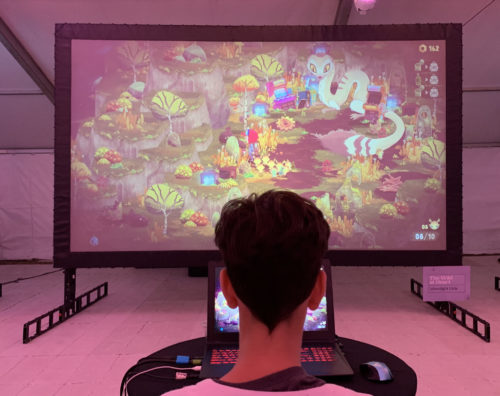
Wild at Heart beta tester
I chatted with one of the developers at Moonlight Kids, a game studio that is halfway done with, Wild at Heart. They expect it will take their small team two years to complete. The team is completely distributed and the festival was one of the rare times that the team were together. I asked how they coordinate their work schedules and maintain momentum towards deadlines set by their publisher. One thing they try and do every week is open an hours long conference call, not with any set agenda but just as a way to connect, to keep the lines open for quick questions and to be there for each other.
Tabletop
I wish I could say more – it was fun but a bit overwhelming as I’m not much of a game player. Vincent and I played Mechanica while the one of the designers of the game patiently walked us thru the mechanics. It had something to do with making vacuum cleaners.
Vincent was really in his element and he signed us up for a “Super Secret” playtest of a game called The Adventure Zone. Our round was led by Keith Baker who is someone really famous in gaming circles. He was really nice and took an interest in Vincent’s game which made him very happy.
Story
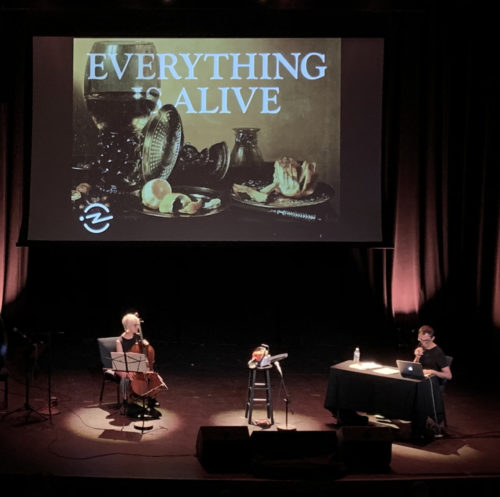
Everything is Alive
Saw the tail end of a live performance of Everything is Alive, the podcast where they interview inanimate objects. In this episode they interviewed a chainsaw.
Finally, I enjoyed the exhaustive breakdown of the Ghostbusters theme song by Ray Parker Jr., and learned about the history around the lawsuit(s). I’ll never not be able to hear Ray’s “Bustin’ makes me feel good!” line again.
Wrapping up, Demi Adejuyigbe made an announcement that he was finishing the season (and moving on from the show) and threw down the most amazing dance routine to a mashup of all the songs covered in the season. Here’s just part of it.
Vincent and I explored several places around Town.
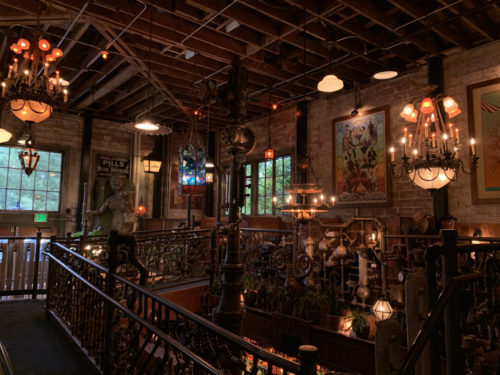
We ducked out for dinner at McMenamin’s Kennedy School located about 6 miles outside of town but well worth the trip. The complex is a restored 1915 school with each of the rooms converted for alternative uses. There’s a speakeasy in the “Detention Room” and a Beer hall set up with crazy pipework art in the “Boiler Room” – well worth the trip but bring your bathing suit as I hear the soaking tub is quite nice too.
The Boiler Room
Back in the late-80s I visited Portland for the first time to see my sister who was attending Reed College at the time. Late one evening she and her friends took me to a cafe. All I remembered about it was that there was one table in the room that was rigged up with a pneumatic lift that ever-so-slowly would push the table upwards and downwards. They always left the table open for out-of-town visitors so that the unknowing visitor would at some point realize that what was once a normal table was now up around their chin, would let out a yelp and the rest of the room would giggle and welcome them to Portland. Vincent promptly googled and found the Rimsky-Korsakoffee House, right around the corner from the conference!
Other spots visited:
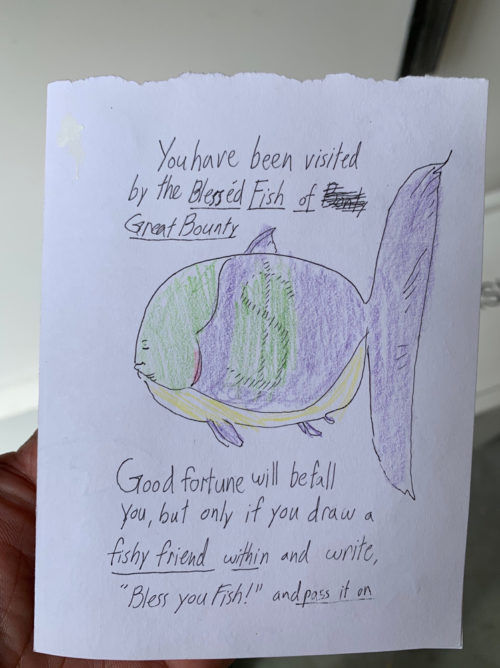
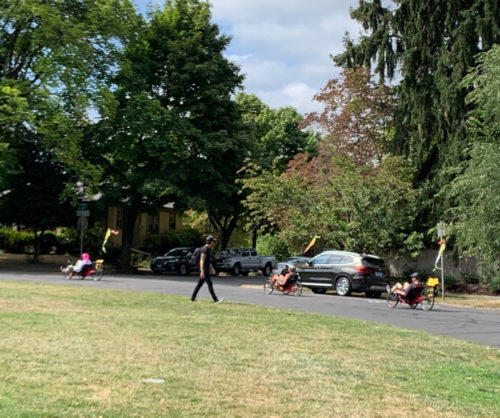
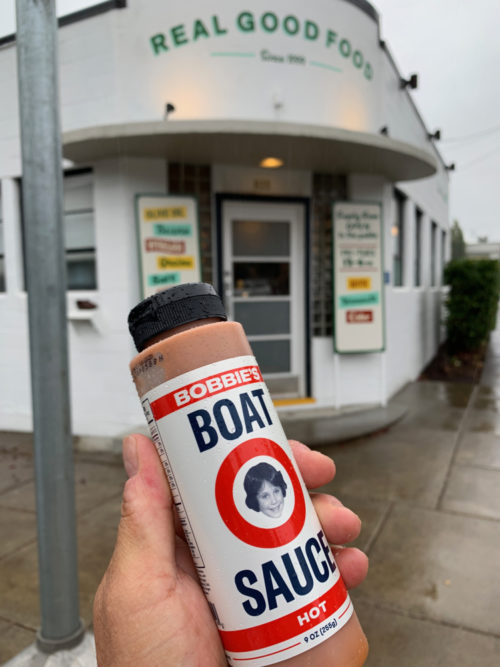
Blessed Fish of Great BountyCommunity ArtRecumbant GangBobbie’s Boat SauceTypographyPublic SupporetMike Bennett artPush x PullWhat unites us all
If you’ve read this far, thank you for indulging me. XOXO 2019 was a rich experience that I will reflect upon many months afterwards. Thank you Andy x Andy for making all the arrangements – I’m spiritually recharged with a renewed sense of optimism for the potential of a connected humanity.
XOXO is an experimental festival for independent artists and creators who work on the internet
That is what it says on their website but it’s so much more. It’s a community of people that live their lives online coming together to meet each other face-to-face, share side projects and talk about ways to make the internet feel more human.
I highly recommend this conference to anyone with an interest in online culture, design, or gaming. Because this conference is by invitation-only, there is a bit of an exclusive feel to it but also it means that most people you meet are interesting and talented and excited to share. You will leave refreshed with new sense of optimism about the future.
The invitation to attend comes months in advance along with an invitation to join the XOXO Slack community so much of the fun at the conference is meeting face-to-face all the people you have been communicating with via Slack or Twitter. I arrived Friday afternoon so unfortunately missed some of the social events on Thursday evening at during the day on Friday but what follows are some notes of things I saw. Photos are discouraged so I do not have many photos to share.
Friday
Games I saw at the Arcade, an open space demoing indie video games:
Busy Work, an installation of four office cubicles where your team has to frantically answer inane customer service questions.
Kids, more interactive art than a game, it was on an iPad projected on a big screen and had the audience shouting commands to the person “playing” the game as we all tried to figure out how to “win”
Goose Game, where you play a naughty goose and cause havoc.
Cathode Mk1, a turn-by-turn game played across a series of tube televisions by the folks at [public games].
Graham Annable spoke about his uniquely dark view of pets.
Film critic Lindsay Ellis took questions from the audience about how she built her audience and the challenges of delivering serious, academic research via YouTube. Here’s an exhaustive deconstruction of Disney’s depiction of indigenous female characters that got over 1M views.
Bill Wurtz is most famous for his History of Japan video (below) but he has a whole YouTube channel of nonsensical videos which he sampled for us. In Q&A we learned that attempted to do a History of the United States video initially but eventually had to give up because “he know too much” and could not summarize effectively. Japan (about which he knew nothing) was easier because his lack of knowledge gave him the distance to help him summarize it.
At the Art & Code session I missed Baratunde where he debuted his new app in which you are quizzed on headlines to determine if they are real or not as a way of alerting you to the problem of “over-policing.” He shared insights about why he built the app and the importance of data privacy in a Medium post.
Nicole He gave a talk (Yelling at Computers) about the rich space between what technology can do today and what people think technology can do today and shared Twitch videos of people playing her new browser-based game, Enhance Computer.
Diana Smith showed us her amazing digital renderings done entirely in CSS and HTML and then shared how the art beautifully degraded when viewed in older browsers. She then shared how the Internet used [Inspect Element] to fork and remix her work so that each piece lives on and have taken on a life of their own. Try it yourself – it’s an amazing labor of love – you will not be disappointed!
Pure CSS Francine
Botnik Studios uses AI to write examples of movie reviews, Twilight Zone episodes, and Tinder profiles.
Andy Baio, co-founder of XOXO kicks off the official conference
Jennifer 8. Lee – Emoji Activist
Jennifer 8. Lee is a self-proclaimed emoji activist described her experience lobbying for (and getting accepted) the emoji for dumpling.
Matt Furie
Matt Furie, the guy who invented Pepe the Frog, spoke about what it was like to get your character co-opted by the alt-right and what he had to do to try and get it back.
Natalie Wynn spoke about gender identity on the internet and her experience as a transvestite character online. She runs the YouTube channel, ContraPoints.
On the main stage John Hodgman and Jean Grae held court and told stories based on topics submitted by the audience on a large, projected spinning wheel which randomly chose which topic to discuss.
Sunday
Someone had printed out and put all the terms of service of several social networks side by side. The long yellow one is Snapchat.
There was an art exhibit where you could mail a postcard to yourself in a year’s time. My favorite one said, “Have you asked her yet?” I assume this person is getting ready to marry his (or her) girlfriend.
Because of some work stuff I was in and out of the Sunday sessions but I did get to see a couple.
I caught the closing credits of Demi Adejuyigbe’s talk.
I came back to see Adam Conover talk about the difficulty of presenting facts to people that don’t want to hear them. Adam has a TV show called, Adam Ruins Everything.
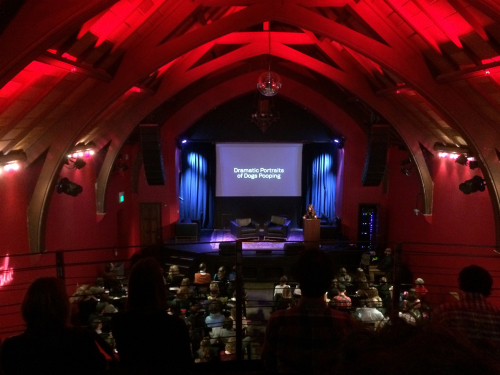
Quick notes from yesterday’s Bold Italic Shift Digital Media Conference which was held at The Chapel in the Mission district of San Francisco yesterday.
The venue and format were perfect. $85 for a half day session of talks in an intimate nightclub off of Valencia Street. Tickets were sold out and the attendees came from across the digital media spectrum, from publishers to advertisers, which made for great side conversations. The Bold Italic, is a San Francisco “hyperlocal” site funded by Gannett, that has acted as an experimental lab of sorts for it’s parent company and this was one of their bigger events, designed to position them as a digital media innovator.
I’ve seen him speak before (my write-up about cir.ca) but he always has new observations to share about the media business.
Brand loyalty to media companies is gone. A show of hands revealed that most people do not remember where they heard about the news they read that day underlining the point that, in a world where distribution costs next to nothing, attention is what is most costly. The undercurrent in this talk and others that followed was that the social networks of the day are the new gate keepers to what gets read.
Fox News at one end of the political spectrum and MSNBC on the other are no different from Facebook’s newsfeed algorithm in that they pander to their audiences’ selected interests and are responsible, to a certain extent, for the polarization we see in society today. Matt sees a need for an editorial viewpoint to tell the most important stories of the day which may come outside your chosen interests.
It’s a great time to be a media startup (“news is sexy again”) but there’s a danger in either being too driven by either an editorial or distribution-focused strategy. A successful company needs to have a “true North” point of view in order to succeed. In his view, Vice News is successful because it has a very clear point of view so its viewers can put the stories in context. Buzzfeed, in Matt’s view, is a bit lost because it is too optimized for social distribution and no one is sure of it’s point of view.
When asked about what he would do if he was put in charge of The New York Times, Matt said he was surprised to see a recent job posting for a “Print Editor” which, to him, signaled a recognition of the difference in the print medium from others. He went on to say that rather than originating stories for print that the Times should flip the hierarchy around writing for Mobile, followed by Web, and finally for Print at the end of the chain.
Matt’s parting words was that we should all glance at the Wikipedia entry for Yellow Journalism to give perspective to the current rash of deceptive, linkbait headlines and where this trend could ultimately be taking us.
Jessica Saia of The Bold Italic was next with a talk about how to make good viral content with “visual satire.”
She gave us a peak into the brilliance of TBI’s creative genius and shared several of their more successful riffs on popular journalistic genres.
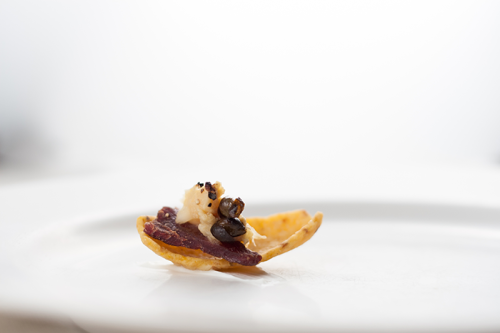
Corner Stourmet pokes fun at gourmet food photography (Jessica’s roommate is a photographer) by using ingredients from her local corner store which resulted in sharable works of art such as the Frito Scoop Amuse Bouche.
Frito Scoop Amuse Bouche
Another is their Actual Food Porn piece which was engineered to jump on to the #foodporn hashtag train. Do/Don’t/Oh God Please Don’t pushes the norms of the standard fashion magazine column while the Kid Food Reviews bring the brutal honesty of 4-year olds to the restaurant critic genre (TBI’s review of The French Laundry is their most successful post ever).
Kid Food Reviews
Each of The Bold Italic’s satire pieces takes a cliche and twists it into a caricature of itself designed to lead to that, “OMG, have you seen this?” moment driving its readers to share and introduce them to new audiences.
Greg Isenberg of 5by gave a talk about making successful viral videos.
He shared a stat that 1 out 3 millennials do not watch television. Not broadcast, not cable, just YouTube and other online video. With unlimited space, imagination is your only barrier.
Assume your audience has the attention span of an “espresso-fueled fruit fly” which means your cuts need to be quick. What’s important is velocity, not length.
You need “lighter fluid” to get things going. Sharing stats on the Double Rainbow video Greg pointed out that even though the video was posted in January 2010, it wasn’t until Jimmy Kimmel put his spotlight on it on in July that it really took off.
Lexi Nisita, Social Media Director at Refinery 29 spoke about the dangers of “lab-created” viral
Truly viral content shares certain elements which signal authenticity. It’s usually “low budget, grass roots, and gritty.”
Lexi pointed to Random Acts of Pasta as an example of a viral video which positioned Olive Garden so well that many thought it was a clever way for the company to get media coverage during the Thanksgiving holiday (according to the company, it was not).
Before Refinery 29 decides to work with a brand on a social media campaign, they use a rubric to gauge its effectiveness.
Identity – does it make the person sharing the content look good or feel smart. Does it enhance their identity?
Life Improving – does it act as a gift? If shared, will it impart knowledge? The example here being a blow dryer company sharing top tips in a blog post as something one person can forward to another.
Heart-Pounding Emotion – does it provoke either “righteous anger,” tears of laughter, or nostalgia. All are powerful drivers of sharing behavior.
Bobbie Johnson, Senior Editor at Medium held an Ask Me Anything session where he took questions from the audience.
Medium is both a platform and a publisher. Not a surprise is Medium is the combination of both Blogger (tools) and Twitter (distribution). Both companies that Medium’s founder, Ev Williams, founded.
While Buzzfeed and others like it are enjoying incredible valuations, they are built on the promise of continued success from their native advertising programs. In Bobbie’s words, “the leaves will be pulled away” from this business as there is only so much sponsored content that you can put into the mix before it collapses from its own weight.
News on mobile devices is still primarily, “lumps of text” and needs to evolve to take advantage of the platform. It is still very early days and a challenge that Medium is very interested in solving.
Medium wants to be a platform where brands engage alongside content producers as equals. They want to be youtube.com for writing. A place you go to view collections of content from all ends of the publisher-advertiser spectrum. To this point, when asked if Medium would share revenues with content creators on the site, Bobbie replied that if they did not, “they’d be doing it wrong.”
When asked (by yours truly) if Medium would allow for domain-mapping that would allow brands and publishers to run Medium sites within their own domain, he said that it was a top priority for the company but that they wanted to take their time to do it in a way that would not take away from the network and community effects that they currently enjoy on Medium. I look forward to learning more.
The next session was a panel discussion on native advertising.
It was unfortunate that only the business side of publishing was represented, none of the panelists (except the moderator, Jennifer Maerz, editor at The Bold Italic) serve in an editorial role.
Everyone was surprised to hear results from a Quartz survey shared by Ryan that found 80% of C-level executives are interested and read branded content. CEOs want to hear what their competition, customers and partners have to say (and how they say it), not only what the media has to say about them. This was a unique insight that made me think deeper about the value of sponsored content.
When asked who creates branded content the answers were across the board. Some publications, such as The Bold Italic, have editorial do double-duty and write pieces that get the “sponsored” label (Bobbie Johnson mentioned he used to do this at the Guardian. They were called Advertising Supplements). Other publications have a group that reports into advertising that works with brands to create content. On the other side, some of the larger brands create their own content and work with publishers to distribute it. Finally, MediaCo sits in between. Their parent is a PR firm but their team has a journalistic background and works with brands to create and distribute content that will be compelling and effective.
I was surprised how much sponsored content runs on Quartz. It’s an important part of their business and allows for them to cut back on the number of banner ads they have to run to support their business. During the session, Ryan mentioned that Quartz has a rule to show no more than one sponsored post on the waterfall for every three “news” posts which seems a lot.
Matt Kaye brought up the insight that as more viewership moves to mobile, the more important it is to have sponsored posts that are relevant and interesting to read.
There is no right rail on mobile. If your next post in the feed is not relevant, you'll lose your viewer. @Kayelol#SHIFTmedia
After the break there was a short dialog between Sherine Kazim and JP Stallard about personalization.
The two were debating cookies and other tracking mechanisms as it relates to advertising which they view as creepy, (“I strongly dislike being a product.” said JP) Unfortunately the debate was stuck talking about advertising and did not bring in the benefits of personalization as it relates to publishing. Some of the most interesting work in media is around implicit personalization based on reading behavior and how it can enhance your reading experience.
The next session brought together several user research experts to talk about Reader Behavior: Motivations, Trends & Insights
The final panel of the day started off unexpectedly with the moderator reading from a passage and spending a long time introducing each panelist and asking several favorite/least favorite questions that brought out some strange answers but did a lot to warm up the room and get bring out the personalities of the panelists.
Several people noticed that it was an entire panel of women which is something several people said to me throughout the day. It was certainly a nice change to see so many women on stage and in the audience and I commend The Bold Italic for bringing together a healthy mix. It made for a better conference.
While many topics were covered, my notes were on the various tips and tricks the researchers used when in the field.
Stephanie spoke about her time at The New York Times when they used Food (farmer’s market grazer or fast food?) or Social Status (arm candy or committed?) as metaphors useful for grouping personas. These methods abstracted the descriptions a level so that they did not fall into a particular demographic group which is limiting when, particularly when looking at reading habits. Different age groups would sometimes share behaviors.
Bethany had an interesting point that when navigating online content there is no sense of how much you are missing. With a physical object such as a book or a newspaper you have visual cues that tell you if you’ve skipped a section but in the online world of the endless scroll, there is no “end.”
At one point there was as discussion of “trusted sources” and someone mentioned that its useful to think of such a source as a pathway to more quality content. I share this viewpoint in that links on a site should be treated as a curated collection and cannot always be trusted to third party widgets driven by an algorithm.
Someone in the audience asked how to collect user research without a dedicated user research team. Each panel member had their own tricks which included:
Bring in two people and observe the first person describe their experience to their partner. These secondary observations can uncover non-obvious aspects of your product that are suppressed in one-on-one interactions.
Camp out at a coffee shop, make friends with the barrista. Tell them that you will offer to buy coffee for anyone who will spend time with you on user research.
Repeat the last word someone says to you with a question mark as a way to continue the dialog. When someone states that, “I then copy/paste and send an email,” you then repeat, “Email?” to uncover motivations.
The final talk of the day was a discussion between Mat Honan and Clara Jeffery about Mat’s upcoming piece for Wired on the Future of Media.
Joel Johnson from Gawker was originally supposed to appear but recent news kept him from keeping his date so Clara stepped in to take his place.
Mat had news of his own to share and announced that he was taking over as Buzzfeed’s Silicon Valley bureau chief and that they would be building up their editorial team here.
Both Mat and Clara had interesting things to say about the readership on their perspective sites.
Wired’s readers are still primarily desktop. There was an audible gasp in the audience. While most tech news web sites have crossed over and have more mobile readers, the grand-daddy tech site of them all still had more desktop readers than mobile. Not only that, if I heard correctly, he also said that many of them still come in via the front page! Old habits die hard I guess.
Riffing a little on why he found Buzzfeed attractive, Mat said it was because they had figured out social better than any other publisher and were thus well-positioned for the future. This lead Clara to say,
A question back from Mat pondered a future where stories live as sharable units on their own, within social media feeds, independent of their site. Some good food for thought in that nugget there.
While Mat views traditional, attention-stealing advertising as “threatening” his views of native advertising are more nuanced. I believe he sees the convergence of editorial and revenue as a trend to get ahead of and he views Buzzfeed as ahead of the game here. I look forward to reading his Wired piece in January. He assured the audience that he only started seriously talking about moving from Wired to Buzzfeed after the story was filed.
Clara shared that Mother Jones burst back onto the scene with it’s blockbuster scoop of Mitt Romney’s 47% video clip. Thankfully they had just completed an overhaul of their infrastructure so their site stayed up despite the deluge of new traffic but the interesting thing is that following that spike many of the new readers stuck around and they are still enjoying more than double the traffic when compared to before the Mitt Romney story. She did not get around to revealing how those new readers were converted to return visitors.
If you’ve read this far I applaud your stamina! These notes are my way of thinking out loud and crystallizing my learnings in a way that I can refer to them in the future. Feel free to share your own thoughts in the comments below.
Running a start-up can be a lonely. What is glamorized in media are the high points, revenue and usage going up and to the right, the launch party, the high-fives when you close a big deal, the opening of your first office.
The reality is more gut wrenching. The late night realization that you may not make a revenue target. The early morning notification that your server is offline. The sinking feeling when a key prospect tells you they cannot work with you. The difficult meeting with an employee when have to tell them you have to let them go.
The life of an entrepreneur is a series of peaks and valleys that can whip you from euphoria to depression and back again in the course of a few days. But it’s when you’re starring into the abyss that you find out who your true friends are, when you find out if you picked the right group of investors, that believe in you and will help you work it out.
After spending two days at Stanford University with 250 other individuals who work at True Venture portfolio companies, I have a new appreciation for why someone would want True Ventures as a backer.
Once a year, True, an investor in my company, Gigaom, hosts a True University for its portfolio companies. It’s an incredibly generous offering. Two days rich with talks and workshops on how to run a business. A sample of the sessions include:
Steve Blank talking about how to develop a business model and product/market fit
Army Major Aram Donigian talking about negotiation tactics learned while in Iraq
Robert Brunner, the designer of Beats headphones, talking about design experience
Reverend Cecil Williams and his sharp as a tack wife Janice Mirikitani talking about the mission of GLIDE
Design should be more than just a phase between marketing and engineering – Robert Brunner
And that’s just the highlight. In between were smaller workshops with folks like Hooman Radfar (the right and wrong way to let someone go), Lars Nilsson (how to set up and run an inside sales team), and Braden Kowitz (how to run a design sprint).
Negotiation Lessons Learned from West Point
But it’s more than talks and workshops. I came away with a feeling of community. True University is an environment of complete trust and collaboration. I spoke openly about challenges I was facing and shared with others lessons I have learned. We were all working to build something and we wanted each other to succeed. True Ventures is more than a collection of investments, it’s a platform from which tomorrow’s leaders can take a leap and know that you’ve got a community of like-minded folks are behind you.
True Venture’s Jon Callahan speaking on trust and risk
Thank you True Ventures for being an investor and thank you for an amazing couple of days!
Further: videos from past True University sessions are posted at on TrueTube
Cookie Consent
We use cookies to improve your experience on our site. By using our site, you consent to cookies.
ID used to identify users for 24 hours after last activity
24 hours
_gat
Used to monitor number of Google Analytics server requests when using Google Tag Manager
1 minute
_gac_
Contains information related to marketing campaigns of the user. These are shared with Google AdWords / Google Ads when the Google Ads and Google Analytics accounts are linked together.
90 days
__utma
ID used to identify users and sessions
2 years after last activity
__utmt
Used to monitor number of Google Analytics server requests
10 minutes
__utmb
Used to distinguish new sessions and visits. This cookie is set when the GA.js javascript library is loaded and there is no existing __utmb cookie. The cookie is updated every time data is sent to the Google Analytics server.
30 minutes after last activity
__utmc
Used only with old Urchin versions of Google Analytics and not with GA.js. Was used to distinguish between new sessions and visits at the end of a session.
End of session (browser)
__utmz
Contains information about the traffic source or campaign that directed user to the website. The cookie is set when the GA.js javascript is loaded and updated when data is sent to the Google Anaytics server
6 months after last activity
__utmv
Contains custom information set by the web developer via the _setCustomVar method in Google Analytics. This cookie is updated every time new data is sent to the Google Analytics server.
2 years after last activity
__utmx
Used to determine whether a user is included in an A / B or Multivariate test.
18 months
_ga
ID used to identify users
2 years
_gali
Used by Google Analytics to determine which links on a page are being clicked
30 seconds
_ga_
ID used to identify users
2 years
You can find more information in our About Me and .