Tag: food

  • American Food Mythology

    Let us remember the giants of American Cuisine.

    Betty Crocker
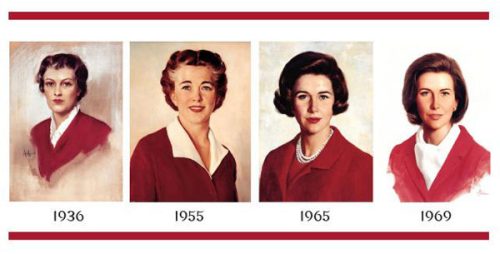
    Betty Crocker isn’t actually a real person. She is the brainchild of an advertising campaign developed by the Washburn-Crosby Company, a flour milling company started in the late 1800s that eventually became General Mills.

    Who was Betty Crocker?
    Colonel Sanders

    Ironically, Colonel Harland Sanders cannot stand what his franchisees have done to his recipes. This from a 1970 New Yorker piece when KFC was still just getting started in NYC,

    During his travels on company business, he will occasionally pay an unexpected visit to a K.F.C. outlet in order to inspect the kitchen and sample the gravy. If the gravy meets his low expectations, he delivers one of his withering gravy critiques, sometimes emphasizing his points by banging his cane on whatever furniture is handy. Months or even years after these ordeals, franchisees wince at the memory of such a gravy judgment from the Colonel as “How do you serve this God-damned slop? With a straw?”

    Kentucky-Fried
    Duncan Hines

    Duncan Hines was, objectively speaking, a big deal: one of the country’s first food celebrities, beloved by millions. “Americans regarded his every word with the highest esteem,” but. . . Duncan Hines sounds like—how to put this?—a domineering, narcissistic jerk.

    Duncan Hines was a real guy
    Chef Boyardee
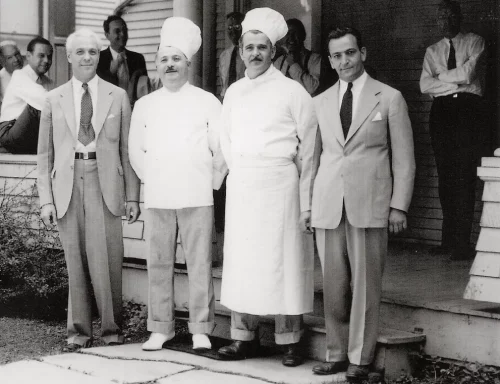
    Chef Boiardi’s Restaurant in Cleveland was a success, and customers expressed interest in learning how to make Italian dishes at home. So the Boiardis started sending people home with pasta, sauce and cheese and teaching them how to cook, heat and assemble the dishes themselves.

    The Man, The Can: Recipes Of The Real Chef Boyardee
    Aunt Jemima
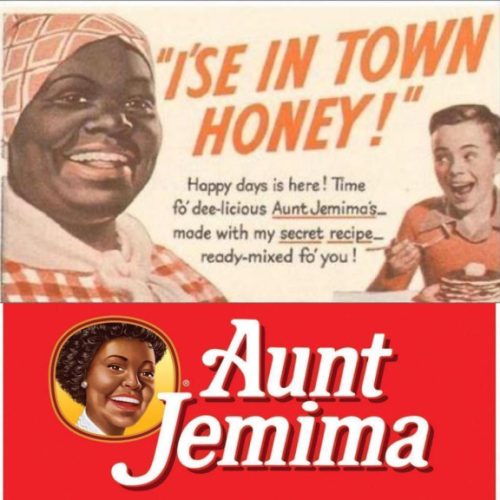
    Aunt Jemima’s appearance has evolved over time. The brand’s origin and logo is based off the song “Old Aunt Jemima” from a minstrel show performer and reportedly sung by slaves. The company’s website said the logo started in 1890 and was based on Nancy Green, a “storyteller, cook and missionary worker.” However, the website fails to mention Green was born into slavery.

    The Aunt Jemima brand, acknowledging its racist past, will be retired
    Uncle Ben
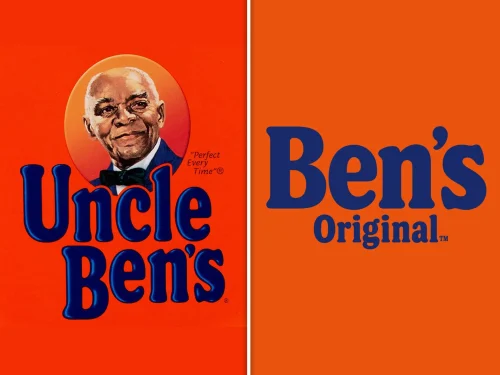
    Uncle Ben’s was founded as Converted Brand Rice by co-founders Erich Huzenlaub and Gordon Harwell. The name “Uncle Ben’s” began being used in the 1940s after Harwell and his business partner discussed a famed Texas farmer, referred to as Uncle Ben, known for his rice. The image of the Black man on the box was modeled after Frank Brown, a waiter at the Chicago restaurant where Harwell had the idea.

    Uncle Ben’s to change brand as part of parent company’s stance against racism

    Honorable mention goes to La Choy that introduced Middle America to horrible-tasting frozen Chinese food with their earworm jingle, “La Choy makes Chinese food, swing American!”

  • NYC Takeout Chinese

    NYC Takeout Chinese

    There’s an unremarkable-looking Chinese joint a block away from where we live on 2nd Avenue. We pass it often on our way somewhere else. When SmartNews kicked in a stipend to encourage us to order in for dinner so we could stay online and monitor things for Election Night, I chose to give the Mee’s Noodle a try.

    On their menu they excerpt a review from the New York Times so I looked up the rest of it online. I’m still getting used to the fact that the Times (as it’s called by the locals) is now my local paper.

    For people jaded by the clumsy, oily fare dropped so unceremoniously on the tables of many Chinese restaurants, the food at Mee Noodle Shop and Grill is a reminder of how good simple Chinese food can be when cooked with care and attention.

    This small restaurant on a busy East Side corner is the newest and best of the three Mee Noodle Shops around New York. Like the other two, in the East Village and Clinton, this one is uncomplicated and efficient. The difference is in the freshness of the ingredients and the delicacy of the preparation.

    It is a wonder how such delicacy is achieved given the assembly line nature of the kitchen, which lines one wall of the rectangular room. Behind the shiny silver counter, which separates the kitchen from the bright white tile dining room, men and women in red Mee baseball caps cook with precision. One woman sings a song in Chinese, the sinuous tune audible above the sizzle and clatter of the stir-frying.

    Mee’s Noodle Shop review in the New York Time, March 18, 1994

    As far as a late-night Chinese, it was delicious.

  • After Prison Cooking Show

    Joe Guerrero served time in prison. Joe has a pretty successful YouTube channel and website about his life in trying to adjust after prison. Riffing on the cooking show genre, Joe invites fellow inmate alumni Danny to teach his viewers how he made food in prison.

  • Grandma’s Recipes

    Izumi turned me on to a YouTube channel she’s discovered that features lovingly documents the kitchen recipes of an older, sometimes forgotten, generation in Japan. Each short vignette explores the life of these women who fed their family with what they had and passed on traditions of their region.

    From the producers:

    Our team especially tries to focus on eccentric, lovely but “Rock” ladies above the age of 80, who have lived through World War Two. We interview them with great care, and through their recipes which represents the relationships they share with those they care about, we are able to uncover great depth in their life stories. We want to spread those stories to the young generations living today. We believe that if we can share the stories of those beautiful and loving ladies to the world, regardless of borders and languages, people may appreciate even the dinner table just a little bit more.

    Grandma’s Recipes
    Masami-san has lived a hard life in Nagano and reflects on her grand life of 99 years.
    Keiko comes from a wealthy family in Tokyo. During the war, she made a frying pan out of unexploded bomb.
  • Engineered Experience at Starbucks

    While Taco Bell worked several years to engineer the Doritos Locos Taco, Starbucks has honed its formula for the optimal coffee delivery experience. Apparently the seats at McDonald’s are engineered to get uncomfortable to sit in for longer than 30 minutes. Can you think of any other examples of Taylorism to guide consumer behavior?

  • Engineering of the Doritos Locos Tacos

    Doritos Locos Tacos

    Fast food is engineered. The product development process is no different from other things that are engineered, it has a prototype phase, followed by QA, and user testing.

    The central issue was that Taco Bell’s shells used a different type of corn masa than Doritos chips. But it wasn’t simply a matter of adjusting the recipe. In order to create the DLT, the teams had to consider everything from seasoning mechanics to the taco’s structural integrity throughout 2010 and 2011. “Frito-Lay wanted what’s called a ‘teeth-rattling crunch,’ so they wanted it to snap and crunch more than the current Taco Bell shell snaps and crunches,” Creed says. “So we had to get that formula changed, then we had to find a way to deliver the flavoring, and then the seasoning. I mean, it was actually important that we left the orange dusting on your fingers because otherwise, we’re not delivering the genuine Doritos [experience].”

    – from Deep Inside Taco Bell’s Doritos Locos Taco

  • That Burger Has Strength, Dayum

    Long weekend here in the USA, a land where one guy’s review of a hamburger gets remixed into an iTunes hit.