Tag: OmMalik

  • Om

    Om

    Om Malik had a wonderful ability to balance a boy-wonder enthusiasm of new technology with an appreciation of its broader impacts to society. He was an old school blogger who distilled the daily Silicon Valley zeitgeist into posts that inspired the reader to think more expansively about how tech innovation changes the world around us.

    I’ll miss his old-man-on-the-hill perspective on the latest trend and his talent in explaining complex technology in a way we could all understand. 

    Om’s ability to recall moments from the history of technology to point out that today’s chaotic chest-thumping is just the latest shiny object hype. His pattern-recognition fu was strong. Om’s perspective gently reminded us that the complexity of new tech eventually fades into the background where it “just works” and becomes the firmament for the next round of innovations. It is in this phase-shift when the new tech becomes ubiquitous and mundane where the biggest societal impacts are felt. This is where Om wanted us to focus our attention.

    • What happens to business when bandwidth is infinate?
    • What happens to innovation when computing can fit in your pocket?
    • What happens to design when the UI is just your voice?

    These prompts embedded in Om’s essays would lead you to ponder technology’s impact on society.

    I worked for Om at Gigaom where he made a run at building an online media business on Kevin Kelly’s 1,000 True Fans axiom. The free-to-read blog was fiercely independent but was also a funnel into a monetized expert marketplace and events business. The paid sections were designed to subsidize the free so the business could minimize dependence on surveillance advertising. My time there was immensely rewarding as we punched well-above our weight, put out a great product and had a great group of people.
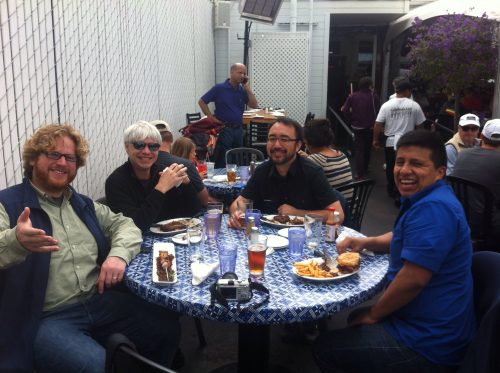
    Casey, Oren, Will, and Jesus

    Sadly, we got out over our skis and short term financial incentives eroded the longer term business and the Gigaom experiment ultimately came to an end.

    Looking back, over the years, Om’s posts inspired me to write as well,

    I also saved a few quotes over the years as keepsakes,

    What will stop growing is the conversation about it. The breathless coverage of each new model announcement has a different texture than it did in 2022. The releases come faster, the benchmarks climb, but the surprise is attenuating. 2026 on AI hype cycle and what comes next

    In the not-too-distant future, these workflows leave the confines of an app wrapper and become executables where our natural language will act as a scripting language for the machines to create highly personalized services (or apps) and is offered to us as an experience. 2023 on how chat+voice UI+AI personalization which spawn a new age of computing

    The algorithm allows us to maintain more relationships with much less effort at almost no cost. 2016 on the tranformative power of tech

    Startups are the atomic unit of innovation. 2013 at the Crunchies

    If someone can become the Dolby of the web — remove the noise and give us clear sound — then they are going to make a lot of money.2008 on intelligent filters

    I’ll miss having Om as a reference point, waypoints for our collective future. His works would make a great training set for an AI chatbot but, without his sharp wit, appreciation of the analog, and humanity, it would ultimately be lacking.

    R.I.P.

  • I no longer have a role at Gigaom

    Last week certainly was interesting. On Wednesday morning I was abruptly informed that, along with my VP and two engineers, that our services were no longer needed at Gigaom.

    While unravelling my personal social profiles from the various company pages I had set up for Gigaom, it was Facebook’s robotic bit of micro-copy that really brought it home, “You no longer have a role on Gigaom.” Harsh.

    Japanese has this wonderful phrase, iro iro (いろいろ) which means roughly, “lots of things that I’d rather not go into now but feel free to ask me over drinks” and I’ll leave it at that. Nothing dramatic, just a sudden shift of course that made it clear that it was time to move on. I’ll leave it at that.

    I had a great run at Gigaom and I thank Daniel Raffel for the introduction and Paul Walborsky and Om Malik for their support while working there.  I joined when Gigaom was a collection of blogs with a nascent premium subscription business. Gigaom Research is now a major driver of revenue. As a Product Manager and later Director of Product the team tackled a number of projects of which I’m proud.

    • acquired and integrated paidcontent.org
    • redesigned Gigaom, Gigaom Research, and Gigaom Events as responsive
    • replaced the e-commerce back end
    • redesigned the gigaom.com post page and front page (twice)
    • rolled out a major re-brand across all properties
    • re-configured the Gigaom Research subscriber acquisition funnel
    • launched Analyst Connect, a simple way to connect to Gigaom Research analysts
    • launched Data Connect, a charts-centric view into Gigaom Research
    • launched Gigaom Search, a faceted search engine across the 15 year archive
    • launched Gigaom Alerts, a free tag-based notification service

    In addition to the projects above, I am also pleased with my contribution to setting up how the Product Team is run. As the company grew through the critical 50 employee mark where unstructured cross-department communications begin to break down, the daily stand-up, weekly Dev Diary, Friday Show-and-Tell presentation, and quarterly Product Roadmaps all played an important role in keeping things on track. The methodology was simple and I think that’s what led to its success.

    The engineers greased communication even further by migrating off our group Skype chat into HipChat rooms with integrations into GitHub and a script that could spawn a Google Hangouts on demand. We even had a Sonos-driven alarm that would play Bob Marley’s Get Up, Stand Up on queue to remind us all when it was time for our daily check-in. Sometimes it’s the little things.

    It’s always bittersweet to leave a place of employment, like the breakup of a band. There’s a lot of talent there and I’ll miss working with them. I will also personally miss the vortex of activity that comes with working at an organization that takes in the news of the day and validates, organizes, and distributes it back to its readers.

    Gigaom is a premium content business with increasingly valuable content and services made available to customers at its higher tier customers. I often tell people that the most valuable content is in the internal Gigaom newsfeeds, the price of which is full time employment. As of now, I am unsubscribed.

  • Short Term vs. Long Term Metrics

    Silicon Valley has replaced Wall Street as the preferred destination of fresh graduates. The pursuit of short term wealth on Wall Street in the 80s is replaced with other short term data points which, when pursued with a singular focus, can skew one’s moral compass.

    “If Google’s primary weapons are relevancy and speed, then Uber’s are cost and speed.” What I didn’t say: They are fairly similar in their inability to deal with consumers at a human level. That is the challenge of our times.

    – Om Malik, Technology and the Moral Dimension

    In this data-driven world we must keep in mind what is being measured and remember that organizations instinctively optimize for those metrics. During this Thanksgiving break, think of alternative, long term metrics such as Lifetime Customer Value, Renewal Rates, and Net Promoter Score as important KPIs for your business’ success in the long term.

  • On Ephemera

    On Ephemera

    Om Malik recently wrote about receipts as a design experience. He was writing about Square, the payments company, that is re-thinking the way people exchange currency. Square’s focus on design, particularly the receipt, is inspirational. They view commerce as a design challenge, not only the method by which a transaction happens but also the artifacts left behind from the transaction, the receipt.

    In his post, Om quotes Jack Dorsey, the CEO of Square, on their approach,

    One of the things that really excited us in the early days was the receipt, putting a very simple map on the receipt where the transaction took place, putting a business’s Twitter account, putting a big picture of what they just sold, a beautiful photograph of a cappuccino, just to make it feel like something that was a lot more tangible, and also a lot more focused around communication. In the early days we saw the receipt as this amazing, kind of often played down and often forgotten about communication channel. It kind of evolved our thinking, this is not about payments, this is about commerce, and the definition of commerce is the activity between buyers and sellers.

    Back in the 90’s, I took a trip through pre-Euro Europe. One of the things that fascinated me were the receipts which I saw as vestiges of the experiences I had on my trip. The receipts were ephemera.

    I would collect the best ones and mail them back to my parents who kept them for my return. Om’s post reminded me of this collection so, over the weekend, I pulled out the old wooden wine crate that holds them and scanned a few to share.

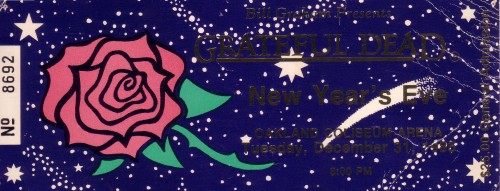
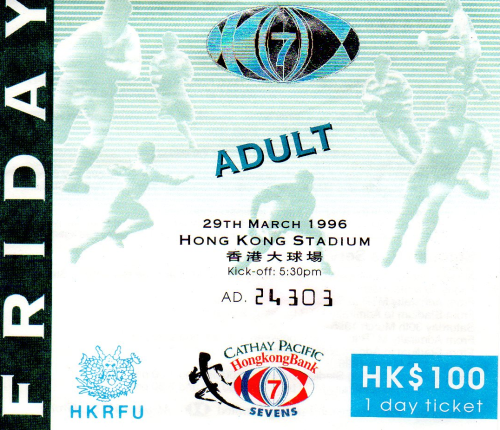
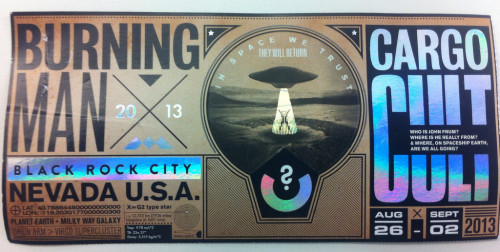
    As I pawed through the box of receipts, I ran across another box, a cigar box this time, filled with all the ticket stubs of every concert and sports event I’ve been to (as you can tell, I’m a bit of a hoarder of this stuff).

    Each of these slips of paper bring back of flood of memories. While the ticket represents the details of a commercial transaction where money changed hands in return for an experience, important for record-keeping, they each expressed these details in their own unique way.

    Each moment in time has been crystallized in time, a keepsake to be shared, a gift and celebration of a shared experience. I am thankful that Square is thinking of this in this age of e-tickets and am glad they encourage attention to this important detail.

  • Blogs as Personal Aggregators

    Om blogged some thoughts after 12 years of blogging and came to the conclusion that one’s blog is one’s digital home. It is not only where you start new conversations, it should also be where you aggregate and archive the fruits of conversations you participate in out on various social web platforms.

    And while I embrace every new social platform with gusto, I find it frustrating that my point of view is spliced across various networks. I think the blog is the one that ties it all together — a central location where you fit together all the Lego pieces.

    – Om Malik on the role of blogs, In 12 years of blogging, the more things change, the more they stay the same

    Most blog platforms support widgets which can bring in streams of your updates from various services. It started with flickr, delicious, and last.fm but soon all the other social services joined in. Twitter widgets are the latest incarnation of the sidebar social widget which you can install today.

    Before Facebook arrived to suck out all the oxygen from social aggregator services there were a number of services, most famously FriendFeed, which would pull in all your updates from across the web on to one page. MyBlogLog was another.

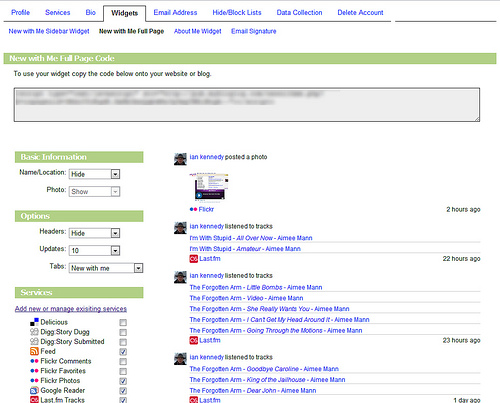
    While I was working with the MBL team we were hard at work pushing forward the aggregation feature but with one unique twist. While you could go to your MBL page and see anyone’s profile along with their newsfeed (we called it “New with you”), we also gave you the option to grab the javascript that let you run this widget on your site as a “full page widget”

    MyBlogLog full screen widget configuration page

    I have yet to see a suitable replacement for this code. I run a plugin called Social Stream on my site but it’s doesn’t quite do the trick. Efforts such as the Locker Project and it’s hosted cousin Singly seem to have lost momentum.

    The web is a collection of digital artifacts. Text, photos, sound files are by-products that are digitized and indexed. We use search engines to locate these artifacts but no one has built a way to tie all these artifacts back to their owner. Until you tie the collective digital artifacts of a person together in a unified way and follow it over time, you don’t really know that person.

    I’ve written about this before but the pendulum swings back and forth between the convenience of social networks on the one hand and the independence of owning your own domain/blog on the other.

    Which Network do I Use?

    • Instagram Direct vs. Snapchat
    • Facebook vs. Twitter
    • AIM or Yahoo Messenger or MSN Messenger

    Once the commoditization of the latest communication protocol has proliferated, the pressure to consolidate identities pushes the updates to a neutral platform which is always the blog.

    This is why I always maintain my own domain and host my own archives. Everwas.com is a digital representation of my life, my virtual self. I have posts about my marriage, my children, my career, observations on places I’ve lived – all other matter of stuff. It’s too important to put under another brand’s name, it’s too precious to be held ransom by anyone’s monetization strategy.

    Go ahead, play around with the latest social shiny thing but be sure to save the best for your blog. You’ll be thankful you did.

    Further reading:

    #indieweb

  • Jack Dorsey the Zen Master

    I had a great day yesterday at the GigaOM Roadmap conference. The agenda had a number of great speakers including Brian Cheskey of AirBnB and Tony Fadell of Nest, the red hot company that is re-defining what a thermostat should look like.

    The thesis the conference explored is one that Om Malik (now my boss) has put forth a number of times. If you think of the steam engine as the PC of our age and the portable version of this technology, the locomotive, as the mobile phone, what does increasing bandwidth and the enabled mobility mean for society and businesses going forward?

    Each speaker chipped away at this thesis with their own slant but Jack Dorsey, as he described how Twitter has enabled empathy on a global scale and how Square has removed the barriers of a Point-of-Sale system and the, “massive counter” that sits between a customer and the vendor, more than anyone else opened my eyes to the incredible transformation going on around us.

    Yet, in light of all these incredible transformations, Dorsey challenged us to maintain a balance between the “sleek, modern perfection and the rustic, zen-like chaos” and to build products that maintain this “balance in-between”. He referenced the Japanese design aesthetic of wabi-sabi (if you want to read a great book about the topic, I highly recommend Wabi-Sabi: for Artists, Designers, Poets & Philosophers).

    In the end, Dorsey advised all product managers to guide themselves with these two principles.

    1. Simplification, work real hard to get technology down to its essence (of an interaction). Take away the “conceptual debris”
    2. Make things fun, remember to be human, relate, “have some whimsy” in your application and make it human.

    The whole interview is worth a listen.

    [There was a video embed below but it’s been lost to the sands of time. You can find a short transcript of the interview on this Forbes article.]

  • Steve Jobs, Master of Delivery

    Watching Steve Jobs introduce new technology is a wonder to behold. He doesn’t bash you over the head with hyperbole nor run circles around you with facts and figures. Instead he walks on stage in jeans and sneakers and pulls something out of his pocket like a wandering hiker might pull out a beautiful stone to share with friends around a campfire. He’s a seeker that’s come back from a journey with something wonderful to show us, he excites us to think of what’s possible and how we might join him on his journey of discovery.

    Look at how he introduces the first iPod. We may laugh when we see the goofy fonts and hear about the 5 GB capacity but to hear how he casts his spell over the crowd gathered in what looks like a local high school auditorium is no different to how Steve has always delivered his latest innovation.

    Flash forward to 2005 and we see him introduce the iPod Nano with what has to be my favorite Steve Jobs unveil, “Ever wonder what this pocket is for?”

    Steve Jobs had a style that was all his own and I’ll miss him. The internet is awash with a collective group hug at the news of his resignation as we all reflect on the departure of a man who helped define why we enjoy tech. Here’s a sample of some of the best recollections (and one future prediction) I’ve had the chance to read:

    And then there are Steve and Apple: a leader and a company not afraid to take the long view, patiently building the way to the future envisioned for the company. Not afraid to invent the future and to be wrong. And almost always willing to do one small thing — cannibalize itself. Under Steve, Apple was happy to see the iPhone kill the iPod and iPad kill the MacBook. He understands that you don’t walk into the future by looking back. – Om Malik, Steve Jobs and the sound of silence

    The company is a fractal design. Simplicity, elegance, beauty, cleverness, humility. Directness. Truth. Zoom out enough and you can see that the same things that define Apple’s products apply to Apple as a whole. The company itself is Apple-like. The same thought, care, and painstaking attention to detail that Steve Jobs brought to questions like “How should a computer work?”, “How should a phone work?”, “How should we buy music and apps in the digital age?” he also brought to the most important question: “How should a company that creates such things function?” Jobs’s greatest creation isn’t any Apple product. It is Apple itself. – John Gruber, Resigned

    So, who is this man? He’s the anchor baby of an activist Arab muslim who came to the U.S. on a student visa and had a child out of wedlock. He’s a non-Christian, arugula-eating, drug-using follower of unabashedly old-fashioned liberal teachings from the hippies and folk music stars of the 60s. And he believes in science, in things that science can demonstrate like climate change and Pi having a value more specific than “3”, and in extending responsible benefits to his employees while encouraging his company to lead by being environmentally responsible. – Anil Dash, What they’re “protecting” us from

    It was at the iMac launch where he was showing off the modern line that is on my desk today “look at the metal on the back, isn’t it beautiful?” he told me. It was. But all the other CEOs didn’t care about the back of their products. They cared, instead, about shaving cost from them instead. – Robert Scoble, A front row seat to Steve Jobs’ carreer

    We know there is such a plan — there has to be, Apple’s moves have been too deliberate, if inscrutable, to be some executive random walk.  But nobody near the top has ever tried to explain where the company is going, preferring to be mysterious instead.  Bill Gates had Nathan Myhrvold write his book for him, but Steve is classier than Bill. I believe Walter Isaacson’s book will also function as Steve’s technology manifesto, part of his legacy. Once we have the grand plan, then it may make more sense just who should lead that plan’s execution during what will clearly be Apple’s best quarter in its 34 year history.  Steve Jobs is setting-up this (and us) for another grand reveal… just one more thing. – Bob Cringely, Cupertino Two-Step

    UPDATE:

    I had to include this photo I took at the iPhone launch event. Note the look of wonder and open-mouthed awe.

  • Widgets Live

    Put together in just a couple of weeks by Niall Kennedy and Om Malik, the Widgets Live conference was a timely event that capitalized on the catchphrase of the day and the fact that a lot of folks are in town for the Web 2.0 conference. The sold out crowd of 200 leaned towards the developer crowd which many of the sponsors said were just the type of people they were looking to reach.

    Arlo Rose of Yahoo! Widgets traced his inspiration for the desktop widgets ecosystem he created to his early work on a product called Kaleidoscope which allowed people to “skin” (there wasn’t a word for it back then) their Mac OS environment. He reminded me that I didn’t really become aware of the concept of plug-ins to extend functionality of a product until the advent of the Mac OS Control Strip which, if you think of it, are the first instance of a widget as a small, graphical control for installed software.

    Fox Interactive Media announced the launch of the SpringWidgets community (which I’m told will become a marketplace in a few weeks) and a partnership with Feedburner which will make it easy to turn your feeds into self-contained mini-readers that you can place on a web page as well as drag onto your Windows desktop. Very cool.

    Photobucket’s Peter Pham shared some of their metrics on their growth (28M registered users, 80k new registrations/day) and how important widget developers have been to the widespred adoption of their photo hosting services. Most telling was a blip in their uptake which coincided with their renaming of Slideshow to Widget. We have to remember that the rest of the world has no idea what a “widget” is and that sometimes the more descriptive (but less trendy) names are better. Once they renamed it back to Slideshow, their growth recovered it’s old momentum.

    The afternoon sessions featured panel discussions which explored each of the major instances of widgets. Desktop Widgets, Ajax Homepages (which are made up of widgets), Blog sidebar widgets, and widget aggregator services (such as Widgetbox).

    Monetization was only touched upon but it was telling to hear that both Microsoft and Google are not really concerned with direct monetization and see the distribution of bits and pieces of their content as a way of spreading their reach and driving traffic back to their site. Affiliate models as well as a marketplace for premium widgets were discussed but it’s still too early to tell. Kevin Burton mistook the Google AdSense Gadget for a desktop widget that runs Ad Sense contextual ads on your desktop (it’s not) to which the room erupted in laughter wondering why anyone would want to give up desktop space to such a thing. In the Photobucket presentation, they mentioned that you need to be careful of running advertising on your web-based widgets because users that install them on hosted blogs may end up violating Terms of Service agreements for some services which do not allow for third party monetization.

    A recurring theme for many was the prospect of widgets interacting with each other. The example I think of is taken from the old intranet portal days when you could drag a stock quote from one module onto a news module and run a news search using that stock’s ticker symbol. The Microsoft Sidebar team is thinking about this the most as they seem to have the deepest penetration into the stack to make this a reality but doing this on with third party information sources brings up all sorts of security problems which need to be resolved.

    Sessions on Mobile and Hardware widgets rounded out the afternoon with a look at the devices that can serve as important endpoints for widget consumption. Cellphones are obvious so long as the syncronization and context problems are solved. I only want to look at a subset of my information on the cellphone and want to do it in a way that’s not only optimized for the mobile experience but also takes advantage of the features of my handset. The Chumby “squeezable interface” is my new favorite design idea.

    Finally came a round of lightining sessions where several folks got up to announce things they were working on. I put in a plug for YPN’s new enhance page which we will continue to update as a publisher-focused catalog of the latest and greatest that Yahoo has to offer and loaned my laptop out to the Zazzle guy whos battery was dead. I found KlipFolio’s demonstration of their integration of desktop and mobile a compelling way to drag things into your cellphone a compelling way to move data around.

    All told, a worthwhile way to spend the day if just to underscore the point that we’ve only just begun. The endpoints are beginning to define themselves (desktop, homepage, blog sidebar, cellphone) but, as someone mentioned, the most popular widgets are the same calendars, weather, and stock quotes. The real killler app is some totally rad social media app, “sitting on someone’s cellphone in South Korea that no one has discovered yet.” The platform is ready and waiting to pull such an app in and redefine the concept of a widget and how we use them.

  • Blog Business Summit – Day Two

    One thing I learned from looking at my Day One post on the various aggregation engines and trackback excerpts is to never lead with an image again. You get his horrible “<img src . . . ” as your lead in which doesn’t exactly draw readers to the rest of your post.

    Day Two was demo day with Matt and Om walking us through WordPress 1.6 and WordPress.com over breakfast coffee, Dean Hachamovitch, Sean Lyndersay, and Robert Scoble running through Internet Explorer 7 in the first session, and our very own Anil Dash speaking faster than I’ve ever seen him during his run through of Movable Type 3.2.

    The gulf between pro-bloggers and the corporate types that are still trying to figure this all out became very obvious to me today. Dean summed it up when he said that there, “are some good tail lights to follow” but no one has it all figured out yet. Everyone said in their presentation somewhere, you just need to start blogging and then it will come to you what you need to do. I don’t think this really sat well with the visiting corporates who need to summarize this all into a PowerPoint SWOT Analysis of having a corporate blog with steps on “how to” listed up nicely, one, two, three.

    Some Notes:

    Microsoft on RSS:
    The power of RSS subscription model is that it’s like a TiVo for the web, it changes people’s lives and puts the web on their own terms.

    For businesses, it’s less about the technology used to drive the site but more about what you can do with this technology. Businesses now have the ability to reach out directly to their customers and present them the “unvarnished truth.”

    Internet Explorer will make subscribing to RSS feeds as easy as adding favorite bookmarks. If used in conjunction with Windows (XP service pack 2 and above) all RSS feeds and their content will be stored in a central location that can be used by other Windows applications. Additional extentions which Microsoft is releasing under Creative Commons license will allow IE 7 to sort and filter feeds based on feed-specific parameters such as price, date, or neighborhood for a real estate feed that was used in the example.

    A point was made that Microsoft originally embraced RSS and handed out jackets at Gnomdex with RSS written on them and that this message is now confused with their re-naming it a “feed.” Scoble countered that there’s confusion in the industry – Safari calls it RSS and Atom RSS, Computerworld calls it XML Feed. Dean sums it up by saying, “I’m unaware of any decision in the tech industry that has be unanimous – Feeds will be Microsoft’s label. In their view, they are both “Feeds” and talking about “RSS Feeds” is akin to talking about “TCP/IP” instead of “networking” or “HTML pages” instead of “Web Pages.” In order to really widen the adoption, you need to ditch the acronyms.

    At one point, Dean talked about using RSS to update Calendar events. That got me thinking – RSS as a version of distributed Exchange? Hmmm. Interesting.

    Will RSS replace email? Scoble counters, “did TV replace radio? did radio replace newspapers?” Dean says that until there is a security in which you can create a secure feed for a specific, authenticated individual, it will be impossible to replace point-to-point communication for which email is best. I would add that there would need to be a financial incentive to go this route – email still works really well for point-to-point messages, it’s just the anonymous and group email stuff that needs to be taken out.

    Lessons Learned: GM & Intuit

    Intuit has a “follow me home” interaction with its customers in which they are used to following users home from the store and seeing how they use their products. This level of interest in user feedback is in the company’s DNA so blogging is a natural extention of this. There is no formal approval policy but, Paul Rosenfeld just last week met with the Founder and the CEO to ratify a corporate blogging policy which they kept to one page. Training on blogging is encouraged but not required.

    Paul’s word to future corporate bloggers is to resist the requirement by “blogging police” to post at least once every three days. It can wear you out and cause you to lose focus. Keep to your audience and only post what they want to read. Respond to comments and questions honestly and faithfully.

    A bit of legal advice from the audience. Rather than put your blogging policy on the page as with Intuit Quickbooks blog, best to link to the legal disclaimer with a more prominent link higher up on the page.

    A day in the life of GM’s Fastlane team. Posts are sent from Bob Lutz’s Blackberry for approval by two communications handlers who review and, if necessary double-check facts before posting. The approval process has been streamlined and now only takes a few hours. There is someone on the team that spends about half her day monitoring comments for approval. There is a weekly editorial meeting to understand what types of posts they can be expecting from executives posting.

    Other notes:

    “Dress for Success” says Darren Barefoot Your site design reflects as much about your business as the way you dress says Darren who is one of the few in conference wearing a necktie and suit.

    Rebecca Blood – has a good page linking to corporate blogging policies. “When blogging for your business, don’t blog about your work or office, blog about your profession.”

    Funniest Line – “At one point there were 9 rules but since I never wrote them down, I forget what they are.” – Paul Scrivens of 9rules.com