Tag: sxsw

  • SXSW Hacks

    SXSW Hacks

    The SXSW conference in Austin, Texas is overwhelming. The sheer number of keynotes, sessions, branding pop-ups (aka “activations”), movie premiers, concerts and satellite activities make it impossible to catch it all. With over 1,500 events just on the schedule, it took me a couple of hours just to browse through what was available before I could even try to plan how to spend the limited time I had each day. Many attendees spoke of an intense FOMO as there was no way to hit everything there was to see in any comprehensive way.

    That said, here are a few tips I picked up over the years (2024 was my 4th South By) that I hope help you get the most out of this annual smorgasbord of ideas and culture.

    1. Watch your inbox and browse the schedule and program as soon as it’s available. I made the mistake of waiting until the flight down to Austin to begin to browse the program and spent most of the flight just trying to narrow things down to a subset of things that I wanted to see. Use the “favorite” star to build your schedule because you’re going to want to have that subset readily available when plans shift (as they always do).
    2. Download the mobile app and add it to your first screen. You’re going to be using it A LOT.
    3. Each day you get four Express Passes that can be used to shortcut your way to the front of the line at busy sessions or talks. These passes can be applied to reserve your space at events the following day at 9am the day before. For example, Monday’s events open up at 9am Sunday morning. The most popular events go almost immediately, Taylor Swift ticketmaster style, so you’ll want to be ready to swoop in on events that you think will go fast to claim a spot quickly. Sessions are 10-11, 11:30-12:30, 2-3 and 4-5 so plan which event you want to go to in each of these slots ahead of time. Make use of the “favorites” mentioned earlier so you can quickly browse your 2nd and 3rd choices for a slot should your first choice fill up.
    4. Be sure to drop by the temporary bookstore set up in the Austin Convention Center where you can pick up hard to find books related to sessions at the conference, some even autographed by the author.
    5. Sold out RSVPs sometimes open up later. If there is a workshop you want to go to that requires an RSVP and is full, check back later in the day as these sometimes open up as people cancel.
    6. There is way more than just what is on the schedule. Be sure to ask about the Unofficial SXSW Master Slide Event List and other event listings such as Blprnt, a local Austin events app, and Eventbrite for last minute events that are not on the official schedule.
    7. Do NOT limit yourself to just the sessions. Be sure to check out a film, some stand-up comedy, and a concert. There is stuff happening all over Austin and SXSW is your chance to get outside your comfort zone and discover something new. Almost everything is with walking distance or a short scooter ride so the time invested to check something out is minimal.
    8. If you want to get away from the South By scene, walk all the way up Congress and tucked behind the Texas state capitol you’ll find Texas Chili Parlor where you can pull up a seat at the bar and have a bowl of venison chili and a bottle of Shiner to set you straight.
    9. My favorite place to grab a breakfast migas taco is at Veracruz in The Line hotel. While I’m at it, The Line is also a chill hotel and has a nice cafe as well.
    10. If you haven’t done so, be sure to see the bats emerge from under the Congress Ave. Bridge at sunset.
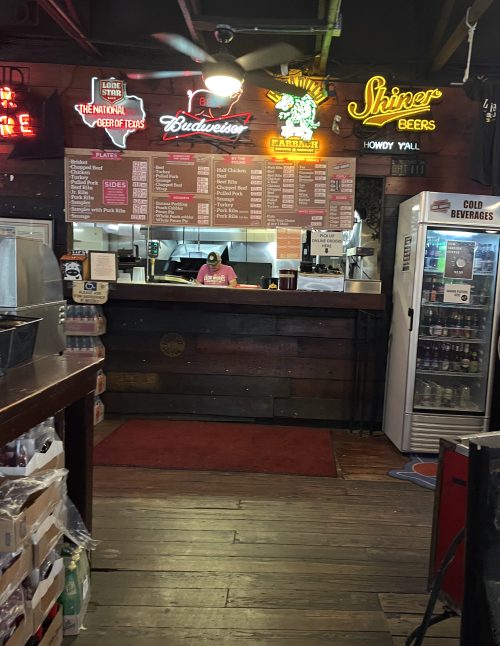
    11. If you want to eat brisket, skip breakfast and have an early lunch after the 10-11 session. I went two days without BBQ because the lines to Iron Works or Coopers in Downtown Austin were out the door and down the street. Go around 11:15 and you’ll have the place to yourself.
    Iron Works is empty at 11:30 am

  • 2020 was an a/b test

    2020 was an a/b test

    One of the more chilling tracks from this year’s SXSW were the sessions about misinformation, specifically political misinformation that derailed our elections. During the first day, I attended a session titled Fact v. Fiction: Fighting Election Disinformation a panel featuring, among others, Chris Krebs, noted cybersecurity expert, and Jena Griswold, former Secretary of State for Colorado.

    Krebs shared his fear that our media ecosystem, while open to any and all to participate, is easily exploited by well-funded state actors. While the internet and open-source publishing platforms such as WordPress have leveled the playing field, opening access to anyone, it has also put the burden of fact-checking and verifying sources on to the reading public.

    too many people are making “insane amounts of money” from disinformation campaigns

    Chris Krebs @ SXSW 2022

    On Facebook and Twitter all posts tend to look the same. Reduced to a headline, thumbnail image, and snippet, a sponsored post or advertorial written by a paid shill looks no different from a site with more stringent journalistic standards. Production values are no longer an arbiter of quality. Super-charged distribution is built into the business model of these platforms so, with a little bit of budget, a false narrative can be boosted and drown out competing narratives.

    The infiltration of “fake news” sites in our media ecosystem is well-documented. What used to be a fenced-off network of identifiable Press Releases has been replaced by networks of “pay-to-play” sites that where lightly re-writing paid messages are turned into into thinly-veiled news stories interlinked to increase their SEO designed to flood the zone.

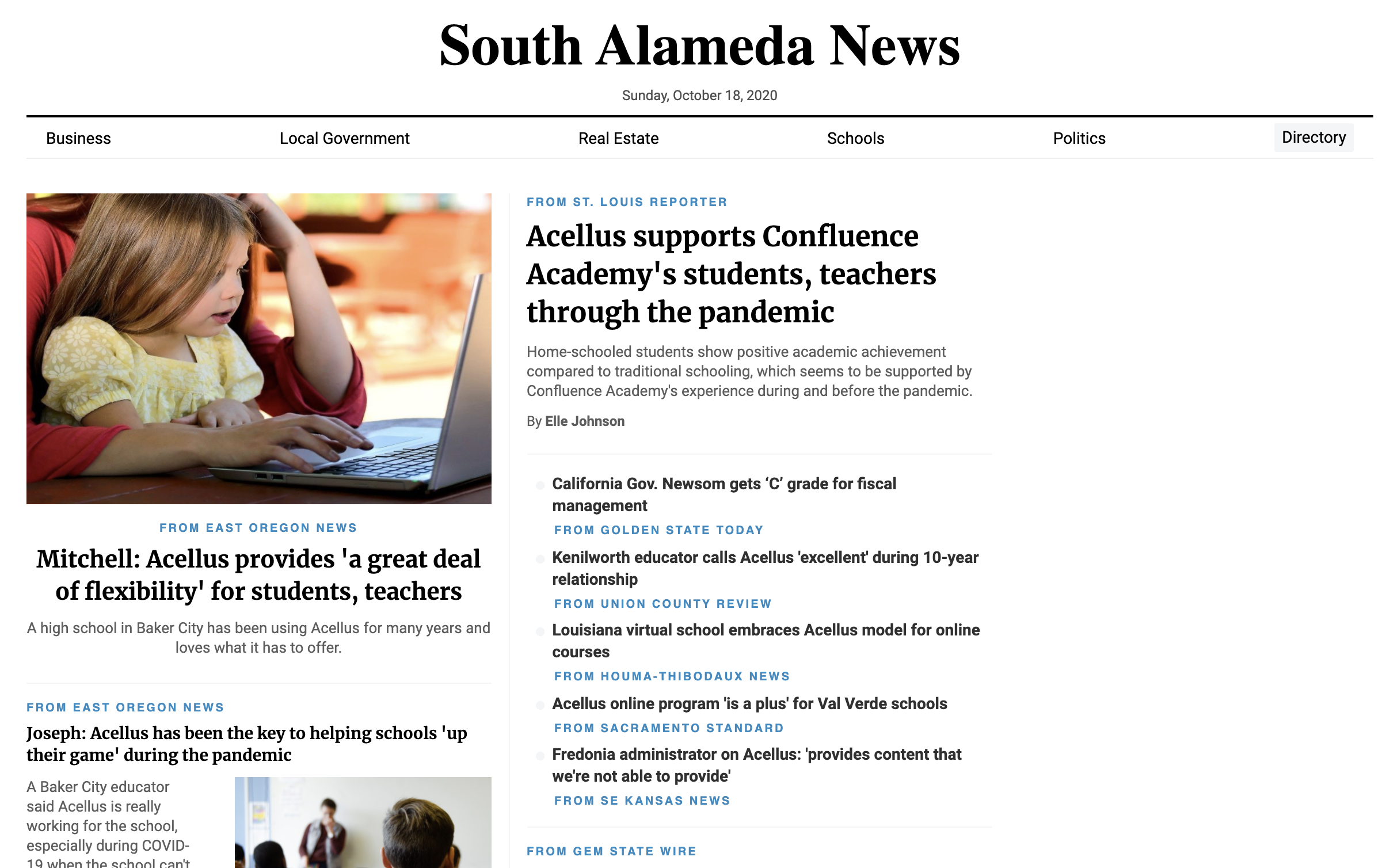
    To illustrate my point in an aside, I uncovered one coordinated campaign designed to promote an online learning program to the Alameda School District. I used to live in Alameda and am familiar with its geography. Imagine my surprise when I saw the identical story across three publications that I had never heard of before. East Alameda is not even a neighborhood – everyone who has lived in Alameda knows it’s called the East End. That was the tell.

    Clearly what happened is that the vendor of the online learning system was trying to swing public opinion to win a contract. Thankfully, they were thwarted but this shows you how easy it is to plant a message.

    Even more chilling was Krebs’ statement that the 2020 Presidential Election was just a dry run or, as he says, an a/b test. Americans were sophisticated enough to suss out foreign disinformation but with movements such as Stop the Steal, QAnon, and the January 6th insurrection, we are still uncovering the depth and extent of deception. Domestic misinformation worked very well to power the Big Lie movement and we are sure to see more domestic misinformation in future elections.

    I look at the last election as an a/b test. A – foreign, B – domestic. We learned that A doesn’t really resonate, B was effective so we’ll see more of that.

    Chris Krebs at SXSW 2022

    Jena Griswold, Secretary of State in Colorado, shared a chilling episode that took place as she oversaw the counting of ballots in the last election. Griswold discovered one of her election workers turned off cameras monitoring the ballot machines and invited an unauthorized person linked to the QAnon movement into the room, sharing motherboard passwords giving privileged access to the ballot computers and opening the ports to the internet, exposing the votes to tampering.

    This person, Colorado county clerk Tina Peters, is now running against Griswold for Secretary of State despite having 10 indictments for election tampering filed against her. The Secretary of State is responsible for election integrity and most people do not bother to look into the background of individuals running for this position, in fact, many run unopposed. This firewall around free and fair elections could likely be undermined by a coordinated campaign to put “Big Lie” sympathizers into office that could throw the next presidential election.

    Terrified yet? Here’s what you need to do according to the panel.

    1. support non-partisan organizations that are working to get people to the polls
    2. get familiar with the people running to protect elections in your county
    3. talk to your “crazy uncle” or neighbor – try to get thru to them, empathize, sample what they are reading and look for common issues or facts upon which you can both agree

    Sleep well.

  • Is Meta just Second Life 2.0?

    Is Meta just Second Life 2.0?

    The video above circulated in 2005 when Second Life was the new hotness. As a pioneer in virtual worlds, they attracted buzz from futurists that saw the platform as the next generation of the internet. Companies flocked to the platform, eager to engage with their audience. Reuters opened a bureau and someone made a documentary. Looking back at it now, it looks so cheesy, “Meet thousands of people!”

    There are echos of this when we see the latest push to the new virtual platform by the company formerly known as Facebook, Meta. Second Life is still around, going strong with 600,000 monthly users, a third of them coming back each day. Through it all, Wagner James Au has been covering Second Life as spectator, participant, and critic.

    I’ve been waiting for someone to check in with Wagner James Au to see what he thinks about Meta, the latest run at virtual reality, and if there are any lessons to be learned from the 15+ years that he’s been there.

    Lessons From 19 Years in the Metaverse, a conversation between Wagner James Au and Charlie Warzel is well worth a read. In it, I found this tidbit which is wise counsel to all those out there thinking about how their company or brand can participate meaningfully in the Metaverse.

    But first, here’s a quote from the first time around:

    To play in Second Life, corporations must first come to a humbling realization: in the context of the fantastic, their brands as they exist in the real world are boring, banal, and unimaginative.

    James Wagner Au in 2007

    And now from the Warzell interview. Same as it ever was:

    Back then, people saw those brand failures and concluded that the metaverse isn’t real or ready for primetime. I fear that might happen again. But the problem is not the users. It’s these companies not meeting these metaverse communities halfway. They’re bumbling their way into the community instead of finding ways to fit inside the community and make use of the platform to bring the magic to life.

    James Wagner Au in 2022
  • Mr. Jimmy

    Mr. Jimmy

    One of the highlights of SXSW 2019 that I want to expand on a bit was seeing the premier of Mr. Jimmy, a documentary film about the Jimmy Page tribute artist, Akio Sakurai.

    The film is a loving appreciation of Japanese attention to detail and craft. In much the same way that Jiro Dreams of Sushi introduced the world to the lengthy apprenticeship and dedication of the world’s best sushi chefs, Mr. Jimmy dives into Sakurai’s singular 35-year devotion to replicating the lead guitarist of Led Zeppelin, Jimmy Page.

    Sakurai’s intimate knowledge of all phases of Led Zeppelin’s musicology allows him to recreate any song from any era exactly matching the phrasing, pace and tone. He can even play entire solos from specific concerts that he has collected in the bootleg CD shops of Tokyo’s Shinjuku 7-chome neighborhood.

    If you want to hear the famous 30-minute version of No Quarter played on June 21, 1977 in Los Angeles, Sakurai can play it for you, note-for-note. In order to capture the exact sound, Sakurai insists on using the same (now vintage) equipment that Jimmy Page used. The same guitars, amps, cables and even pick-ups. He plays the acoustic portions of Stairway to Heaven on the same guitar used by Mr. Page. The exact same one. He spares no expense in his pursuit.

    Before the screening of the film, the director (Peter Michael Dowd) told a story of when he first heard Sakurai play. As a Led Zeppelin fan himself, he understood the time it must have taken to get the sound just right. Sakurai told him it took him 30-years to learn that particular song to his satisfaction. Dowd could tell from the look in Sakurai’s eyes that this was not just a term of expression. It really did take Sakurai thirty years.

    There are wonderful snippets of dialog with the constellation of craftspeople who support Sakurai’s quest for perfection. They each have a gleam in their eyes as they know they are working for someone who notices every detail they put into their work. From Shinji Kishimoto makes Sakurai’s pickups to Rie Nakahara, the costume designer, who pours over concert footage with Sakurai in order to capture and recreate the stitching and creasing of the custom shirts worn by Jimmy Page.

    It’s this pursuit of the pure experience that has attracted a devoted fanbase in Japan that is equally obsessed with the church of Zeppelin. His fans in Japan study his every move as if they are experiencing the band for the first time. Most of them have never seen the original band so a Mr. Jimmy concert is their only experience of a live Led Zeppelin show. It all comes full circle when Jimmy Page attends one of Sakurai’s concerts while visiting Japan. After the show, Page compliments Sakurai and they exchange a moment when Page recognizes a telltale lick that reveals which era’s style he was playing. The master giving an approving nod to the apprentice.

    The film follows Sakurai as he leaves his family and steady job (at a kimono maker) in Japan for the United States to follow his dream. We see him struggle with his Western bandmates who are more realistic about playing the hits, selling tickets, and having fun. “No one wants to hear an 8-minute guitar solo, even if it is faithful to the time period.” they say to Sakurai. They are not used to getting post-show pages of feedback on their performances – criticisms about how they sang or placed their hands. Sakurai and Led Zeppagain eventually went their separate ways and Sakurai seems happy to leave the “jukebox band” behind.

    But true artists eventually find each other and we see Sakurai form another band, joining together with Jason Bonham, the son of the late-John Bonham (drummer for Led Zeppelin) for a world tour. It’s a dream come true.

    Please see this movie. It was a labor of love (the director sold his car to make a second trip to Japan) that investigates Japanese otaku culture through one person’s journey, a hero journey but with a twist. Sakurai can never truly become Jimmy Page but instead the audience has internalized a bit of Sakurai’s obsession. I have been listening to old Led Zeppelin bootlegs for the past week.

    After the movie, we were treated to a few songs played by Sakurai himself who was in the audiences. Here’s a clip I filmed of him playing The Rain Song which we were told was written on a dare by George Harrison who complained that Led Zeppelin never wrote any ballads!

    Jimmy Sakurai plays for the audience after the premiere of Mr. Jimmy

  • SXSW 2019 Highlights

    SXSW 2019 Highlights

    It’s been twelve years since I last was at SXSW – time flies – I wrote about it then so for continuity’s sake I might as well share some highlights from this year.

    What I learned

    Following the success of the New York Times’ The Daily podcast, the Grey Lady will dip its toe into broadcast TV with a weekly show called, you guessed it, The Weekly. Following the same formula, The Weekly will go deep on one story and, in 30 minutes, bring viewers the broader picture of how a news article comes together and convey things via video that cannot be expressed in print. The Weekly will air sometime in June on FX.

    I saw Senator Amy Klobuchar expertly deflect a pointed question about her comb/salad incident, brushing it off as, a mom thing and moving on to a broader point about expecting the best from herself and her staff.

    I saw the intersection of two writing cultures in the The New Yorker but Make it Internet panel. I learned that while you “post” something online, you “close” it in print. The young writers who post regularly online shared their experiencing getting edited for longer pieces in print where they still use words such as “teen-ager” and “web site” is written with two words.

    Lots of talk about Artificial Intelligence and how it will impact journalism and storytelling (film). Sony demonstrated software that can write music. Many media outlets admitted to deploying AI to write summaries of high school sports or financial earnings reports and some are using AI to look for anomalies in large datasets for primary investigation. Several funny stories shared of flat-footed AI recommendation systems, “You’re here for the parenting, stay for Iraq!” and how one-dimensional AI can be (intense interest in how to raise a baby does not evolve into how to raise a child).

    This reminds me of what Kathy Sierra said about apps in 2007 at my first SXSW,

    All apps have a Asperger’s Syndrome.  They cannot pick up on visual queues from their users such as when someone is angry, frustrated, or confused. If a user has these reactions to software, they quickly fall below the suck threshold.

    Kathy Sierra, SXSW Keynote, 2007

    We must always remember that any Artificial Intelligence was born in the mind of someone, somewhere and has the biases of that person or team of people baked right into it and remains static, not taking in the inexplicit contexts of its environment,

    What I experienced

    SXSW is much bigger than it was 12 years ago. While I was last in Austin for the annual Online News Association meeting which took over the JW Marriott, SXSW sprawled over not only the JW Marriott but also the Austin Convention Center and Fairmont Hotels with pavilion and bar takeovers all across town. I don’t think Rainy Street was a thing back in 2007. It is not only the Interactive festival but also gathering for music and new film releases which I was somehow oblivious of the last time. I thought I could plan ahead and pick and chose what I wanted to see but soon realized that would be an exercise in frustration and that it was better to just have a rough idea of a few things you wanted to seek out and then let the winds of chance take you from one thing to the next.

    Using Foursquare in Austin during SXSW unlocked a preview of their Hypertrending map

    I wandered into the Japan pavilion where the Japanese comedian, Yuriyan Retriever (ゆりやんレトリィバァ) narrated a guy who was creating a stop-motion video on his iPad in front of the most-patient audience I had ever seen. I’ve written about her before, she’s got a great bit on the Oscar’s acceptance speech.

    Framed “covefefe” tweet at The Daily Show’s Presidential Twitter Library
    Late-night on Congress Street

    SXSW with your son

    Tyler had the week off from college so I suggested he come down from Boston to Austin and take advantage of the hotel room and get to know the city and take in the festival. Unfortunately he came down with a nasty cold for the first two days but we did get a chance to walk (and scooter) around a bit on Monday and Tuesday. I loved just walking around and experiencing things through his eyes.

    SXSW Hacks

    While Twitter and Foursquare famously launched at SXSW – this year was the coming out party for electric scooters. The grab-and-go rentals were everywhere with competing pods from Uber/Jump, Lyft, Bird, Lime, and others. In my unofficial survey, the late-model Lyft scooters had the most “umph” to them.

    The Interactive badge got me into all the media sessions that I wanted to attend and they had this new SXXPress system that, like a Disneyland FastPass, let you jump the line and grab a guaranteed seat. Also discovered a hack to get into the more popular talks was to attend the talk in the time slot prior and squat in a seat and make small talk with your neighbors. This hack probably won’t work next year as many were catching on to this as the festival went on.

    Be sure to check out a film or band in the evenings. While the Interactive lanyard will not give you first dibs or get you into the big name premiers, it will get you in for free if space is available. I caught the premier of the excellent documentary, Mr. Jimmy and the Welsh band Novo Amor.

    I booked my hotel very late but was able to score a room at the Marriott Residence Inn at The Domain which has a Costco-sized Whole Foods which is a wonder to behold. The Domain is way out of town and costs $20+ in a Lyft but discovered a tram station 10-minute’s walk away that only costs $3 and takes you right into town, next to the Convention Center. Riding the tram I learned:

    • West Austin is where rich housewives gather for yoga sessions an Kombucha exchange parties,
    • People in Austin get discounted passes to SXSW, many also volunteer which gives them access to events when they’re not working,
    • The Domain is a soulless retail development and signaled to many locals the end of Austin

    Yeah the BBQ is awesome. Iron Works, Coopers and all the other places – there are tons of places to eat. If you’re looking for something else, Gus’s Chicken (it’s world famous ya know) is good for lunch and the Texas Chili Parlor is a must do when finishing out a night on the town.

  • SXSW Day Four, Tuesday

    After Bust 2.0: Ten Years Later, Where Will We Be?

    Most of the optimism on the panel came from the fact that “this time it’s different.” Bandwidth and hardware is cheaper, storage is cheaper, we know how to scale effectively, we can do more with less, we won’t get fooled again.

    Then Ted Rheingold of Dogster brought up the point that costs are rising again. While we may be saving on infrastructure accounts, traditional business costs for things such as rent, salaries, and consulting are creeping back up. This has a ripple effect on startups which need to put this into their business plan. If they need more funds to run the company, they need to raise more money in financing which requires a greater return and before you know it, you’re back in the bubble again. Almost on queue, today’s Wall Street Journal cover story (“Tech Companies in the Red Pursue IPO Gold“) talks about IPOs for non-profitable businesses.

    Dave Hornick on the consumer media business. “There are two markets to serve and any successful service needs to serve both.

    • People with more time than money.
    • People with more money than time.

    Napster failed because it only served the former and didn’t start making money until it served the later.

    Lane Becker views customer service as the next great untapped opportunity for web 2.0 optimization.

    All panalists view USA Today’s addition of digg-like voting and recommendations as turning point. Until then, there was no mainstream media company doing this and the model to emmulate was digg or slashdot. Now, with Gannett serving as a validation, others will follow.

    Will Wright Keynote

    The Ultimate Music Recommendation Smackdown

    Nice touch, the moderator had each of the representatives of each company introduce and describe their competitor’s company. Everyone was quite complimentary of each other until the Last.fm representative described Pandora as a bunch of people in an, “ivory tower.”

    Pandora vs. Last.fm – both use collaborative filtering but Pandora uses human “experts” to classify the music in their library while Last.fm is based on algorithms with very little human intervention.

    Pandora’s editors play a key role in “jump starting” the insertion of music into their “radio stations” that make up the collective library of genres of Pandora. Many of the songs they surface would have never made it into rotation on other systems unless they were pushed there by their categorization.

    Bruce Sterling Rant

    Transcript of Bruce Sterling’s rant

  • SXSW, Day Three Monday

    It poured last night but had the good fortune to tag along with with Dan Theurer out to the Austin City Limits studio to catch Voxtrot. It was so nice to be away from the mad rush of conference posers and chill out to a some great music with people that were there for the music and not just the scene.

    It took a little while to get a cab back but I actually went to bed at a reasonable hour and woke up fairly rested.

    Getting Unstuck: Moving from 1.0 to 2.0

    Always a pleasure to hear Chris Messina talk and he did not disappoint. This session covered strategies that get you out of a rut and onto the next level in product design. Chris’ advice to put it out in the open was spot on. Ideas that stay in the dark fester and die. The process of communicating your idea to others and bouncing it around for advice not only helps you formulate the idea and how best to explain it, it also gives you an opportunity to stress test it against reality and shore up its weaknesses. “Explore the blind spots, the negative spaces.” Once you make something a conversation piece, then you know it’s strong enough to stand on its own.

    Along these lines, another panelist (sorry, I was in the back of the room and couldn’t read their names) said that one shouldn’t underestimate the power of reducing your idea into an easy to remember “sound bite” that can be internalized by your team so they can help spread the word. This is very much like Guy Kawasaki’s advice to kick off projects with a mantra and write it on a t-shirt. If you can fit your team’s rallying cry on the back of a t-shirt, you’re well on your way.

    “Listen and build what their users need, not something that fits into your companies process.” A process  is about your company, not the people or its customers. Too many companies get wrapped up in process and loose focus on their ultimate goal which is shipping products to their clients. A simple timeline with deliverables will do. The process is no more complicated than “Explore, think, create, act.”

    The Future of the Online Magazine

    A lively session that featured editors from Salon.com, Media Bistro, The Onion, and College Humor. Moderated by Rufus Griscom of Nerve.com which has a great new site for, “urban parents”

    • Media Bistro – 27 total staff, 3 full time editors, 14 bloggers
    • Salon.com – 64 total staff, 28 in editorial
    • College Humor – 40 total staff, 9 in editorial
    • The Onion – 13 writers, 20 for their entertainment section, AV Club.
    • Nerve/Babble – 25 writers

    The Onion gets 80% of its revenue from advertising. Much of it’s traffic comes via direct links to it’s stories.

    75% of traffic to Salon.com comes directly, not via links.

    Media Bistro, much of their traffic heads straight for their job boards.

    Question in the audience from editor of smithmag.net, a participatory storytelling site, about the value of turning over the creation of content to your readers. Joan Walsh, editor-in-chief of Salon.com says that the editor is important because they can smooth out the volatility of the public’s interest. If you see a story about Africa on the front page, you know that Salon is taking a hit to their traffic but (and this is my example) much like green beans, they are part of a healthy and balanced media diet.

    Salon.com on how to moderate comments and discourage trolls. They have a “red star” system which editors award red stars to comments that they like to highlight. Readers can filter out and read only comments awarded a star so the community aspires to write comments that get awarded a star.

    Salon.com pleased that their story on Walter Reed (which they broke two months ago) is finally being covered.

    Interesting (and revealing) debate over the value of letting your writers have their own blogs. Rufus of Nerve encourages it because it allows them to explore topics that he may not necessarily carry on his site. A nice side benefit is that these writers often point back to their work on his site anyway which broadens the audience (and allows his readers to find out more about the author’s interests). Laurel Touby from Media Bistro didn’t get it. She didn’t want any of her author’s output going anywhere outside her site.

    I think I’d rather write for Rufus. Smile

    Dan Rather Keynote

    It was great to see such a seasoned veteran address a room full of bloggers and share his perspective of the future. The quote of the day was, “What American journalism needs is a spine transplant,” which a quick search shows is not such a new line after all.

    Most of his talk was about dangers of journalists becoming too chummy with their sources. The old saying is a journalist is only as good as his source. In the old days, a journalist would nurture a multitude of sources but perhaps there is now too much dependence on just a handful of sources which puts pressure on the journalist to bend their stories to curry favor and maintain access.

    “Investigative journalism” a redundant phrase to Dan Rather.

    On Corporatization of news. The news operations of the large media divisions are such a small part of the overall business of the parent companies (NBC owned by GE who also makes nuclear reactors) that the CEO is too focused on profits and stockholder value to care too deeply about news operations. There is not enough competition in the major markets which waters down coverage and alternative viewpoints. It’s all too formulaic. Here’s what the governer said > here’s what his critics said > here’s the governer’s response > next story.

    On the rules of the game. There were several layers of disclosure that were well understood in his day but are increasingly ignored today.

    1. On the record – attributable and can be used
    2. On background – the source cannot be directly identified, i.e. “a Senior White House official”
    3. On deep background – you cannot even point to the source’s organization
    4. Off the record – this conversation didn’t even happen, even if it means going to jail

    People respected reporters like Dan because they took him for his word. He mentioned that there are things that he was told in the past that he would never tell anyone, even today. I really go the sense from him that he meant it.

    Dan’s talk was liveblogged by Pat McCarthy on Conversation Rater.

    When Communities Attack

    Chris Tolles of Topix.net (soon to become Topix.com) gave a great talk about how best to moderate online communities based on his experience managing the comments on the Topix site.

    1. Anonominity enables certain bad behavior.
    2. If members identify themselves, opponent fights break out and often devolve into attacks on the other’s behavoir. Moderating these types of cat fights is much like the being the playground guard.
    3. There are people that manage multiple accounts so they can use their multiple logins to give the illusion of popular support. These schemes are easily discovered because they often use the same IP address.
    4. Sometimes mob fights follow each other from site to site.

    In each case, there are three possible responses:

    • Shut the site down – you can take down a blog but you can’t take down the blogosphere.
    • Abdicate – this is kind of the MySpace approach, “hey man, it’s not our problem.” If you set out this way, it’ll be near impossible to put the genie back in the bottle.
    • Moderate – encourage good behaviors and try and get the community to moderate itself.

    If you moderate, besides things such as Captcha registration, profanity and semantic filters, the recent activity log which shows per post, per user, and per IP address/domain activity is the most powerful tool you have to manage volume. Community flagging, voting, (dig/bury) are tools you can use to get the community involved.

    The Ni-chan paradox. Registration keeps out most good posters from your forums. Only the trolls have the time and energy to register. The Ni-chan forums in Japan had absolutely no registration but managed to keep its forums clean with a minimum of effort. The Ni-chan paradox is covered in detail on the topix blog and on the Shiichan BBS. More interesting perspectives from Clay Shirky in his talk, The Group is its own worst enemy.

    I would have loved to have caught Jay Allen’s talk on the Invisible Blogosphere and Justin Hall and Joi Ito on gaming but various conference calls and work things pulled me away. Joi especially is a mind-blower. In a chat we had about World of Warcraft on Saturday while waiting to checkout Dorkbot (he was wearing his guild’s logo on a t-shirt) he mentioned that he’d like to engineer it so that he could Twitter others from within the game so when he needed, say, a level 60 priest, he could put out the call to help.

  • SXSW, Day Two Sunday

    Part two in a continuing series. I was up late watching Ze Frank and his hilarious deconstruction of Airline Safety Seat Back Instructions (“So what does this mean? No interracial dating?“) and other general silliness. Compounded by the fact that 2am instantly became 3am I passed on the 10 am sessions and opted for a run by the river where I caught the Heart of Texas Regatta.

    Lonelygirl15 Case Study

    As they got into developing the concept, they realized that what they were doing was not unlike what Orsen Wells did with his War of the Worlds broadcast at the dawn of the radio age. The general public is not literate in internet video and how truth can be manipulated.

    Even after it was discovered that Lonelygirl15 was a fictional character, people still tune into the site which has become an, “internet soap opera” with a following that is comprised of 70-80% female, most in their 20’s.

    On the site, fans are encouraged to submit their own videos to add to the plotline. Fans take minor characters and expand them with their own backstory which the producers then roll into future episodes.

    How do they make money? Product placement and videos hosted on Revver. They are also investigating more integrated promotions such as inviting viewers to go to fedex.com and type in a tracking number to follow a package to delivery which will coincide with an event.

    Keynote Conversation: Limor Fried / Phil Torrone

    Photos and descriptions of various projects including:

    Bacon-cooking Alarm Clock

    Gummy Bear Chandelier

    A 225 HP Monowheel

    RFID-activated Flame-throwing trampoline

    The OpenMoko – an open source cellphone

    Plants that call you when you need to water them

    Building an Online Fan Base

    Lance Weiler walked us through the site for his movie, Head Trauma. A series of pages tell the story of the movie and at one point you are prompted to SMS a message to a number. Once you do, the site calls your cellphone and continues the narration of the site over your phone, augmenting the spooky music on the site. At one point, the voice on the phone asks you your “darkest secret” recording what you say into the receiver and then plays it back to you OVER YOUR COMPUTER SPEAKERS. It continues to loop what you said over and over again until, sufficiently chilled, you leave the site. The site monitors the clicks and knows when you leave the site so it then CALLS YOU BACK!

    At this point the entire room let out an astonished gasp of horror.

    Lance has a number of SEO tricks up his sleeve as well which he has documented for other filmmakers at his site, workbookproject.com.

    People-Powered Projects

    Jamglue.com – totally cool flash-based remixing console with social “favoriting” features thrown in to surface the best mixes.

    Despite the fact that some of the most creative material is coming out of community-based sites such as flickr and JPG Magazine, getting “published” by a big-name publisher is still a mark of validation.

  • SXSW, Day One Saturday

    It’s my first SXSW and I’ve kept off the laptop so that I can devote as much attention as possible to what’s going on in the sessions, conversations, and parties in between. I have been taking notes and for the benefit of readers (and just in case I misplace my notebook) I’ll dump them here in the next few posts.

    Online Publishers & Ad Networks

    Cody Simms (Yahoo!) points to very informative research report from Morgan Stanley. Direct Mail still a jaw-dropping 25% of the total advertising budget for the US.

    Larry Allen (Tacoda) – Advertisers consider anything with comments as “user generated content” and are wary about having their messages appearing alongside anything they cannot vet in advance.

    It bears watching how this view will impact advertising revenues alongside the recently launched USA Today redesign. Learned on the Trade Show floor that these comments are powered by the Pluck SiteLife product which has a broad agreement with the Gannett chain to power all their papers so I’m sure they are watching this closely too.

    Bridging the Online Cultural Divide

    People are using the web to either build a false persona or exaggerate an existing tendency. Like drunkards at a loud party, people take controversial things to get attention and traffic to their site. Add crude methods of monetization that are a derivative of your traffic and it only makes the problem worse.

    Arguments online are often two dimensional where as in the face-to-face world they are more nuanced. The analog to this is modern politics where democracy boils down the candidate race to a yes/no vote – there is no room for grey and that is what polarizes us, pushing out more thoughtful discussion.

    Under 18: Blogs, Wikis, and Online Social Networks for Youth

    danah boyd – everything is moving towards mobile but you need cluster effects to really get things going. There is no such thing as a concept of “net neutrality” in the mobile world and the US carriers are just standing in the way.

    The room erupted in spontaneous applause.

    Kathy Sierra Opening Remarks

    All apps have a Asperger’s Syndrome.  They cannot pick up on visual queues from their users such as when someone is angry, frustrated, or confused. If a user has these reactions to software, they quickly fall below the suck threshold.

    Successful apps quickly push someone beyond the suck threshold and up beyond the passion threshold to a zone where users realize that they enjoy using an app because it helps them do things that have an impact in the offline world.

    To prevent users from falling into the “canyon of pain” why not provide a WTF button. Allow users to tell you when they are lost and at wits end. Help and FAQs are for more reasoned times, it’s the happy tech support with the clipboard. A WTF situation is more dire, a time when you need to open with a “Don’t Panic” and speak to the user in a language they understand. Provide links to sections written in a conversational tone – user testing and feedback emails are a good source of the questions you need to answer.

    There are two levels upon which a user can enjoy a product. High and Low resolution. A wine critic enjoys the, “subtle hints of tannin” in a fine bordeaux. A low resolution user (she used an example of Robert Scoble) enjoys the one-bit choice between red and white wine.

    Web Hacks, Good or Evil

    Kent Brewster (Yahoo!) showed off a number of simple hacks with links to how it was done. Badger will take the JSON output of any Yahoo! Pipes feed and turn it into a simple linkroll which you can put on your page. In such a world where information becomes ubiquitous and readily mashable, the only thing of value is attention. It is less a world where finding the information is the problem but more a world where efficient presentation is the key.

    Pay Up! Should Publishers Choose the Porn Path?

    The affiliate model is where the real money is made in the porn industry. The selling of subscriptions to “networks” of affiliated sites is the most advanced of these models. Mainstream media is only just now starting to catch on.  The Wall Street Journal, Financial Times, Economist, MIT Technology Review are available as a “conglomerated membership” for a single price. (I would argue that services such as Factiva and Nexis have been offering this type of access for years).

    Another model is where a mother site (i.e. spookycash.com, NSFW) offers tools such as hosted galleries, pic of the day, and integrated RSS feeds so that affiliates can customize their own site and start feeding leads with a minimum of effort.

    John Halcyon Styn on value – in the pre-internet days, “porn was more valuable than gold.” Now that it is readily available, the value comes from features such as interactivity and privileged access.

    On design all panelists agreed that, for porn sites, the temptation for slick design should be suppressed.  Think of the audience. They want to find something “dirty” or “raw.” One panelist told the story of a non-profit that had their site refreshed and then saw their donations go down because their donors felt that if they had enough money for a smart looking website, they didn’t need their donations.

    Mapping: Where the F#*% Are We Now?

    Currently, mapping applications feed simple location data to your device. In the future, they will be able to layer additional metadata to provide a rich interaction. With GPS enabled, a mapping application can set up a two-way dialog with your mobile device.

    Imagine a world where, when walking from one neighborhood to the next, the mapping application polls a crime statistics database and, upon entering a high-crime neighborhood, a heat device makes the back of your neck hotter.