Month: February 2011

  • IBM Watson on Jeopardy

    In a brilliant piece of PR, IBM Research stormed back on the scene matching their artificial intelligence computer, Watson, against top contestants of the popular American game show, Jeopardy. On February 14, 15, and 16 Watson’s competes against two humans on live television.

    According a piece on Wired’s Epicenter blog, 25 IBM scientists spent four years building Watson. “Powered by 90 IBM Power 750 servers, Watson uses 15 terabytes of RAM, 2,880 processor cores and can operate at 80 teraflops, or 80 trillion operations per second”  The database of content upon which Watson draws its “knowledge” is from over 200 million pages from reference texts, movie scripts, entire encyclopedias, as well as, Wikipedia.

    How did Watson do?

    After the first day, Watson is tied with Ken Jennings for the lead at $5,000, beating out  Brad Rutter who has $2,000. For details on the game and some behind the scenes of what was going on, listen to the interview with Stephen Baker on Arik Hesseldahl’s post on All Things Digital.

    Footage from a practice round back in January below.

    More details at the IBM Watson mini-site and a documentary on Nova, Smartest Machine on Earth.

  • Push Button Social Networking

    HTC announced two phones with dedicated buttons for Facebook. The touchscreen Salsa and ChaCha (pictured below).

    Running Android Gingerbread 2.3.3, HTC modified the Sense UI to integrate the Facebook into the experience. According to the HTC press release,

    The Facebook button on HTC ChaCha and HTC Salsa is context-aware, gently pulsing with light whenever there is an opportunity to share content or updates through Facebook. With a single press of the button, you can update your status, upload a photo, share a Website, post what song you are listening to, ‘check in’ to a location and more. For example, you can take a photograph of friends on your phone and upload it instantly to Facebook by simply pressing the button. Or let your friends know what song you’re listening to by pressing the button while listening to music on the phone. The track is automatically identified and shared on Facebook.

    Dedicated hardware keys are nothing new (see Yahoo button on Japanese feature phone below) but HTC has taken advantage of the phone sensors and software to give this button multiple uses, as long as your preferred social network is Facebook.

    Shipping in Q2 2011 across Europe and Asia and launching exclusively with AT&T “later this year.”

  • Dual SIM is Better Than One

    Dual SIM is Better Than One

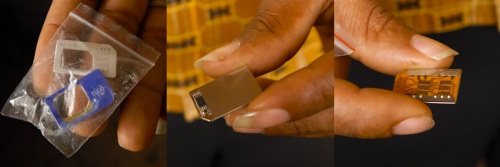
    Nokia Researcher Younghee Jung has an fascinating two-part post about how people are hacking their phones to support multiple phone numbers.

    We found a service offered by a local mobile phone dealer (Mobile Phone People, one of the Nokia authorized dealers) in Ghana. It costs 15 euros to have the two SIM cards combined into one. There is an even more advanced operation, which requires a special SIM card imported from Finland. This card can host up to 16 SIM cards into one, but costs 40 euroes. Either of these operations costs considerably high for the market, as it is more than purchasing a mobile phone. Therefore the clientele is mostly business people who do need to have two or more numbers but do not want to go through the inconvenience of switching SIM cards or carrying multiple phones.

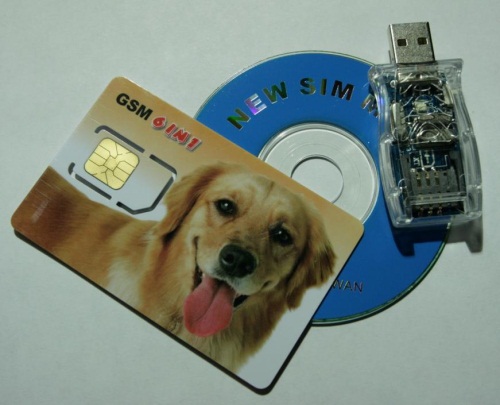
    I did a little research and it turns out the 16 in 1 SIM cards are no longer available but you can still pick up a 6 in 1 backup kit for $50 and clone your existing SIMs onto a single chip. Features include:

    • Fast number switching, normally takes less than 30 seconds (phone dependence)
    • Dual speed (9600/19200bps) USB SIM reader/writer, allow scanning old SIM card which can’t be scanned with high speed.
    • Allow to edit SIM card name for easy identification of which SIM is being used
    • Allow to show either SIM name, operator name or SIM + operator name on the phone. (phone dependence)
    • Super large phone book capacity with 250 contacts and 50 SMS
    • Supports English, Traditional and Simplified Chinese user interface
    • Manage SMS and contacts in PC with “SIM Editor”
    6 in 1 SIM chip

    *It should go without saying, that cloning your SIM most likely violates your agreement with your mobile provider.

  • David Segal on Search

    David Segal, the same New York Times journalist who filed the fascinating 5,500+ word piece in November about decormyeyes.com is back again. The Dirty Little Secrets of Search with a great piece looking into an unwitting, client (and now victim) of black hat SEO, JC Penney. His piece goes into quite a bit of detail (for a mainstream newspaper anyway) on the underground mechanics of the link sharing economy but what I like best is the following description.

    When you read the enormous list of sites with Penney links, the landscape of the Internet acquires a whole new topography. It starts to seem like a city with a few familiar, well-kept buildings, surrounded by millions of hovels kept upright for no purpose other than the ads that are painted on their walls.

    Exploiting those hovels for links is a Google no-no. The company’s guidelines warn against using tricks to improve search engine rankings, including what it refers to as “link schemes.” The penalty for getting caught is a pair of virtual concrete shoes: the company sinks in Google’s results.

    Sounds like a rough neighborhood.

  • Singularity and Sentience

    Singularity and Sentience

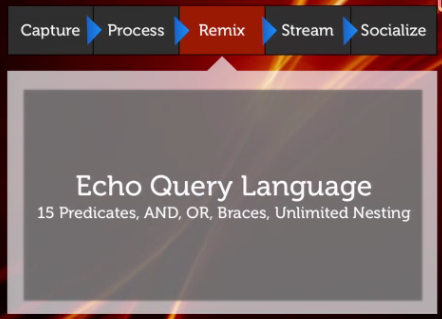
    I tuned into the launch of Echo’s social media mixer, the StreamServer, which they describe as a platform for the activity streams-based economy. As the saying goes, in a world where the amount of information is ever-expanding and time remains constant, attention is what is of value. As your phone and computer beeps and buzzes with the latest urgent notification, the ability to monitor, much less take action on a signal becomes impossible. All information is approaching real-time in the constant battle to be first.

    The volume of this “me first” wave of data increases causing the half-life of information to get shorter. Steve Rubel quoted a study that found that 92% of retweets happen in the first hour. If you can’t get your point across so that it resonates with someone else within that first hour, that thought is gone for good. Scrolled away, below the fold, decayed away.

    So we wire things up to make things faster and we put systems in place to help us make sense of all this information flowing around so we can pick up a signal that we can use in a meaningful way. Something that will hopefully make our life better than it was before we had to deal with all this information that gets pushed at us.

    Then we build filters. And what are filters but a search query that swims mid-stream. Not a respective search like what you would type into Google to search an archive but a prospective search, one that looks forward in time. And each of these queries we type are nuggets of intelligence. We fine-tune them to get exactly what we want and filter out what we don’t.

    Follow all my LinkedIn contacts (that have twitter accounts) that are in the Mobile Phone industry and have over 500 followers that are saying anything with a hashtag of #MWC and has more than 5 retweets.

    In plain English (kinda), that is what we want our filter to do and a smart system will look at how we respond to the results of that filter and try and automatically make it better. More like this, less like that, etc.

    So we teach the machine how to think. We tell it how we connect the dots and draw conclusions.

    So I dig around the aboutecho.com wiki and scroll down to the Philosophies section (I dunno, sounds intriguing) and click through to read this post on http://synapticweb.org/.

    Social profiles are becoming real-time streams. If the old profile was a neuron, the stream is a neural pathway or pattern. It is the connective tissue between applications and people that feeds information from one node to another. Profiles come and go, people express themselves using countless tools and technologies – the stream, however, is the consistent and persistent channel that matters. It is the new presentation metaphor that increases the level of information we can consume while reducing our sense of overload. Just like synapses, they fire, and like synapses, it is the collective patterns of multiple firings – multiple signals or re-tweets – that creates a pattern. Patterns create meaning. Tune in, tune out, it doesn’t matter. The information will find you if it matters. Implicit information derived from content and gestures is one of the great opportunities of the Synaptic Web. To observe a set of gestures and connect them together creates a dynamic profile of interests, intentions and friends that can be used for discovery and filtering.

    This is heady stuff. Yeah, I read Kevin Kelly’s book too but we’re going to have to evolve quite a bit beyond brute force keyword filters. How do you encode a vibe, a hunch?

    Don’t get me wrong, Echo StreamServer looks like an interesting idea and I’m sure we’ll hear something along these lines from Facebook soon too. Big minds are at work on this. But let us not fool ourselves into thinking that a bit of hacking is going to solve our information overload problems. We’re just taking the tools out of the toolbox and learning what we have.

  • Helsinki “Snow-How”

    7-minute video on CNN about how Helsinki handles it’s annual snow removal operations. The last time Helsinki’s Vantaa airport closed because of snow was in 2003 and that was for just 30 minutes.

  • Bohemian Rhapsody on Ukulele

    TED has a video of Jake Shimabukuro playing Queen’s Bohemian Rhapsody on his Ukulele. As Jake says, “If everyone played the Ukulele, this world would be a much happier place.”

  • Europe at Night

    This amazing composite image hosted by NASA and other cool images are hosted over at Thought Bubbles, a running archive of occasional wallpaper images and quotes I’ve been curating since 2005.

  • Throwing Stones

    Banksy’s "Barely Legal" show in Los Angeles

    The images coming out of Cairo are very disturbing. Nothing good can come out of a situation where the two sides resort to the throwing of blunt objects at each other. My hope is for calmer minds to prevail tomorrow. Google (and Issac Asimov) tell us, “Violence is the last refuge of the incompetent.”

    Ignore the “american as cherry pie” stuff – that’s just the incompetent Americans that are saying that.