Year: 2015

  • My Pushcart in Yokohama

    My Pushcart in Yokohama

    When I was a sophomore in college, I took a year off to teach English in Japan to help pay for tuition. Having experienced taco truck street food while attending Occidental College in Los Angeles, I yearned for the late night snack and saw an opportunity to introduce a decent street taco to the Tokyo late-night crowd. Japan had not discovered Mexican food back in the 80s. Tacos were a caricature of the real thing, cabbage was often substituted for lettuce and the only tortillas you could find were El Paso’s fried hard shells at the expat grocery store. 

    There is a long tradition of street food in Japan. Scores of ramen or oden pushcarts (yatai) could be found at every railway station with groups of salarymen grabbing a bite after a long day at the office or a night of karaoke. The yatai business is hyper-competitive and you would often spot dusty old pushcarts under railroad bridges, abandoned by someone who had tried and failed to bootstrap their career. My thought was to reclaim one of these old carts, fix it up, and introduce my tacos in the streets of Tokyo after my evening English lessons. Encouraged by my fellow English teachers, I felt I had a core group of regular customers with which to start and it seemed easy enough to fix up an old yatai, find a spare spot, and set up shop. Boy was I wrong.

    Locating an old yatai that was abandoned and in decent condition was easy enough. During my spare time between classes I found some carts that were parked a good distance away from any station that appeared no longer in use. There were several of them in what looked like an old yatai graveyard. I found an old one that clearly had not been used for a long time and left a note asking if I could take it. I came back several days in a row to check. When I was confident the owner was long gone, I set to work refurbishing it for service.

    I visited the local government office to ask what was required to open a yatai and received a document with several pages of requirements. My basic Japanese translation of the document listed out things such as a source of running water, refrigeration, and a way to keep the food warm. All these would be examined at an inspection by the health authorities before I could get a license.

    Perhaps it was my naiveté but I chose a creatively liberal interpretation to meet these requirements:

    • Running water? A 20-gallon plastic jug with a hose connected to a spigot running into a “sink” which was a plastic bucket with a hole drilled out of the bottom.
    • Refrigeration? I cut a series of styrofoam panels and glued them to the walls of a cabinet and fashioned a door to seal it shut.
    • Burner? I placed two portable table-top gas burners into a rack I fashioned to hold them and the pots of taco fillings I would serve.

    I think the old health inspector took pity on the innocent gaijin kid with a capitalistic gleam in his eye because when I rolled my contraption to the government office for my appointment, he took a cursory glance, listened patiently to my explanation of how I satisfied all the checkboxes on the form, grunted his approval, and stamped my certificate! All I needed now was a location, this is when I learned about the yakuza.

    The yatai business in Japan, is lightly regulated by the government (as demonstrated by my easy approval), but strictly controlled by the yakuza. The area immediately around each train or subway station, while clear during the day, hosts a warren of cozy little noodle stands that crop up around 8 or 9 pm each evening. Every open spot is “controlled” by the local gang who takes a share of the revenues as “protection money” to keep things running smoothly. The yakuza runs interference with the local government, police, and rival gangs to keep them out of the hair of the proprietors and for this service, each yatai owner pays the gang a cut of their profits. A noodle stand can clear between $1000 – $3000 a night so it’s a good business so long as everyone’s happy and things are running smoothly.

    My English school was near Yokohama station, a major terminus south of Tokyo so the streets leading to the station were already crowded with many yatai, all with their own specialties and faithful regulars. Of course no one was serving tacos so I felt that was my in. I had scouted out a location on a street under a nearby highway overpass that was in between a busy nightclub district and the station so I felt I could grab some people on their way home or going out for the evening. It was also on the way home from the English school so convenient for the teachers and students as well. It appeared that the space was open so I asked the nearby yatai owners if it would be ok if I opened my stand in that spot.

    There is a clear pecking order among all the yatai and I was directed to one stand lording over a fork in the road, a prime spot at the nexus of two major walking routes to the station. The yatai was a ramen cart and the broad shouldered proprietor had such a steady stream of clientele that he required two satellite tables to serve all his customers. I bought a bowl of his excellent tonkotsu and after making small talk about the secret of his broth, explained my street taco concept and how I might go about securing a spot down the road and how much the “protection money” would cost. He explained to me that I would have to meet “the man,” explain my business, and this person would negotiate a fee and grant his permission. I asked when I might meet this mysterious person who didn’t have a name and was told that he would introduce me when appropriate.

    Several nights passed and each time I would stop by the ramen stand and ask if “the man” was around and each time was told I had either just missed him or that he had not come by that night. Finally, after about two weeks, I decided that the only way I was going to meet this guy was just to set up my stand and he would come by sooner or later, the chips would fall and I would then know what I was working with. I made final preparations, cooked up a batch of taco fillings to open for business after my last lesson.

    Opening night was a roaring success. All the English teachers and several students came by to try out my 300 yen tacos. I sold cans of beer out of a cooler and all the activity attracted a few curious barmaids on their way to work and they promised to tell their friends. No “man” came by on the first night, neither on the second. Just as I was beginning to wonder if such a guy existed, on the third night a cheery guy just looking for a good time stopped by and was full of questions about what I was doing.

    yatai1

    My imagination prepared me for some scarface gangster in a black suit and red tie but I was totally thrown off by this guy with the fashion sense of a carnival barker. He was such a bundle of joy I showered him with free beers and tacos and me and my English teacher friends quickly won him over. He clearly enjoyed the music we were playing (I think it was Aretha Franklin) and loved the vibe. Later that evening, as I was cleaning things up and he was on his 5th can of Asahi Dry , I broached the topic of “rent” and he shrugged it off and patted me on the shoulder and said that he wanted to do his bit for international relations and sponsor my stand gratis!

    yatai2

    I continued the stand the rest of that year, later bringing on a partner who ran the stand on alternate evenings so I could get some time off. One evening it was pouring rain so my partner and I decided not to open for business. The next night, when I was setting up, he was waiting for me, sitting on the curb. He scolded me saying that if I wanted to establish regular customers it was imperative that I be open, rain or shine. A fundamental rule of business that I have never forgotten.

    My yatai adventure ended that Summer as I got ready to return to college but I’ll never forget the lessons I learned. The hardest part of starting a business is starting. Once you gain momentum, people and promise have a way of materializing and turning your dream into reality. And with the right attitude, barriers that you imagine for yourself are just that, your imagination. Chip away at anything and it’s all just people.

    yatai-pinto

  • The importance of context

    Surprisingly, the YouTube recommendation algorithm doesn’t draw inputs from far beyond the confines of YouTube itself. You might think that mining our Google search histories for clues about what videos we’d like would pay off. Nope, Goodrow says.

    “The challenge is that web search history is very very broad.” Just because you Googled for help with your taxes does’t mean you want to watch YouTube videos about the ins and outs of U.S. tax law.

    To Take on HBO and Netflix, YouTube had to Rewire Itself, Fast Company

    Not surprising at all actually. Just because everything on the internet can  be connected doesn’t mean it has to be connected. When the internet is your world, zooming in on contexts and measuring behaviors in those contexts becomes paramount.

  • Popping filter bubbles at SmartNews

    Popping filter bubbles at SmartNews

    It’s now just over a month since I joined SmartNews and I am digging into what’s under the hood and the mad science that drives the deceptively simple interface of the SmartNews product.

    On the surface, SmartNews is a news aggregator. Our server pulls in urls from a variety of feeds and custom crawls but the magic happens when we try and make sense of what we index to refine the 10 million+ stories down to several hundred most important stories of the day. That’s the technical challenge.

    The BHAG is to address the increased polarization of society. The filter bubble that results from getting your news from social networks is caused by the echo chamber effect of a news feed optimized to show you more of what you engage with and less of what you do not. Personalization is excellent for increasing relevance in things like search where you need to narrow results to find what you’re looking for but personalization is dangerously limiting for a news product where a narrowly personalized experience has what Filter Bubble author Eli Pariser called the “negative implications for civic discourse.”

    So how do you crawl 10 million URLs daily and figure out which stories are important enough for everyone to know? Enter Machine Learning.

    I’m still a newbie to this but am beginning to appreciate the promise of the application of machine learning to provide a solution to the problem above. New to machine learning too? Here’s a compelling example of what you can do illustrated in a recent presentation by Samiur Rahman, and engineer at Mattermark that uses machine learning to match news to their company profiles.

    The word relationship map above was the result of a machine learning algorithm being set loose on a corpus of 100,000 documents overnight. By scanning all the sentences in the documents and looking at the occurrence of words that appeared in those sentences and noting the frequency and proximity of those words, the algo was able to learn that Japan: sushi as USA : pizza, and that Einstein : scientist as Picasso : painter.

    Those of you paying close attention will notice that some the relationships are off slightly – France : tapas? Google : Yahoo?  This is the power of the human mind at work. We’re great with pattern matches. Machine learning algorithms are just that, something that needs continual tuning. Koizumi : Japan? Well that shows you the limitations of working with a dated corpus of documents.

    But take a step back and think about it. In 24 hours, a well-written algorithm can take a blob of text and parse it for meaning and use that to teach itself something about the world in which those documents were created.

    Now jump over to SmartNews and understand that our algorithms are processing 10 million news stories each day and figuring out the most important news of the moment. Not only are we looking for what’s important, we’re also determining which section to feature the story, how prominently, where to cut the headline and how to best crop the thumbnail photo.

    The algorithm is continually being trained and the questions that it kicks back are just as interesting as the choices it makes.

    The push and pull between discovery, diversity, and relevance are all inputs into the ever-evolving algorithm. Today I learned about “exploration vs. exploitation”. How do we tell our users the most important stories of the day in a way that covers the bases but also teaches you something new?

  • Francis Ford Coppola on the Amateur

    in the documentary Hearts of Darkness, A Filmmaker’s Apocalypse Francis Ford Coppola’s wife, Eleanor, chronicled the filming and production of her husband’s masterpiece Apocalypse Now. It’s an fascinating film, a meta-commentary of the American entertainment industry as a metaphor for American imperialism and the war in Vietnam. I highly recommend it.

    The clip above comes right before the credits start rolling. A weary Francis looks forward to the return of the amateur who practices film making purely for the art. It’s a prescient glimpse to the world of YouTube and Snapchat artists where we find ourselves today, a refreshing support of new art forms from a lion of the old.

    To me, the great hope is that now these little 8mm video recorders and stuff have come out, and some… just people who normally wouldn’t make movies are going to be making them. And you know, suddenly, one day some little fat girl in Ohio is going to be the new Mozart, you know, and make a beautiful film with her little father’s camera recorder. And for once, the so-called professionalism about movies will be destroyed, forever. And it will really become an art form. That’s my opinion.

  • Modern Family take on Noah

    Variety reports that the TV sitcom Modern Family is going to film an entire episode featuring the UI of phones, laptops, and tablets as a way to tell a story. The idea came from a short film, Noah, that debuted at the 2013 Toronto Film festival and won many awards for it’s innovative commentary on our device-mediated society.

    I’ve embedded Noah below (kinda NSFW, remember Chatroulette?). I look forward to Modern Family’s treatment which will air on ABC February 25th with the title “Connection Lost”

  • Apple Design Extends to Process

    Like everyone else I too read through 17,000 word profile of Apple Design chief Jony Ive. It’s extensive and well worth your time if you want to get a sense of the scope of Apple’s vision and how they think about design.

    What struck me most was the passage below which shows you just how much of a lead Apple has when it comes to it’s intellectual property. It’s not just the idea, it’s not even the physical design of their products, the materials or dimensions. Apple design IP extends to how their products are made, the speed and force with which the tools cut the metal.

    “Years ago, you thought you’d fulfilled your responsibility, as a designer, if you could accurately define the form”—in drawings or a model. Now, Ive said, “our deliverable just begins with form.” The data that Apple now sends to a manufacturer include a tool’s tracking path, speed, and appropriate level of lubricant. Ive noted that the studio’s prototyping expertise creates the theoretical risk of beautiful dumb ideas.

  • Brian Williams – the pressures to promote

    Brian Williams – the pressures to promote

    Two perspectives of the modern war correspondent in this age of the personal brand and selfie sticks.

    We want our anchors to be both good at reading the news and also pretending to be in the middle of it. That’s why, when the forces of man or Mother Nature whip up chaos, both broadcast and cable news outlets are compelled to ship the whole heaving apparatus to far-flung parts of the globe, with an anchor as the flag bearer. We want our anchors to be everywhere, to be impossibly famous, globe-trotting, hilarious, down-to-earth, and above all, trustworthy. It’s a job description that no one can match.

    David Carr on Brian Williams, Retreading Memories From a Perch Too Public

    The correspondent retelling war stories surely knows that fellow correspondents had faced the same dangers or worse. More important, they knew that the GIs or Marines they were on patrol with or with whom they were sharing an outpost faced these and greater dangers every day. The troops obviously were the story; not the reporter. To brag about one’s own little brush with danger was unseemly; it was simply bad form.

    former Wall Street Journal war correspondent, Peter Kann, Things a War Correspondent Should Never Say

    Richard Engel, please take note.

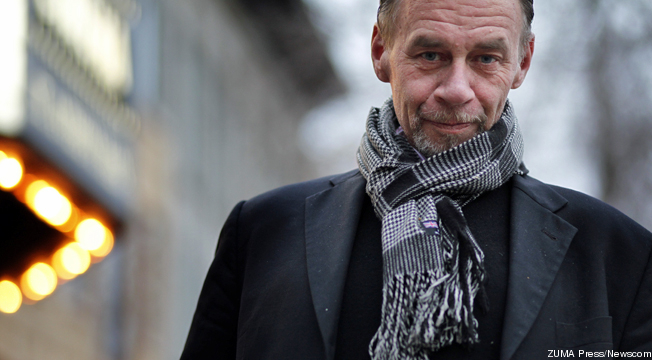
  • David Carr

    David Carr

    David Carr left us today. He was simultaneously optimistic about the adaptability of the news media in the modern age while pessimistic about the agility of the institutions that were the keepers, underwriters, and employers of those that practice the craft in its current form. He was conflicted which way to go, like a man astrid two ice floes drifting apart.

    Their tiny netbooks and iPhones, which serve as portals to the cloud, contain more informational firepower than entire newsrooms possessed just two decades ago. And they are ginning content from their audiences in the form of social media or finding ways of making ambient information more useful. They are jaded in the way youth requires, but have the confidence that is a gift of their age as well.

    The Fall and Rise of Media

  • Getting the Band Together Again at SmartNews

    Getting the Band Together Again at SmartNews

    Following a month off after my unexpected liberation from Gigaom, I started this week as Director of Media & Technology Partnerships at SmartNews. I feel very fortunate to have discovered this company at a time when I believe I have a lot to offer.

    First, some recent coverage,

    While researching the company, I was delighted to learn they had hired Rich Jaroslovsky. Rich and I crossed paths a few times when I was working at Dow Jones as he was getting wsj.com off the ground. We both have a fascination with technology’s impact on media and I shared his mission to bring The Wall Street Journal online. We had since gone our separate ways but I always admired his love and respect for good journalism as a writer, editor, and business guy.

    Rich explained to me that SmartNews thinks of itself as a machine learning company with a news front-end which is right in the nexus of what makes me tick. The co-founders, Ken Suzuki and Kaisei Hamamoto, are super-sharp engineers who see news discovery as an interesting problem to solve and hugely important for society to get right. To give you a sense for how they think, as they look for real estate for their San Francisco office, Ken and Kaisei each created their own interactive maps showing the locations of high tech startups and compared notes to determine that the area of 2nd and Howard was the ideal spot to focus their search.

    I made my pitch (excerpted below) and here I am!

    Two of the hardest challenges for the publishing industry are distribution and advertising. When publishers moved online, they had to reinvent their traditional distribution channels and navigate a new landscape.

    Initially it was the portals such as Yahoo and AOL that would curate the best of the web. Advertising was also sold this way, manually curated and matched to broad channels of interest maintained by the portals.

    As technology improved, search engines such as Google automated discovery and matching a reader’s interests to a publisher’s content. Advertising was automated and optimized via keyword matching and auction systems to extract maximum value. Distributed widgets allowed publishers to embed advertising into their sites and a combination of publisher tags and indexing that allowed them to take advantage of an ad network’s inventory.

    Social media platforms have recently taken over as a source of traffic for publishers and content snippets shared via these networks represent the fastest growing segment of inbound readers for a publisher.

    A common thread to success across all these channels is attractive representation of a publisher’s content within each distribution channel. Whether it’s meta-data, SEO, or “social media optimization,” each new distribution channel has spawned a new method of representing your content to the service which is doing the crawling and aggregation.

    For a new distribution channel both the crawling and aggregation algorithms are key to successful presentation of content and relevant advertising to the reader.

    Technology has enabled effortless distribution of news so the looming challenge is not so much the distribution of content but more its discovery and presentation. Social media burnout and personalization algorithms are still very basic and often push more and more similar content to the reader resulting in a “filter bubble” which shows the reader only what they want to see or worse, what they already know.

    Working with publishers to find them new sources of readership and readers to teach them something they didn’t know is an important goal that aligns with my interests. The fact that the team is based in Japan, a culture with a strong culture of news readership, is attractive to me as I am a big fan of introducing Japan to the rest of the world.