I went to a panel yesterday where online retailers spoke about the changes AI has brought to their profession. Ugly Talk: Selling in the World Run by Algorithms. While a well-structured website with lots of meta-data around your catalog have become table-stakes, success or failure can also come from unexpected data layers in your checkout pages. Frank Pacheco from Nearly Natural spoke about how one of his SKUs sales dropped 75% overnight because of a shipping issue which extended delivery times beyond the usual Amazon two-day. Your supply chain and logistics is just as important to agentic commerce as your descriptions and prices.
As AI Agents and atomization of audiences into niche vertical markets will de-emphasize traditional marketing, social media still remains as an important marketing channel. As marketers try and optimize their sites to get mentioned in the AI Answer Engines, social media is one of the last resources to discover broad trends and what people are looking for in your product.
In this sense, social media marketing has become mainstream and often you’ll see traditional advertising campaigns shot to look like low-budget social media clips to try and emulate the unfiltered and honest perspective of a viral video. It rarely works as audiences can see right through that.
One of the first rules of social media marketing is that you should have faith in your product such that you can allow the customer to amplify your products and brand and remix and celebrate it.
Having your CEO reveal your latest “product” before anyone else can experience it is the antitheses of social media. The bland office, the tiny, tentative bite, not even mentioning that this behemoth has THREE slices of cheese, even the sign over his shoulder that says “petty” – these are all working against him.
That is, unless the goal is to generate mentions on reddit in which case, they win!
Anthropic, makers of AI Assistant Claude, is going after their competition with a series of ads to designed to give users pause after the Open AI’s announcement that ads would be coming to their product, Chat GPT.
The campaign, Time and a Place, was envisioned by Mother London, extending Claude’s positioning from the Keep Thinking campaign.
The ads launched yesterday, timed for this weekend’s Super Bowl, which will feature two of the spots as detailed by AdWeek.
First, the good part of the Anthropic ads: they are funny, and I laughed.
But I wonder why Anthropic would go for something so clearly dishonest. Our most important principle for ads says that we won’t do exactly this; we would obviously never run ads in the way Anthropic…
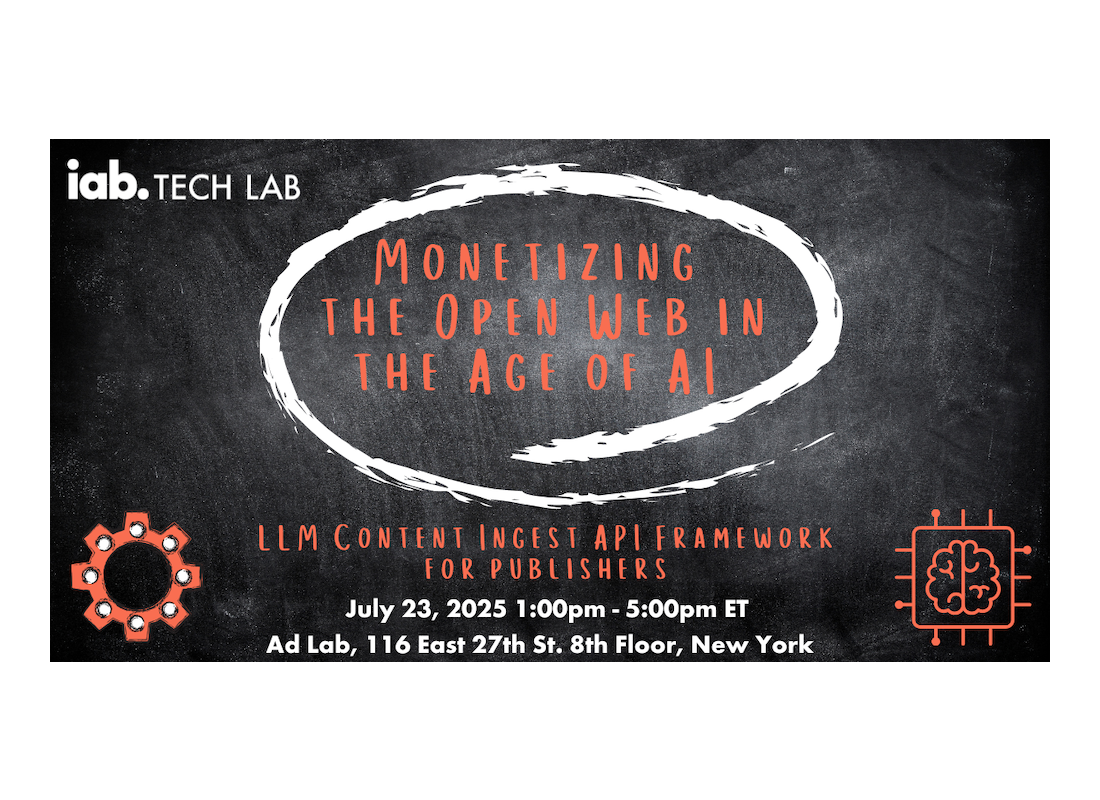
I was fortunate to be invited last week to the kick off meeting for an IAB Tech Lab task force dedicated to establishing a framework for Monetizing the Open Web in the age of AI.
The accelerated use of tools such as OpenAI’s Chat GPT, MSN’s CoPilot and Google’s AI Overview has precipitated a re-thinking of how publishers are compensated for their work. While the conversation is only just beginning, this group outlined concrete suggestions to the challenges ahead.
Publishers must work together to stem the flow of unlicensed content.
As long as information is readily available and free, there is no incentive to drive demand. Unless you limit supply, you cannot derive value. Content Delivery Networks (CDN) such as CloudFlare and Fastly are on the front lines as they see the majority of requests & responses across their networks. They have noted the sharp increase in AI-bot traffic and have the expertise in the blocking and tackling of the thousands of bots and spiders.
TollBit is keeping track of the AI crawlers with their quarterly State of the Bot reports
Publishers in the room are anticipating a world where the value of a search result on Google is less than the value of licensed access from an AI Agent. In such a world, it would be prudent to default to denying access to all crawlers in favor of direct access by verified, registered readers or licensed partners.
Old methods such as robots.txt and user-agent/IP address blocking filters are readily ignored or spoofed by long-tail startups scrambling to serve their users. More secure methods are necessary. “Get a better lock on your door.” says Jon Roberts, Chief Innovation Officer at DotDash Meredith.
Establish a marketplace for publisher information that can scale to serve AI Agents.
While CloudFlare’s Cost-Per-Crawl implementation redirects crawlers to a 402 HTTP error page to redirect AI developers to licensing information, TollBit and Dappier are building the first marketplaces for publisher libraries as a proof-of-concept as a bridge from the search engine results of the past to the marketplace of the future.
A search for the past 25 years returned 10 blue links of which a human might read 1 or 2 links. This referral traffic was the currency of the old internet. This attention could be monetized any number of ways.
Google owned this marketplace.
Now imagine a world where a query by an AI Agent may spawn 20-50 queries of which *every* article is scanned and synthesized into a single response. Ads and subscription funnels on these pages are ignored. There needs to be a different pricing model for this traffic. Source material will not be a “page” but could be a snippet of video, a schematic blueprint, a sound bite, or a product spec. The pricing model in this “marketplace of everything” needs to recognize and support dynamically pricing requests based on who is requesting it and in what format, all in real-time.
The programmatic advertising ecosystem which has been the engine driving the growth of online publishing for the past 25 years was subsidized by advertisers bidding for a reader’s attention on a web page. An entire tech-stack was built to serve up the right ad for the right audience at the right time, all in under 500 ms.
With AI Agents, you have readers paying directly for content with their subscriptions (Chat GPT Pro is $200/month) and the AI Agent is acting as a proxy on their behalf. Once publishers have successfully shut off the free flow of their content, accurate, reliable, and up-to-date information will accrue value. In this world, there will be need for a real time marketplace to handle the access and metering of content and this system will need to be built to the same scale and performance of the programmatic advertising platforms of today.
No one owns this ecosystem.
Tokenization – core components to a market
The final step, once you have established a way to meter (cost-per-crawl, cost-per-query or some other subscription model) access to a publisher’s library, is to establish a standardized way to track and count content as it travels through the ecosystem from a publisher to the AI platform.
Tokenization is this final step. Once an AI has asked for something, the response needs to be tokenized in such a way to properly attribute credit as well as track the usage of that content not only to the initial query but in all future derivative uses.
ProRata has a working implementation of this tracking in their Gist Answers, distributed search widget. “If you can track it, you can charge for it.” they say as their IP is focused on the attribution of AI responses from their network of publishers.
TollBit has one-time use tokens for access and are setting up a system where an AI Agent can query for information, inquire about pricing, and generate and receive a token to retrieve the information as needed, on demand.
All these are approaches to the same problem and my company, SimpleFeed, aims to participate in the delivery of publisher content, whether it be tokenized, vectorized (to assist in discovery), or otherwise value-added with filtering and meta-data augmentation as we have been doing for 20+ years.
I look forward to staying engaged with the individuals and companies that were gathered for this workshop. AI summarization is rapidly tearing down a business model that has worked for decades. Unless there is an agreed upon business model that is accessible to all players including small publishers and long-tail AI startups, we may lose the diversity of opinions and perspectives that have given us the open web we currently enjoy.
It makes sense that IAB, an industry group that helped establish standards around online advertising, is taking the first steps to establish standards around the AI Agentic web of the future. I thank them for taking this first important step of getting all the players in the room together and publishing the first framework for publisher content monetization and brand content management for LLMs and AI agents.
Publishers underwrite new projects based on forward-looking financials. If nothing is done to improve the economics of publishing online today, the investigative reporting of the future will not be funded and we will all be poorer for it.
A couple of years back, I was working with a publisher that complained that their site was really slow. As I opened up the site on my browser I immediately became suspicious as the fan on my MacBook kicked in and every process slowed to a crawl.
When I finally was able to crack open and see what was going on behind the scenes, I was able to record what happened on each page refresh.
In America, it used to be AT&T that made the nostalgic TV commercials that would bring a tear to your eye. In Japan, a Yokohama train line is pulling on that thread.
The Sotetsu line was the train I took to my Japanese grandmother’s house in Wadamachi from its terminus in Yokohama. It was the first train I took by myself when visiting Japan when I was 12.
Their television commercials have gone viral for their nostalgia. 100 Years Train shows various couples missing each through the years before finally getting together at the end. This commercial was made to celebrate the train line’s 100 year anniversary.
Last month, Sotetsu updated this theme to celebrate the line’s extension to Tokyo. Father & Daughter follows a father and daughter over the years as the father takes his daughter to school. In the beginning, the daughter looks up to her dad and says that it’s so far away. In the end, the daughter stays on the train to go away to university, presumably in Tokyo, which she tells her father is not that far away.
Be sure to watch the “behind the scenes” video below which is really quite amazing. Instead of using CGI, the entire commercial was shot in one go with identical-looking actors and hand dollies to simulate the movement of the train.
The title of this post is from last week’s People vs. Algorithms newsletter. What starts with a grim evaluation of BuzzFeed’s latest earnings leads into a grim prospectus of the online media industry in a world where platforms such as TikTok and Chat GPT upend established publishing business models.
In this world, publishers that have built their reputation on listicles curating the best posts from Reddit lose out to TikTok accounts scratching that same itch but wrapped up in bite-sized, personality-driven, 20-second video clips. People don’t go to BuzzFeed for random amusement, they go to TikTok.
Then there’s search. When you know what you’re looking for, you realize that Google’s search results page is no longer that efficiently clean place that it used to be. There are more distractions on a a Google SERP than a suburban strip mall lined by used car inflatable air guys and their flailing limbs.
Search for the best hotels in NYC and you’ll notice that not only the first couple of results are sponsored, the embedded map, People Also Ask box and other remaining links are also heavily SEO’d and lead to pages that are either full of sponsored links as well. Anyone who has searched for a recipe knows that the actual list of ingredients is buried down on the bottom of the page, after you’ve scrolled past the history, entomology, and evolution of the dish, all while generating impressions on the accompanying advertisements that may or may not be related.
Conversational AI interfaces harken back to the utility of early Google as they cut right through all this. I have to admit that 80% of my ChatGPT use is asking for the ingredients of a cocktail. The response is wonderfully refreshing with its “just the facts” presentation.
The web starts to look different, half chat box, half vertical video.
Lifestyle publishers that get their revenue via ads running on their site need to prepare for this new world. If curation of the social web is no longer seen as a value add and the “How to. . .” or recipe post just becomes raw material for a ChatGPT response, then how does this publisher, who is paid to introduce advertisers to their audience, get paid?
The arc of the internet is long and unpredictable but bends toward user empowerment and ever increasing fidelity. An endless stream of algorithmically sorted vertical video is the current endpoint. Robots that do much of the work to make sense of things for you are coming faster than you can say “human augmentation.”
John Battelle, who wrote the book on search, the last technical innovation, has some ideas. The first two (affiliate and subscription) are the logical continuation of existing business models but the second two are more interesting.
“NPR-style” underwriting – There’s an opportunity for a specialized AI to be sponsored by a brand in the same way you see certain brands feature prominently in certain magazines. Going back to my search for a cocktail recipe, does adding a classy, relevant brand ad to an AI search that’s been specifically trained on a curated dataset for the purpose can not only help pay for the experience, if done tastefully but also add to it.
Building programmatic search ads “at scale” ruined the curation of high-end brand advertising. To make a good conversational search experience takes time and expertise. Great care should go into curating training sets and iterating continually to produce quality results. Hopefully the same care will be given to accompanying advertising.
The branded agent – this brings to mind something that was pondered but never came to be when search became a consumer product. Search can go both ways, there’s the retrospective search where we search the past and then there’s prospective search that is like a standing search that only notifies you when there’s a new “hit” in the future. Prospective search is familiar to anyone who’s played around with a financial news service, Google Alerts, or services such as IFTTT or Zapier.
If I think of it, I have multiple standing search queries across multiple services that vie for my attention when they get a hit. Spotify lets me know when an artist that I have on repeat is coming to town, American Express tells me every week how much I’ve spent on my card, and ESPN is laughing at me right now because my NCAA bracket is a mess.
These are better known as push notifications and, if you’re like me, you get too many of them. Maybe this is where conversational AI will provide help. Notifications are like a one way conversation – various services trying to start a conversation, most of them failing. Apple has attempted to offer user controls but it’s so complicated to set up that entire articles are written about how to configure the Notification Center.
World War I U-boat controls
Maybe notification management is where we’ll see sponsored conversational AI agents provide value. Allow an AI access to your notifications to get filtered or enhanced notifications and chat conversations informed by your lifestyle and interests.
Invite The New Yorker AI, sponsored by Calm to manage your weekend notifications and allow you uninterrupted time with their long-form journalism partners.
Let Bicycling‘s AI, sponsored by Peloton look at health-related notifications and suggest that you take your indoor training on the road with the upcoming Five-Borough ride.
Use the Eater AI sponsored by Resy to look for food & drink recommendations and get access to a branded conversational AI module that has a history of not only where you’ve been but also all the places you have “on your list.”
We give Google access to our retrospective search, are we prepared to give an AI access to our prospective search in return for personalized AI?
Imagine asking your personal AI when that Italian restaurant your friend texted you about last week is open for a Friday evening reservation. You then ask it to check which of those days works for your date and, when you hear back, you ask the AI to secure that reservation with your credit card. Skip a few beats and then your Peloton AI pipes in to suggest a longer than normal ride for you the following day to work off all that pasta. Respond “sure” and then it’s on your calendar for Saturday morning.
Is this a dream come true or a nightmare you want to avoid? We’ve been here before. What privacy will you give up in return for convenience? It comes down to trust. We’ve been burned by the platforms who took our trust and used it to spam us with irrelevant messages in pursuit of CPCs at scale.
Would things have been different if we opted in to brands we trust to broker our preferences. What if publishers such as The New Yorker, Bicycling, or Eater managed our privacy and brokered it to its advertisers. Wouldn’t you feel differently if you were putting your trust in an editorial voice that you identified with as a subscriber and reader and not some faceless technology stack that only sought to harvest your clicks?
Now is the time for publishers to jump in front of conversational AI development and use their editorial expertise to craft experiences that cater to their readers. Use this Precambrian period to establish a reputation for quality and avoid disintermediation by the platforms again.
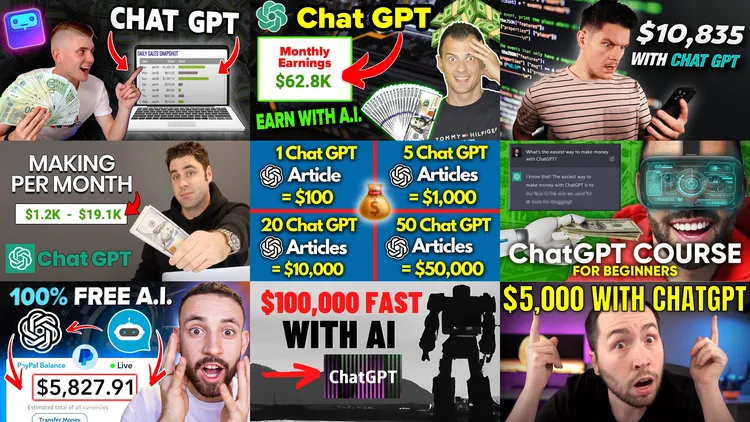
Well that was fast. While still pondering the impact of generative AI technologies such as ChatGPT, we already have the hucksters rushing in to put it to market and make a quick buck. On a more serious note, a Columbian judge has used it to help him draft his judgement and we’ve already about the robots taking over CNet.
As the graphic in the tweet below has predicted, the first use cases for generative AI will be to scale up correspondence so that the we can produce customized on a grand scale.
Viva Sales, which connects Microsoft’s Office and video conferencing programs with customer relations management software, will be able to generate email replies to clients using OpenAI’s product for creating text. The AI tools, which include OpenAI’s GPT 3.5 — the system that is the basis for the ChatGPT chatbot— will cull data from customer records and Office email software. That information will then be used to generate emails containing personalized text, pricing details and promotions.
The AI hype race has a nasty habit of pushing the “should we really do this?” stage of innovation to the side in pursuit of the almighty first-mover advantage. Threatened with Microsoft releasing a conversational AI search engine, Google is now pressured to release their own version. Despite careful consideration to date Google is making investments in what feels like an AI arms race.
All this to say that it’s going to take awhile for the “algal bloom” mentioned at the top of thIs article to run its course. In time the valuable use cases will become obvious but, to most, it will be in hindsight. There are going to be some road wrecks along the way but hopefully we will not break the internet, democracy, or society while we learn how to be smarter about how to work smarter.
It’s useful to gain perspective on the coming AI revolution from the great technological historian Kevin Kelly who spoke about how AI would lead to the Second Industrial Revolution six years ago at TED.
Everything we electrified, we can now cognify. . . The most popular AI product in 20 years from now, that everybody uses, has not been invented yet.
Super Bowl 56 featured ads from many car companies introducing their Electronic Vehicles (EV) as well as a few crypto companies.
The failed attempt at the most innovative ad was goes to Coinbase which featured 60-seconds of a floating QR code (for those that were in the know, that graphic was an homage to an episode of The Office) Unfortunately their site crashed so the $14 million the company spent to hopefully acquire new users went to waste and Coinbase will forever be associated with the QR code that crashed their website.
A personal favorite of mine was from the FTX which featured Larry David (who has never featured in an ad spot until now) as the ever-present skeptic who misses out on all the great inventions of history. The ad’s theme plays right into the older generation’s FOMO and played in the premium spot right before the Super Bowl’s halftime show.
The tear jerker of the night was from Toyota which ran before the game even got under way. The spot told the story of the McKeever brothers from Canada who worked together to achieve greatness in Nordic Paralympic skiing. Brothers is a moving 60-seconds worth watching if you haven’t seen it. Here’s the backstory.
Of all the EV commercials trotted out over the course of the game, Polestar’s anti-ad was most effective for me. Taking aim at the market leaders VW (“no dieselgate”) and Tesla (“no conquering Mars”) Polestar’s spot doesn’t even show you much of their car which immediately piques your interest in who they might be?
Friends from Finland shared this advert for Kyrö Distillery, a Finnish distillery, who gives us a master class at how to introduce the world to their unique line of products.
If you’re going to introduce a new Malt Rye Dairy Cream Whiskey to the world, there’s only one way to do it. With a naked man strolling around and staring straight at the camera in all earnestness.
Oh, and the story about five guys in a sauna dreaming up a business is true.
Cookie Consent
We use cookies to improve your experience on our site. By using our site, you consent to cookies.
Contains information related to marketing campaigns of the user. These are shared with Google AdWords / Google Ads when the Google Ads and Google Analytics accounts are linked together.
90 days
__utma
ID used to identify users and sessions
2 years after last activity
__utmt
Used to monitor number of Google Analytics server requests
10 minutes
__utmb
Used to distinguish new sessions and visits. This cookie is set when the GA.js javascript library is loaded and there is no existing __utmb cookie. The cookie is updated every time data is sent to the Google Analytics server.
30 minutes after last activity
__utmc
Used only with old Urchin versions of Google Analytics and not with GA.js. Was used to distinguish between new sessions and visits at the end of a session.
End of session (browser)
__utmz
Contains information about the traffic source or campaign that directed user to the website. The cookie is set when the GA.js javascript is loaded and updated when data is sent to the Google Anaytics server
6 months after last activity
__utmv
Contains custom information set by the web developer via the _setCustomVar method in Google Analytics. This cookie is updated every time new data is sent to the Google Analytics server.
2 years after last activity
__utmx
Used to determine whether a user is included in an A / B or Multivariate test.
18 months
_ga
ID used to identify users
2 years
_gali
Used by Google Analytics to determine which links on a page are being clicked
30 seconds
_ga_
ID used to identify users
2 years
_gid
ID used to identify users for 24 hours after last activity
24 hours
_gat
Used to monitor number of Google Analytics server requests when using Google Tag Manager
1 minute
You can find more information in our About Me and .