Tag: culture

  • The Tyranny of Gift-Giving in Japan

    The Tyranny of Gift-Giving in Japan

    My father moved our family to Tokyo in 1978. As a local, he had a great run sharing his observations of Japanese culture from a Western perspective in a collection of of essays collected in a now out-of-print book, Home Sweet Tokyo.

    Here’s his take on the Japanese culture of gift-giving.


    The Present Tyranny

    By Rick Kennedy
    Home Sweet Tokyo, 1988

    It is curious that in a society as dedicated to sweetness and harmony as that of Japan, a tradition as potentially disruptive as the ritual giving of gifts has been allowed to flourish. People don’t talk much about the consequences of indiscriminate gift giving for fear of being seen as mean, but it is clear that in Japan gifts are launched as missiles, serving, if rightly chosen, to stun the recipient, or as least to nudge him or her off balance.

    As gift giving proliferates, it tends to be taken for granted, and so to achieve its purpose of impressing the other fellow with the giver’s scarcely controllable generosity, the preferred gift has to be seen to be twice as magnificent as any sane person would deem reasonable.

    In this way the ante escalates. If I give you a cheap souvenir teaspoon stamped “Shizuoka, counterpunch with a packet of fine tea. I fight back with an antique teapot; you ambush me with a round trip for two to a luxury hotel on the grounds of a Sri Lankan tea plantation. I, panicking, present you with a one-third interest in Twinings… and so on until we are both bankrupt.

    In Tokyo this annual escalation of gifts given takes place between companies who do business together: one company one year giving its client company ten cases of beer, the next twenty, the next forty, until all corridors, closets, washrooms, and space at the back of the recipient company’s garage are filled with brightly wrapped packages from Mitsukoshi Department Store. At the end of the gift-giving season, the employees of both companies thus locked in gift-giving combat must hire trucks to cart away their share of the bounty, wanted or not, to their own homes and garages.
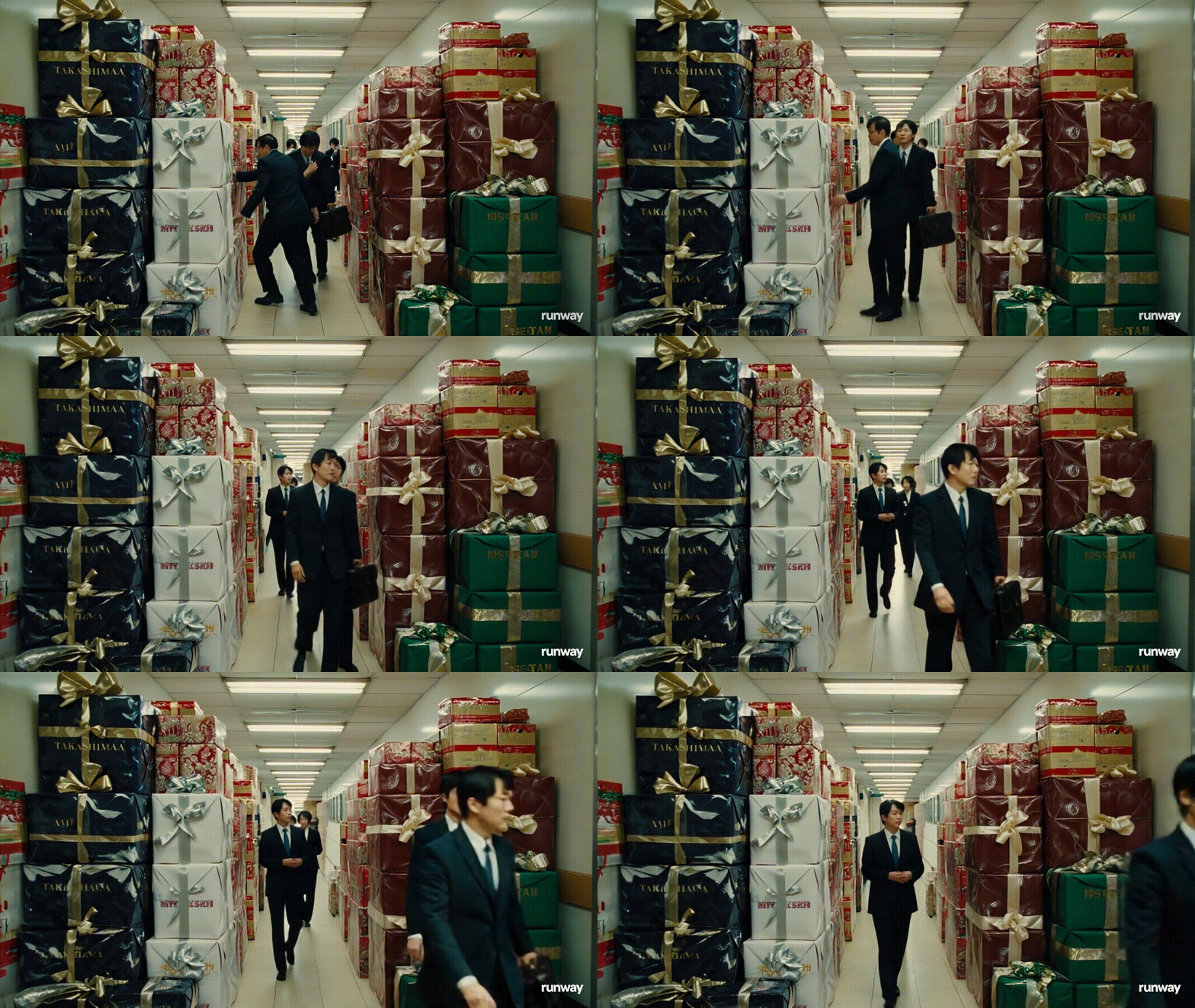
    AI-generated

    At a higher level, the presidents of the companies involved will exchange exquisite lacquer boxes, larger ones every year, each requiring the attention of a master craftsman for several months and costing millions of yen. It is said that the hills outside Kyoto are heavily populated with subtle geniuses whose sole occupation is the crafting of fine lacquer boxes destined to be presented by the heads of Japanese industry to each other during the annual gift-giving seasons of o-chugen in the summer and o-seibo in the winter.

    Escape from the gift-giving plague is impossible. On every train platform, boxes of the local specialty-pickles, bean cakes, rice cakes, fish cakes, twirligigs – are dutifully purchased by travelers (although they may only have gone overnight to Osaka to visit an aged aunt) to be taken back and presented to fellow office workers and neighbors as a gesture of their enduring concern.

    The constant flow of gifts keeps the Japanese economy purring and out in front of the unsupercharged economies of nations that don’t indulge in frenzied gift giving. A good 15 percent of the revenue of the average department store is generated by gifts: boxes of bars of soap, cans of soup, tins of salad oil and pressed seaweed, matched bottles of wine and whiskey and 100-percent orange juice, and hampers of exotic foreign delicacies – a truly prodigious prodigality, as if to make up for the shameful thriftiness of the rest of the year.

    Perhaps, though, this gift-giving reflex could be put to good use.

    One hears that the American public continues to be concerned that they are buying more Japanese goods than Japanese consumers are buying American goods. Some Americans are evidentily itchier than ever about the trade imbalance and have convinced themselves that behind it all there lurks some great brooding conspiracy.

    Would not an appropriate gift serve to ease the tension? Why don’t the Japanese people simply present the American people with a massive present, perhaps a video game or a motor scooter for everyone, or a new national railroad system (staffed by supernumerary JR railroad men), or maybe, because after all it is the thought that counts, an enormous lacquer box?

  • Turning Point?

    Turning Point?

    A crowd spontaneously turned on a Waymo robot car when it tried to push its way through a Chinese New Year’s crowd in San Francisco’s Chinatown.

    So there were fireworks happening – pretty fun night and folks watching the fireworks. Every now and then traffic would build up and the crowd would make way for it to clear.

    There was a small traffic holdup with waymo at the front of it. Then someone in a white hoodie jumped on the hood of the car and literally WWE styel K/O’d the windshield & broke it.

    The crowd was shocked. People started paying attention and gathered around. Nothing happened for another 30 seconds until someone else jumped on the hood.

    Then a group of people joined in affirming the behavior w/ positive feedback. Clapping etc.

    That was when it went WILD. People with skateboards breaking the glass, and others graffitiing the car.

    A Mob Just Vandalized A Waymo Self-Driving Car And Set It On Fire. The Videos Are Nuts

    People are getting fed up.

    Now, more than ever, Silicon Valley should be paying attention. We all should. Because the torching of the Waymo car may well prove to be a turning point. If no one in power is going to listen to the growing chorus of people shouting their fears that big tech has concentrated too much wealth, influence, and control over their lives — or to the legion of New Luddites organizing against the excesses of Amazon, generative AI giants, and self-driving car companies — then this smoldering husk of an AI-driven robot may merely be the first.

    Torching the Google car: Why the growing revolt against big tech just escalated

    Remember that other Tracy Chapman song?

  • The Internet’s Circle of Life

    The Internet’s Circle of Life

    Paul Ford, great sage of internet culture, has a piece in Wired where he puts the inevitable dismantling of Twitter into perspective.

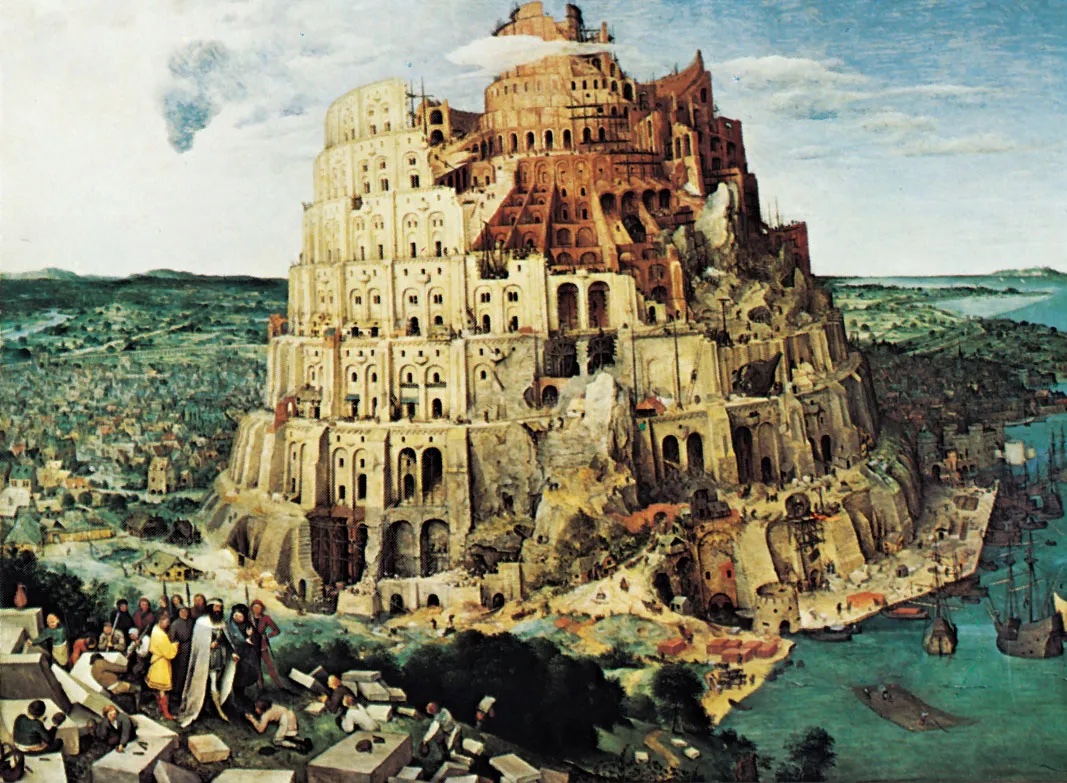
    Musk is merely the vehicle. The real reason Twitter lies in ruins is because it was an abomination before God. It was a Tower of Babel.

    The internet is always in motion, like the human life it reflects, things are always swinging from one end to another.

    • Online media business models swing from “information wants to be free” to full-locked down paywalls.
    • Content is King one year and the next the power shift to the aggregators, curators, and portals.

    As the internet figures out what works best, it swings back and forth searching for the optimal fit. It’s the internet’s own version of the circle of life. This is what Ford evokes when he says that the teardown of a centralized network like Twitter was inevitable, the internet’s way of bring things back to equilibrium. If there is a ghost in the machine, perhaps this is it.

    But when I go back and read Genesis, I hear God saying: “My children, I designed your brains to scale to 150 stable relationships. Anything beyond that is overclocking. You should all try Mastodon.”

    But in the same breath, while we all begin to navigate this new world of distributed social networks, we must never forget where we came from and that, eventually, the forces of capitalism will figure out how to gather an audience large enough to be targeted and monetizable. Maybe we’re already seeing the fresh roots of this new world with generative AIs that will be able to craft millions of customized sponsorship messages for each splinter of the community.

    If anything is constant, it is that the internet is an excellent platform for testing innovations, at scale.

    But someone will figure out the details. The reason the Babel story matters is not that it happened once but that it happens over and over: We Babelize and de-Babelize. The internet is an engine of both processes. Eventually, brands will find purchase in Mastodon’s rocky soil and grow engagement. Billionaires will order the construction of new marketplaces of ideas. Everything will centralize again, and it will seem eternal, as if the tower could never fall. For now, let’s enjoy the scattering.

    God Did the World a Favor by Destroying Twitter

    Same as it everwas.

  • Folksy Database

    Folksy Database

    Part of the charm of the greater Grateful Dead culture was that there was something for everyone. Like any good pastime there was some aspect of a Grateful Dead show to please everyone.

    I often compare the sub-culture of Deadheads to baseball fans. There are those that go for the scene, the roar of the crowd or to see their heroes play. Others go for the party, the beer & hot dogs on the one hand or the recreational drugs and lightshow on the other.

    Then there are the stat nerds which also exist in both cultures. Go to any ball game and you’ll see people with detailed score cards, recording every hit and at bat using their own custom shorthand.

    Baseball scorecard from September 10, 1999 Red Sox v Yankees game

    There are stat nerds in Deadhead culture too. These are the people that can tell you the last time the band opened the second set with Saint of Circumstance or when they last played Red Rocks. There’s a special language of code to how they talk and a learned shorthand to normalize communication.

    During the time when I saw the band, computers were not that widespread so a lot of the documentation was collected from memory and passed around on handwritten notes. Historic setlists were passed down as legend.

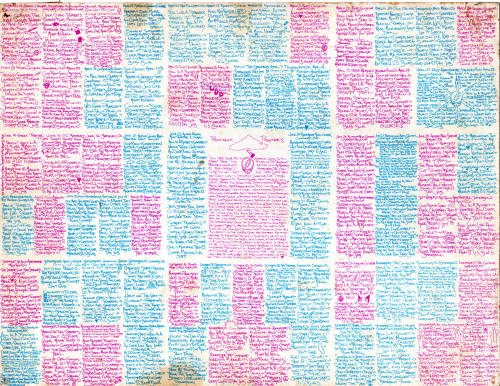
    Printknot Printer’s 1985 Year at a Glance

    The photo above is something I found in a drawer as I was packing to move house. It’s a handwritten collection of every setlist from every concert the Grateful Dead played in 1985. Crib sheets like these were passed around like a folksy database of shared knowledge.

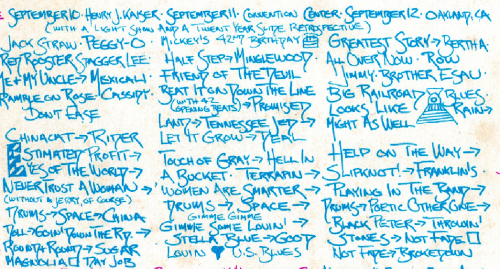
    Detail with graphic annotations

    There’s endless detail in the notations that hint at a shared understanding of how a Grateful Dead setlist works. The capital “E” in the detail above ties Estimated Profit and Eyes of the World together as those two are often paired and segue seamlessly from one to the other. The “Gimmie Gimmie” scrawled above Gimme Some Lovin’ is a wink to the fact that Bob Weir was especially enthusiastic in his rendition of Spencer Davis that night.

    All this was just to say that while the ever-connected phones in our pockets are wonderful for precision and recall, they don’t transmit knowledge and understanding as well as these folksy databases of handwritten notes. An illuminated manuscript from the medieval past, carefully hand-copied and embellished, is so much better at transmitting culture and passes on so much more than just the written word.

    To listen to two Deadhead stat nerds get into the weeds, check out my post on Alex and JM Hart’s discussion about the evolution of Bob Weir’s playing style on Deadicated.

  • Modern Luddite’s Prayer

    I found an old notebook of scribblings from a two week vacation taken in Paris around 2010. We were wonderfully disconnected from the internet and spent each morning at a museum or gallery and each afternoon on extended walks thru selected neighborhoods. As you can see, I took a grim view of technology when viewed from outside that bubble.

    A bit over-dramatic but indulge me. This is what a couple of weeks in Paris will do to you.

    The spindled algorithms of our time are optimizing the sinews of humanity. Gnashing life’s great works in the gears of its Engine. These are the dark Satanic Mills of our generation. Spitting out matchsticks of Knowledge that are mere sulfur-tipped flashes of attention-seeking factoids, no longer able to light the pyre of change to our mossy, over-grown minds deadened by years of trackpad-enabled twiddling.

    We are addicted to the new of newsfeed but have lost the wisdom of perspective. Supplicants to the superior recall of the internet brain, we slavishly log time on the social treadmill with a thirst to be first for our friends and followers. Dark Times ahead if we continue to blindly submit to the false gods of Real-Time, PageRank and Likes.

    Step away from your monitor, stop stroking your little glass-faced friend. Look into your neighbor’s eyes and peer into their soul. Smile to the passing stranger on the street and note them for who they are and how we are all connected. Embrace the warmth and smell of humanity. Live to create, not consume.

  • Gif Peanut Butter

    Gif Peanut Butter

    The limited run is already sold out on Amazon. From the listing:

    • Limited edition jar with double-sided JIF/GIF label.
    • Perfect for sandwiches, baking, and shutting down internet debates.
    • Contains about 34 servings of peanut butter, and 0 looping images.
  • Civil Eyes

    Civil Eyes

    I’m not great with words so I’ve been looking for someone else to quote that best expressed my views on the recent moves by social media companies to curate the discussions taking place on their platforms. I did not feel comfortable with the knee jerk reaction to simply get rid of the “bad stuff” as such blanket bans could too easily be misapplied and cause collateral damage. But,  like others, I was impatient with @jack’s intellectual distancing.

    The light bulb finally went off when I read Jeff Jarvis’ piece in The Atlantic, Platforms Are Not Publishers. Jarvis points out that we view the internet through the lens we have for print – a medium where words are published for consumption. Print is broadcast. The internet is, by definition, bi-directional. The internet is not about content, it is about conversations. Conversations are iterative, messy, hard to curate, let alone control. An editorial board is not the solution.

    The banning of Infowars from most major platforms is a sign of that process beginning to work. Civilization is winning, at last. Alex Jones went too far and the public, empowered by the same tools of social media he exploited, told the platforms that his behavior is unacceptable in a civilized society. The platforms—like media and like regulators—might prefer to start with a set of rules that can be enforced by government, by social-media managers, or by algorithms. But that’s not how we negotiate our standards. The breach makes the rule. We know pornography, propaganda, trolling, and spamming when we see it, and then write the rules to prevent it. That progress always seems to take too long, but it is prudent that we ban what we see rather than everything we might fear.

    – Platforms Are Not Publishers

    The norms of acceptable conduct are still being refined. With each new transgression or outrage such as the Infowars example, we collectively define the line between a provocative debate of a contrarian viewpoint and an attention-grabbing, deceitful and malicious commercial enterprise.

    Political discussions used to be along a familiar Liberal – Conservative spectrum in which both sides used agreed upon tools (facts, scientific method) to argue their case. Think of the Federalist Papers or, more recently, the Buckley/Vidal debates during the early days of television.

    Today, agreed upon facts have been discarded and shared decorum has gone out the window, replaced by intimidation and violence. Democracy’s unconditional support of free speech has been weaponized and used to justify the distribution and amplification of the outrageous and untrue. The folks at Pod Save America took to their blog to describe how we got to where we are today.

    The company’s lip-service defense of free speech is in practice a choice to collapse the distinction between disinformation and news-analysis. The right-wing narrative of social-media censorship is dishonest, but it has also been incredibly effective in pressuring platforms into accepting lies as opinion.

    – Facebook Is The World’s Biggest Right-Wing Media Company

    We must return to Jarvis’ framework for the internet as a conversation to better understand how to manage our way forward. “Twitter is not The New York Times. It is Times Square,” says Jarvis. In a public space, no one would tolerate someone screaming and threatening another individual or group with half-baked ideas. To curate a debate that improves our understanding of the world today, we should favor voices that respectfully lay out an argument that is well-researched and moves the debate forward. We have too many hair-raising threats to our existence just over the horizon to waste our time on anything less.

    My 7th grade school bus driver was this amazing woman who managed to keep the 50-odd kids on her bus in line during our 30-minute ride through rural Connecticut to John Winthrop Junior High. She had this enormous, panoramic mirror so she could keep an eye on things. Whenever things started to get out of hand, she’d peer up into the mirror and stared into your soul while bellowing, “KNOCK IT OFF BACK THERE!” Justice was meted out equally, without bias or favor.

    The social networks need to start acting more like that school bus driver, keeping us kids in line, with a modicum of civility and mutual respect, so no one gets hurt and we can move the conversation forward.

  • John Perry Barlow

    I’m struggling to process the passing of JPB this week. For many that got connected via dial-up in the 80’s he was the soul of the .net. He set the tone. His spirit prevailed as the founding principle of many online communities – his tone of “live & let live and be helpful and nice y’all” was foundation of many of the pinned posts of the early BBS that taught us how to behave in this new world. Whenever we struggled with some great calamity, we would turn to Barlow for guidance. Through it all, he was ever the prankster reminding that no one should take themselves too seriously.

    Others have been more eloquent.

    John Battelle

    Steven Levy in Wired

    Kevin Kelly

    Cory Doctrow

  • Short Term vs. Long Term Metrics

    Silicon Valley has replaced Wall Street as the preferred destination of fresh graduates. The pursuit of short term wealth on Wall Street in the 80s is replaced with other short term data points which, when pursued with a singular focus, can skew one’s moral compass.

    “If Google’s primary weapons are relevancy and speed, then Uber’s are cost and speed.” What I didn’t say: They are fairly similar in their inability to deal with consumers at a human level. That is the challenge of our times.

    – Om Malik, Technology and the Moral Dimension

    In this data-driven world we must keep in mind what is being measured and remember that organizations instinctively optimize for those metrics. During this Thanksgiving break, think of alternative, long term metrics such as Lifetime Customer Value, Renewal Rates, and Net Promoter Score as important KPIs for your business’ success in the long term.