Tag: family

  • She’s Gone

    She’s Gone

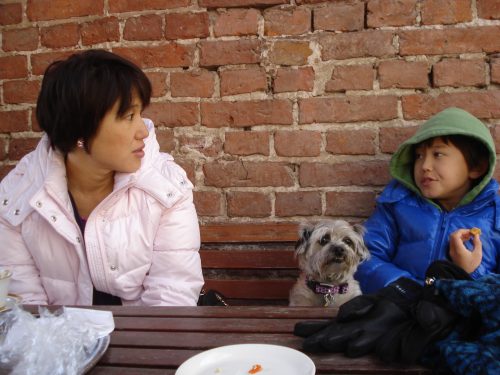
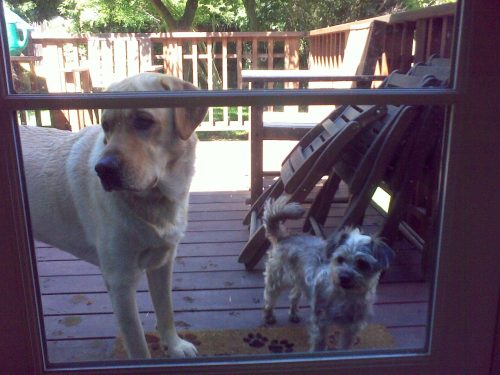
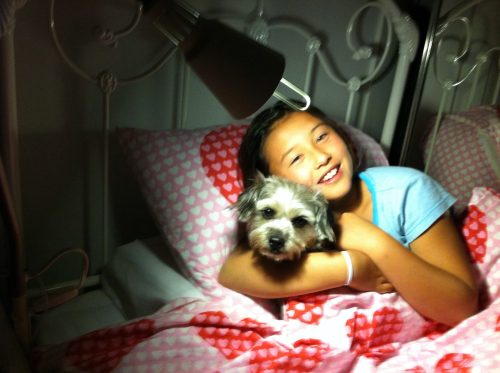
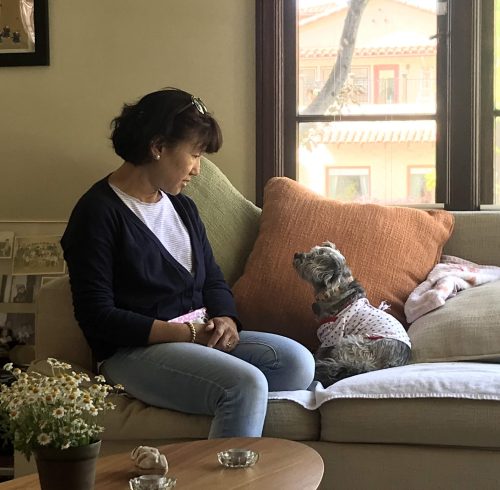
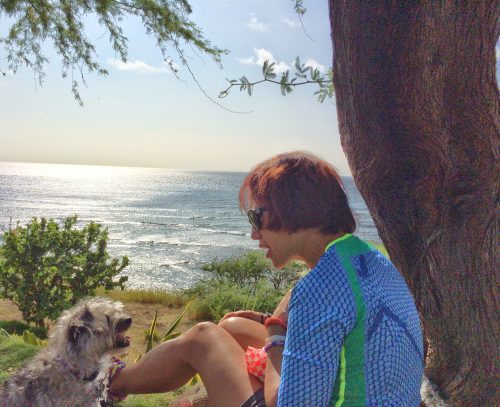
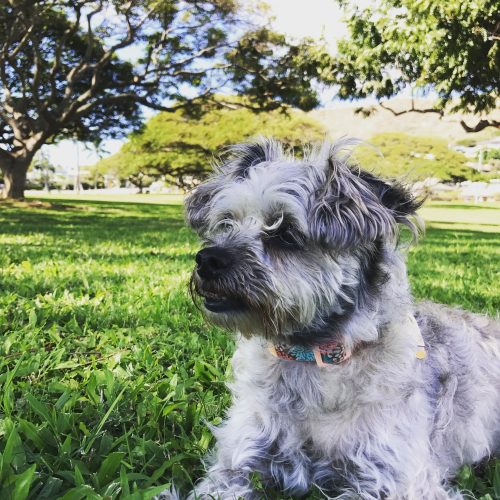
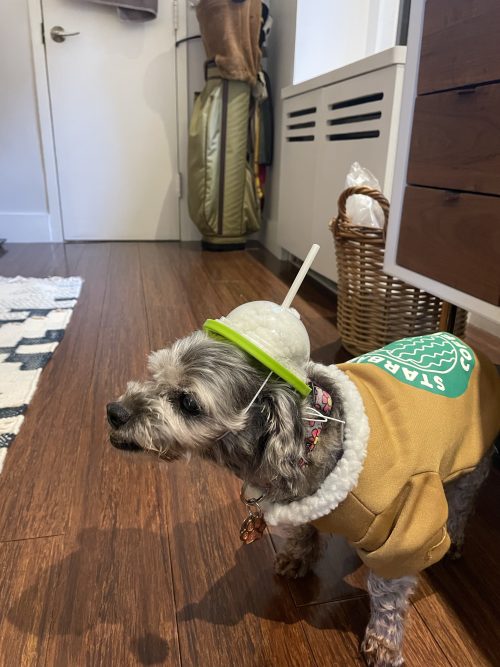
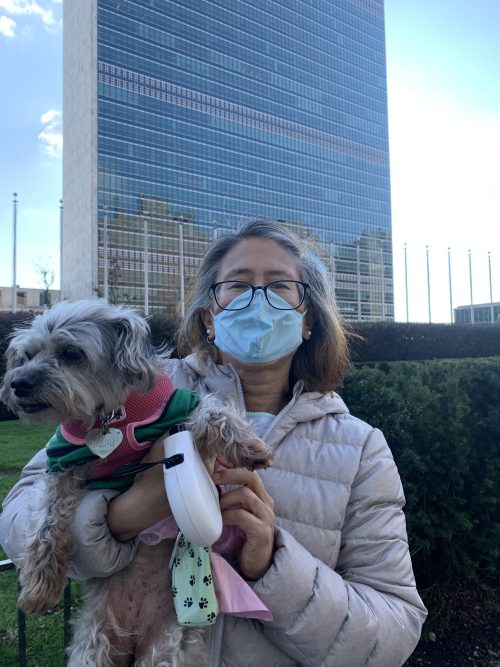
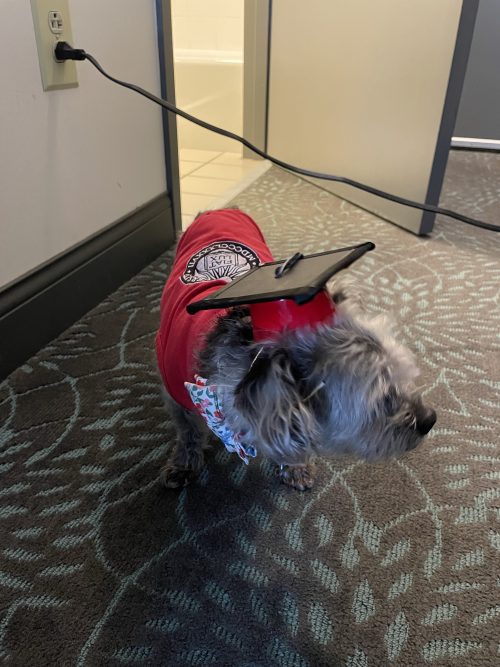
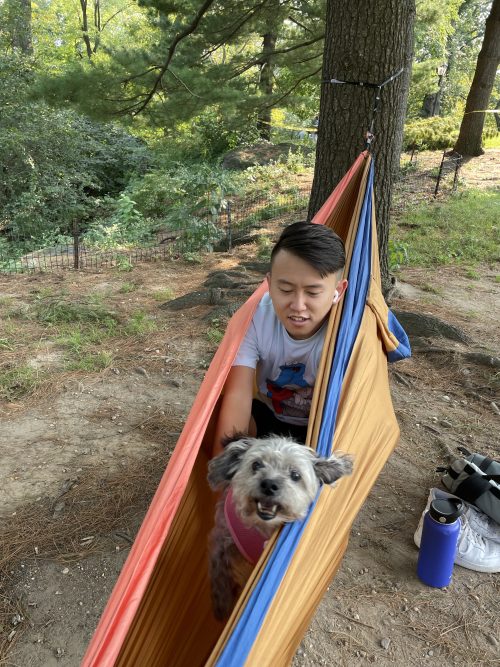
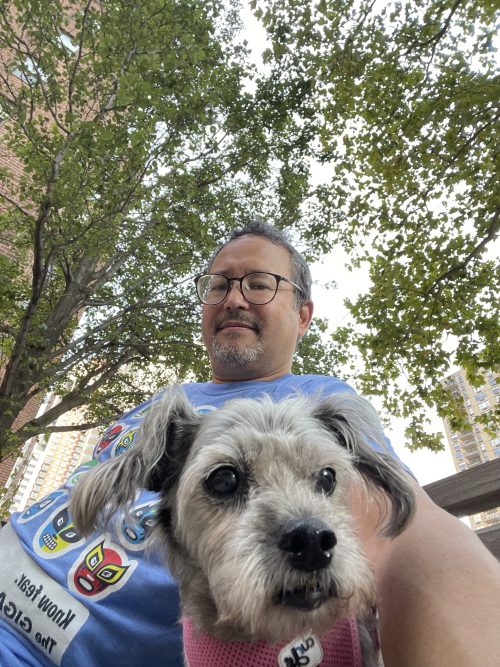
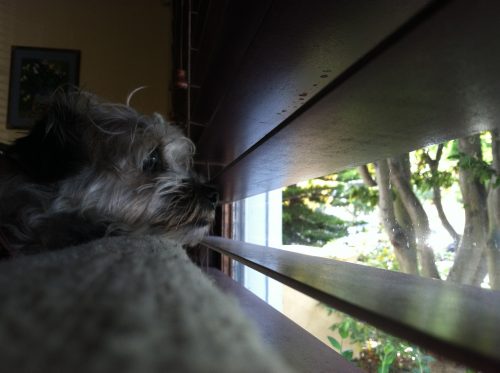
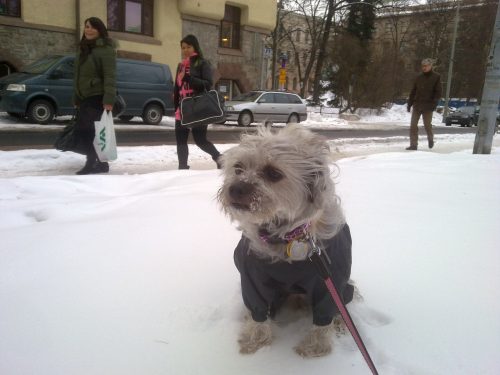
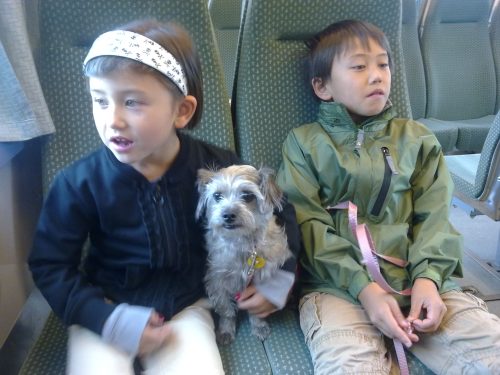
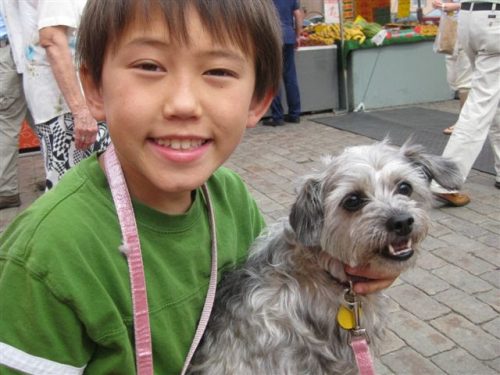
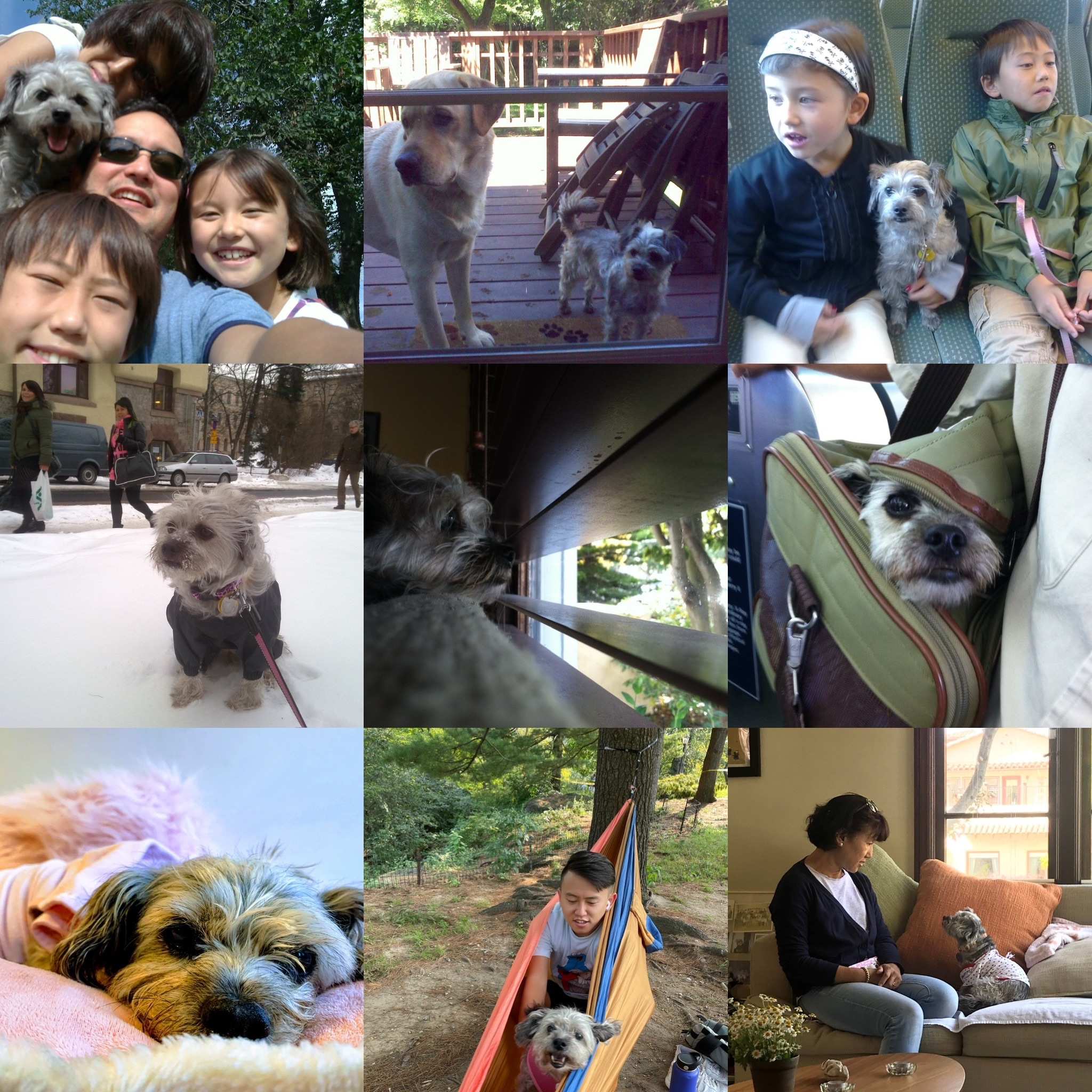
    We lost Mimi last night. She would have been nineteen (!) in July and had slowed down considerably over the past six months. No pain, just a gradual fading out until she finally stopped breathing at around midnight. 

    Mimi has been with us since 2008 where she was thrust into Izumi’s arms at an Oakland shelter. “She belongs with you” said the lady and that was that. 

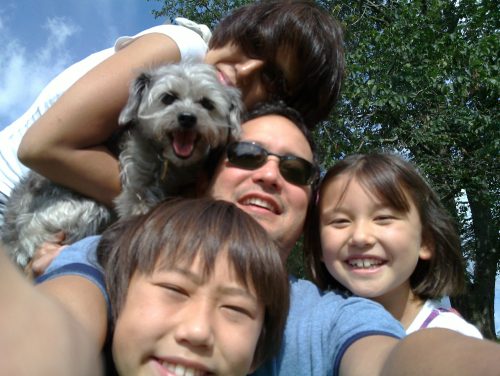
    We called her Mimi (the Japanese word for ear) because of her expressive ears. She was a good dog, who lived a full life. She saw Julia and Tyler grow into adults, traveled with us all around the world (necessitating a Christmas Eve visit to the home of the top National Finnish Veterinarian authority) and literally led us up some stairs to discover our beautiful neighborhood here in NYC. Many of the friends we have here, we met through Mimi and the other dogs in the neighborhood.

    We will miss her terribly but are thankful for everything she taught us and are happy to know she is now resting.

  • Skipper

    Skipper

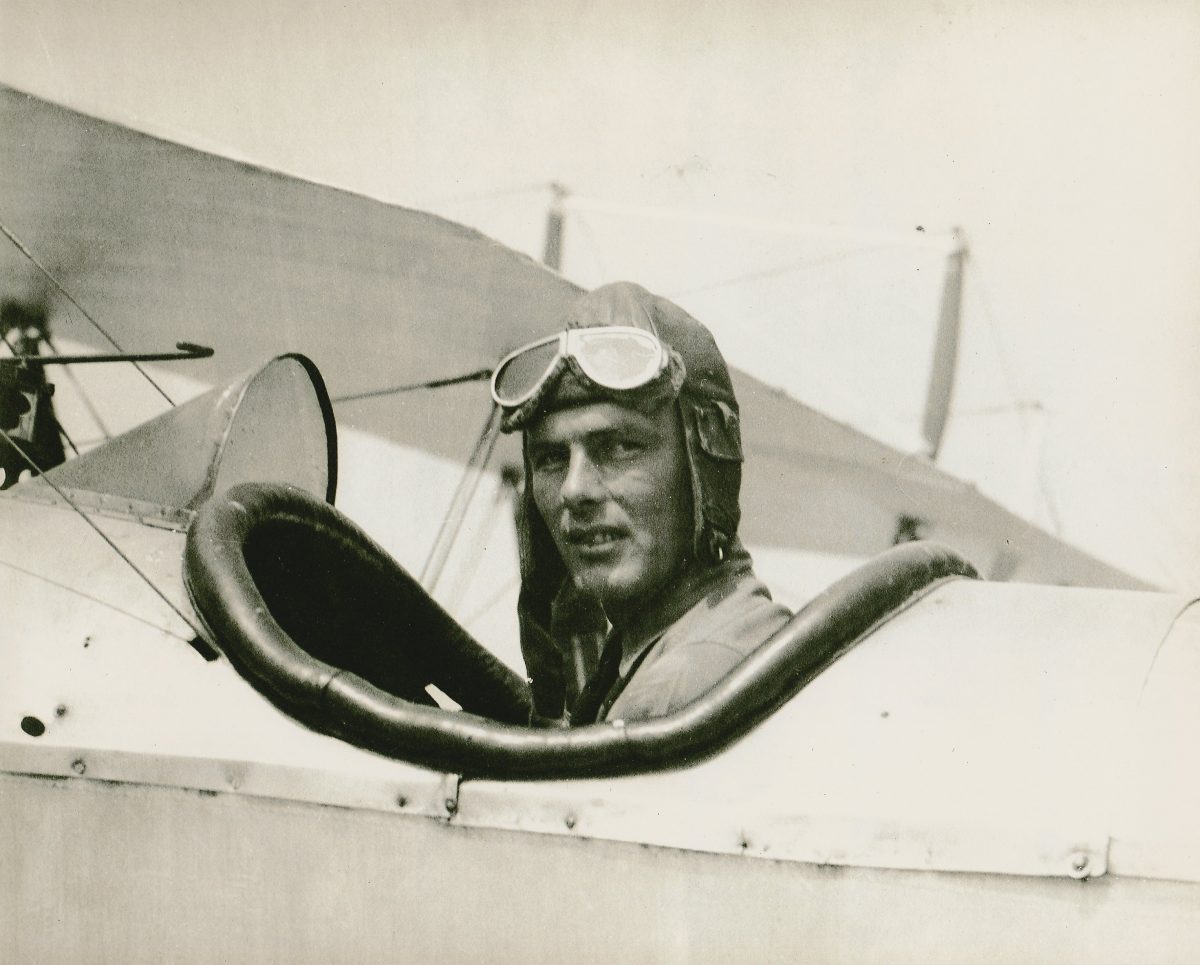
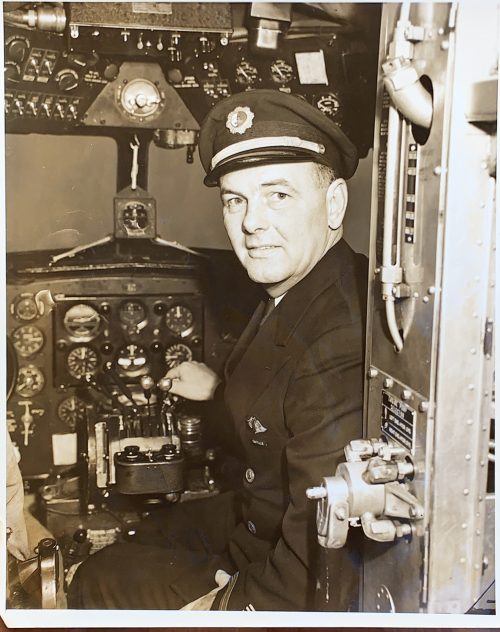
    My great-grandfather, Erlon H. Parker, flew bi-planes for the United States in World War I. As a Memorial Day project, I decided to pull on a few threads to see what else I could find about the man known in my family as “Skipper.”

    The photo up top is Skipper in the cockpit of a biplane. Back then, planes were wood-framed and covered with canvas. When they first started flying, they didn’t know how to synchronize machine guns with the prop so there was a danger of shooting the propeller off. Until they could work out the synchronization, the solution was to wrap the prop with bands of steel. This resulted in randomly ricocheted bullets which sometimes would glance off you or your plane but at least the prop survived. This gives you an idea of how they did things in the early days.

    Before that, pilots went up with pistols, which sounds quaintly like the Wild West. Other options included deploying a grappling hook on the end of some rope and trying to cross your enemy’s path and tear up the their plane like some Afghan fighting kite.

    This is what my great-grandfather signed up for.

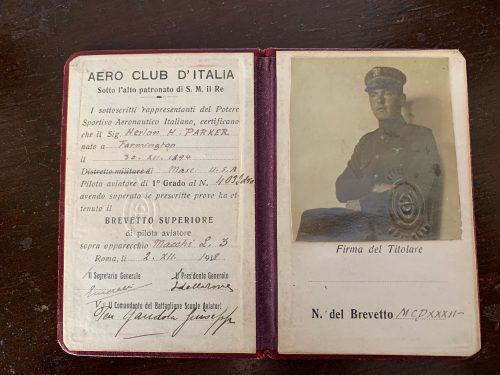
    Erlon Parker’s Italian pilot’s license (the Italian official misspelled his name and got the wrong state)

    Once the United States entered the war, the Army and Navy raced each other to see which service would get to Europe first. The Navy implemented a recruiting program to enlist men for aviation duty. 100 men were chosen, two from each state. Skipper, signing up from Maine, joined as a member of 1st Naval Aeronautic Detachment in Pensacola, Florida which was eventually winnowed down to 20 enlisted pilots.

    On a family Zoom call, I learned that the fledgling unit left for Europe before any uniforms could be made for them. Once they landed in France, (fun fact, they sailed to Europe on the USS Jupiter, the first aircraft carrier in the US Navy) they were instructed to go to a tailor and get a uniform made for themselves. Apparently everyone interpreted what a uniform of a naval airman should look like so the resulting uniforms were not very, um, uniform.

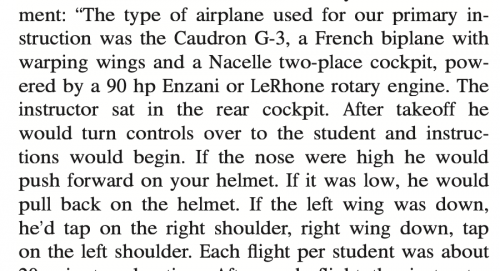
    The group needed instruction as they had little practice flying. The French pilots agreed to train them but, because of the language barrier, they had to be creative.

    From Origins of Naval Patrol Aviation, 1911 – 1920s

    One can only imagine how dodgy these early planes were. Nicknamed “flying eggcrates” there wasn’t much holding them together. The early engines were not very reliable, some only good for 4-hours flying time. There was no radio so each plane went up with a carrier pigeon which was used to send home coordinates for a search party should they go down. There were also other uses for homing pigeons.

    Skipper had other uses for pigeons (clipped from his obituary)

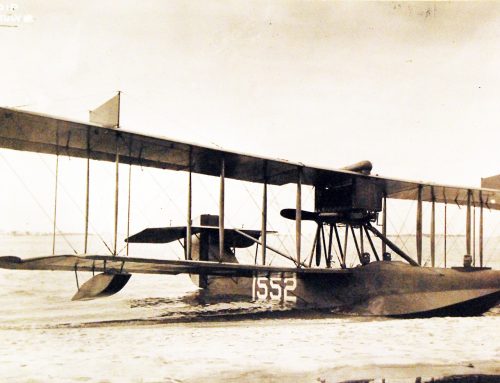
    Skipper flew seaplanes (“flying boats”) that patrolled out over the ocean looking for enemy ships and submarines. They mostly would go out on reconnaissance but they also had some light bombs (basically hand grenades) that they could pitch over the side if they wanted to cause trouble.

    HS-1 Seaplane

    I also learned from Skipper’s obituary that his squadron was credited with sinking two German submarines but that all he ever shot down were, “two seagulls.”

    After the war, Skipper joined a fellow war pilot, Eddy Rickenbacker, as one of the first commercial pilots with Eastern Airlines where he flew the Ford Tri-motor “Tin Goose” on the route between Newark, NJ and Washington, DC. Captain Pete Parker, as he became known, became the Chief pilot with Eastern and flew the first flight out of North Beach, Long Island which is now known as La Guardia.

    The Eastern Airlines Tin Goose

    I have seen Captain Parker’s flight log at my parent’s house which records regular flights between Newark and Havana on a DC-3 back in the 1930’s. My great-grandmother used to tell of the time when they were passengers on a DC-3 going through choppy air. Everyone was getting ill from getting bounced around so much so Skipper asked his wife to excuse him and went up to the cockpit and politely asked if he could take over for a bit. The plane soon smoothed itself out to the delight of everyone on-board.

    This photo was taken in 1940, I think this was a DC-3

    Skipper died before I was born but his stories and spirit last on in my family. He is also the reason my middle name is Parker. I thank him for his service and hope you enjoyed this little celebration of his amazing life.

  • Time Travel

    old-telephone

    Leave it to the Lutherans.

    100 years ago, on April 22, 1913, the Ladies Aid Society and the First Lutheran Church in Oklahoma City sealed a time capsule which has been sitting under a grill set into the floor of the church. Last month, the Century Chest as it was called, was opened. The contents were in pristine condition and included newspapers & periodicals, a brand new telephone, a straw hat, clothing and correspondence, all in mint condition.

    Oklahoma Century Chest

    Several letters and objects were addressed to future descendants of local families. Imagine handing your youngest daughter or son the package above and telling them it was from their ancestors and addressed specifically for them.

    Further reading:

  • When Mom Left for America

    When Mom Left for America

    While in Japan I ran across a bunch of scanned photos that I think my sister did last time she was there. I grabbed them and within the collection, I found one of my favorite old photos of my mom.

    My father loves Japan. He moved there in the early Sixties when not too many Americans would venture to the “Far East” as they used to call it back then. The story goes is that he was in Amsterdam, working for a Dutch trading firm, when word went out that they were opening a branch office in Tokyo. He jumped at the opportunity. His job was to find interesting things for his company to import from Japan.

    At that time the Japanese Yen was something like 330 JPY/USD. He had a flat in the tony suburb of Denenchofu, took taxis everywhere, had a maid, and basically lived like a king. He met my mom during this time, they hit it off and began dating.

    My Japanese grandmother and grandfather were suspicious. They had heard of young GIs wooing away the young daughters of the village and then flying off to the US where they never saw them again.

    My dad was different. He was not in Japan with the Army. He deeply respected the culture, took kendo, studied kanji, and planned to live in Japan for the rest of his life. It took my father a long time, he said a year or two, to convince my grandparents that he was not going to be one of those to steal away their eldest daughter.

    If you know my dad, you know he has eclectic tastes. Apparently his nominations for lucrative exports (colorful koinobori flags for one) were not cutting it with the home office and after a time, they decided to shut down their Japanese operation which was not proving lucrative. At that time it was impossible for a foreigner to get a job in Japan unless you were there with the military. The English teacher route wasn’t an option, no one could afford one. My father had no choice but to return to the United States, specifically New York City, where he knew friends in the publishing industry that could get him a job.

    My grandmother was not pleased.

    The photo above is one of my favorites of my mom. Here she is, all dressed up to fly to New York. This is when people flew Pan Am or BAOC and they got all dressed up to fly. And look in the background, at my grandmother, dressed up as well in a kimono, to see her eldest daughter off to somewhere very, very far away. She’s scowling! I can imagine what’s going through her mind, “I knew this would happen, I knew this would happen!”

    Flash-forward to several months later to the photo below. Dad now has a job in Manhattan and the two of them are living in a brownstone in Brooklyn. Life’s pretty good but my Mom’s trying to figure things out. My dad suggests a local Welcome Wagon event for recent immigrants – maybe she’ll meet someone there.

    The Brooklyn Welcome Wagon (circa 1965)

    And here is my 2nd favorite photo of my mom. She’s there trying her best to fit in. They’ve got some weird activity where you’re supposed to cut up some Dixie cups into stars and that’s the supposed to be this crafty thing. I guess this is folk art for a country that’s only 150 years old. You can see she’s trying her best to put on a smile for the camera but you can see that she’s thinking, “What the heck have I gotten myself into?”

    Anyway, thanks for indulging me in this bit of family history. These two photos have been haunting me and I’ve told this story numerous times to friends and have referred to these photos and now I have a link that I can send them so they can see for themselves.

  • Cancer Sucks

    Cancer Sucks

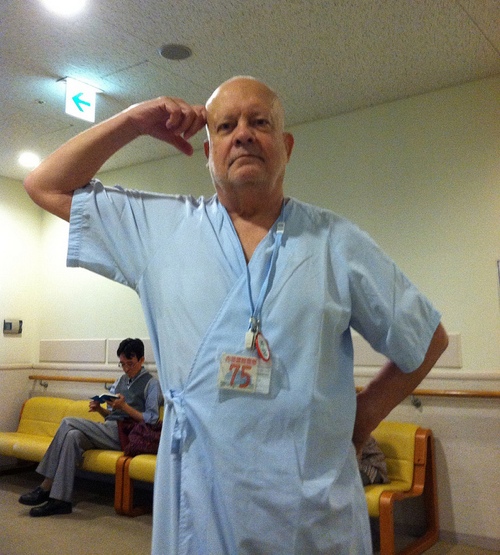
    I’m in Japan this week to visit my father. He has colon cancer and just checked in for surgery.

    This is not a total shock. He is getting old after all and I’ve come to accept a time when something like this would happen. He’s taking it well. He has openly embraced his body slowly falling apart like the owner of an old MG learns to deal with a tricky carburetor.

    He could have gone in for check-ups and caught the cancer earlier and addressed it. Maybe he could have put some time between now and where we are today but that’s not Rick Kennedy’s style. He is not really a doctor kind of guy. He proudly tells the story of how, when diagnosed with a kidney stone he, “somehow managed to piss it right out.” I’m told that is extremely painful, most opt to dissolve it with drugs or other treatments. He has a high tolerance for pain and the cancer grew in him as an annoyance until it became something he couldn’t ignore. Let’s hope it’s not too late.

    My father influenced me in many ways. As I am raising a son myself, I have an appreciation for how he was able to plant seeds of interest that lead me to take the path that I’ve chosen in life.

    My early interest in cycling gave me love for the sport that I experience everyday as I ride to work. He was there in the late-70s with a fixie back before anyone heard of such a thing, an original hipster. I fondly remember watching grainy video tapes with him of European coverage of Paris-Roubaix and other European classic bike races as we learned about the sport together. Part of our weekly grime clean routine was to disassemble our chains, wash them off with an old toothbrush and kerosine, then dip them into a coffee can full of oil warmed up on the kitchen stove. My mom hated that. We were bike nerds.

    My dad had a nose for the eccentric that would drive my mom nuts. For two years he somehow convinced my mom that we should live in a commune. It was fun for me and my sister because there were always lots of kids to play with but the shared chore list made my mom crazy because most people slacked off and she ended up having to do a lot of it. We moved out shortly after a lady named, Tomorrow nearly burned the house down after one particularly memorable party.

    Dad was a writer. (Good Tokyo Restaurants, Little Adventures in Tokyo) Originally an editor at Random House, we moved to Japan when he convinced Sony they needed someone to help make their user manuals less laughable. He took great care to chose the right words and was quick to criticize sloppy use of the English language. To him, bad writing shows a carelessness that offends him.

    We have an on-going debate about the craft of writing, often about the merits of print vs. online. He will never understand hashtags or data-journalism. “I’m just a print guy,” is his refrain. On his way into today’s operation, he insisted on carrying a copy of The Spectator and New Yorker to read just in case he got bored. The nurse had to remind him that he’ll be under while they operate on him. His books were his security blanket. He loves to read and has a hundreds of books he’s collected over the years at great expense. When I asked if I could bring him anything new from the US he declined, “Some people save up money for retirement, I’ve been saving books.” He has a stack of 15 books on the table next to his hospital bed and I’ve been asked to bring with me several more. AJ Liebling, Anthony Powell, Cyril Connolly.

    Dad was incurably optimistic. To a fault perhaps. I remember seeing the book, “A lazy man’s guide to enlightenment” on his shelf. That was very much his philosophy. The secret to happiness is being at peace with what you have, not pushing for more that you might not get. He doesn’t like anyone to fuss over him but I think he is secretly enjoying his time in a Japanese hospital. The nurses are angels and are so gentle and kind. Japanese society is coddling to begin with so you can only imagine what this place is like.

    I have no idea what to expect of Dad’s operation. As can be expected, he is brushing this off as an annoyance but also says things like, “It’ll be good to know you’re here,” which sounds ominous. My mom tends to suppress bad news by ignoring it and she hasn’t really been asking many questions. Keep your fingers crossed. We’re all hoping for the best.

    Thanks to everyone who has already sent along their wishes. Thank you to all those at GigaOM who are filling in for me while I’m away. I am thankful to my managers who, when they learned of the news, told me to absolutely, without question, take as much time as I needed. Stand up folks at GigaOM they are, I feel your support and it means a lot.

    I’ll update this post when I hear more. He should be getting out in a few hours.

    UPDATE: All good! After five hours doctors where able to cut out about 20 cms of his colon and a big, ugly looking lump of evil. He’s resting in the ICU now and doctors say he’ll be wobbling about on his feet tomorrow. He’ll stay there for a week or more depending on how he heals. Luckily they were able to do the whole thing through a few tiny incisions so at least the outside will heal quickly.

    The first thing he said? He wants a few more Anthony Powell books!
  • Julia on Violin

    She’s been wanting to play for years.

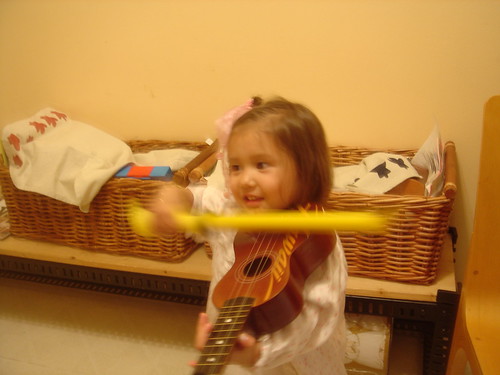
    A new way to play the ukulele

    and now she’s now learning to pluck the strings.

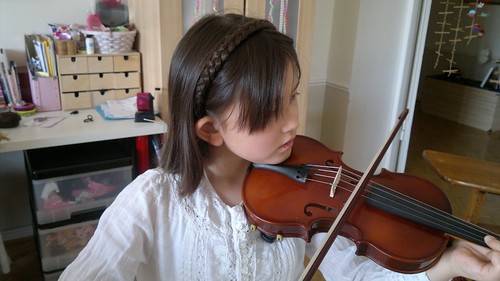
    Julia on Violin

    Yesterday, Julia received certification from the Royal College of Music.

  • Update from Tokyo

    Following up on last week’s letter, here’s an update from my father who lives in Tokyo.

    –The New York Times says just short of half a million people are now in “shelters,” which in most cases means living on a blanket spread out on the floor of a high-school gymnasium. Most of these rural people have lost everything, even their money, which they did not keep in the local bank but in the top drawer of their bureau, which has been swept away.

    –Most recent addition to the shelters are a young boy and an 80-year-old woman rescued after eight days under rubble.

    –Shibuya crossing in front of Shibuya Station is known for its people jams, in which 600 people can step off the curb when the light changes. These days, however, it’s more like fifty people.

    –One fashionably dressed lady in the train this morning was wearing a highly polished helmet.

    –In the stations, escalators going up are operating, but people are expected to descend to the platform on their own. Elevators are kept operating, though, for people who genuinely have difficulty climbing stairs.

    –Although many stores in Tokyo are closed or at least partially shut down, the cosmetics counters on the first floor of department stores, where some of Tokyo’s most attractive ladies man the stands, are open for business. A morale booster, clearly.

    –Gasoline is being rationed, which everyone understands. By lining up early in the morning at the stand at the bottom of the hill, we were able to get 12 liters–maybe four gallons. But in Tokyo the trains take us wherever we want. In the rural disaster area, people can’t get anywhere without a car. They may have to drive 30 kilometers for gasoline.

    –We have heard of a family living uncomfortably close to the endangered power plants evacuating to Yokohama. A family of eight in a car driving 150 miles.

    –We learned a few days ago that radiation has been detected in shipments of spinach. In its determination to provide everyone with as much information as possible, NHK shows a map of the ten prefectures in question, with the precise level of radiation one could expect in the spinach from each prefecture.

    –“Foreigners” seeing videos of residents of Tokyo wearing white face masks might think they are protection against radiation. No, it’s protection against hay-fever pollen.

    –There are far fewer ads in the trains and stations than usual, although beer ads celebrating the coming of spring (tra la) are plentiful.

    My mother adds that she had to give up on getting milk at the local grocery store because the line was too long. Milk supplies are down because radiation contamination has impacted the supply. The local department store was only open from 4pm until 7pm as they were trying to save on electricity and she recently had to line up at 6am to get gasoline for the family car which is being rationed out to just 10 liters/car.

    —– 0 —–

    Meanwhile, I read in local press that the Finns have moved the seven staff in their Tokyo office down south with the Danes in their Hiroshima offices. This move was prompted, in a historic twist of irony, to avoid potential nuclear fallout from the reactors in Fukushima.

  • Letter from Tokyo

    My father just sent an email yesterday to my sister and I describing the situation in Tokyo. Knowing how everything runs like clockwork in that city, it’s even more striking how the country adapts when they have to improvise.

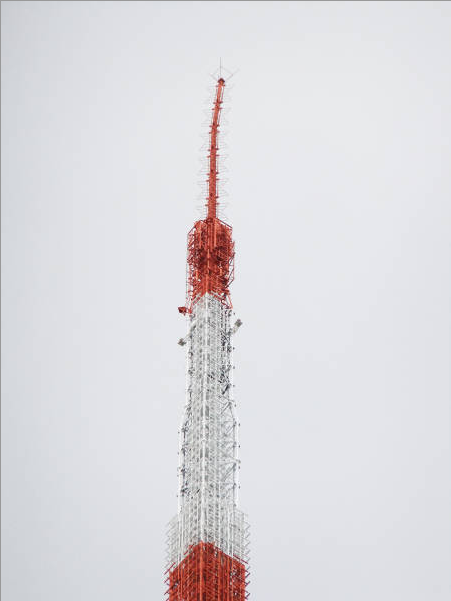
    Tokyo Tower, bent following earthquake

    Four days after the quake we are still feeling aftershocks. We’ve received over sixy aftershocks so far and clearly there are more to come. We have learned another is on the way when the hanging drawer-pulls of the bureau begin to tinkle. But you know, after a while it all begins to lapse into a routine, especially as no one here ever gets excited and the Japanese instinct to rally round is inbred.

    Mikie and I are a couple hundred kilometers south of the scenes of devastation you’ve seen on TV and we’re on a hill, so we’re pretty safe, I guess. We are told, though, that we should expect another follow-up quake and the ensuing tsunami.

    There has been little damage in Tokyo, although the radio aerial at the tip of Tokyo Tower was bent. A number of multi-story stores in downtown Tokyo have closed to make sure their structure has not been damaged, although their (disposable?) clerks behind the information counter on the first floor remain on duty to apologize to customers for the inconvenience.

    Because the nuclear power complex in the stricken area has been closed down, electricity is being rationed and this has brought home to everyone just how dependent a city like Tokyo is on electric power. No electricity means no trains, no traffic lights, no doors opening automatically on your approach, no pumping of gas, no automatic bottom-washing in toilets.

    The trains, usually punctual to the minute, are no longer posting any schedule at all. To conserve electricity, lights in stations have been dimmed and escalators and elevators have been shut down. There is a palpable commeraderie among people now forced to ascend a long stairway to the street or to descend to the platform. We used to be able to go through station turnstiles by swiping our wallet across a reader, but now we have to endure the inconvenience of actually showing our pass to the station attendant, who shrugs his shoulders and rolls his eyes.

    The evening the quake hit, all trains were immediately stopped because it wasn’t certain that the tracks had not been bent, so thousands of office workers couldn’t get home. A sense of commeraderie flowered then, too, as people found refuge in the back room of their favorite little drinking spot, or in one of the temples that opened for the occasion, or on a park bench, or just on the street.

    With the trains running now, although to an irregular schedule, we seem to be inching back to a regular routine, but coming home on the train last night, the train stopped because Train Control had warned the driver that an aftershock was expected (better notice that the drawer-pulls of our bureau) and in fact after a minute the train rolled gently from side to side. The conductor apologized.

    It may be worth noting that the Financial Times reported that when the quake struck, ten minutes before the Tokyo Stock Exchange closed, the trading floor was shaken, which brought about a feverish selling of the yen and of Japanese stock generally–a testament to the brutal efficiency of Capitalism.