We finally got a decent winter storm here in California which meant that instead of my usual train/ferry & bike commute I had to shlep it home on a bus to stay dry. The bus is comfortable but it involves a good 60 minutes so it’s a good time to catch up on podcasts.
Today I listened to a fascinating piece which told the story of the “Glomar Response” which is that foggy response that a PR flack gives when they want to answer a question with a non-response.
“We can neither confirm nor deny. . .”
When did such a phrase come about? What were the circumstances that required someone to come up with such a turn of a phrase? The good folks at Radiolab dug in and found the answer. Give it a listen, it’s an amazing piece of cold war yarn.
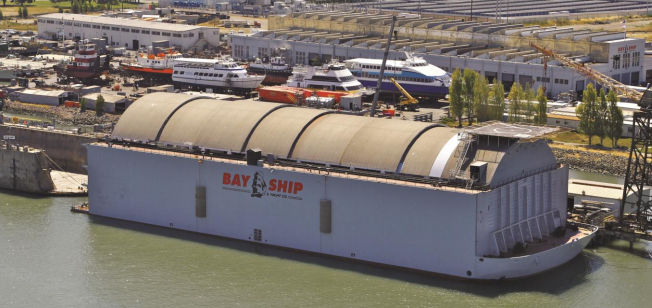
Here’s the Alameda connection. A sister ship to the Hughes Glomar Explorer was the HMB-1. This was basically a floating dry dock which had ballast tanks that would flood and submerge the dock underwater beneath the Explorer. Inside was the massive claw device used to grab the submarine mentioned in the story. The sub could then be pulled into the docking bay while it’s still underwater and the HMB-1 surfaced and the retractable roof pulled back over on top, all the while hiding its cargo from the prying eyes of Soviet spy satellites. It’s all very James Bond.
Later, the HMB-1 was commissioned by the Navy for the Sea Shadow, an experimental ship built back in the 80’s when stealth technology was all the rage.
The Sea Shadow
The HMB-1 was designed to hold this top secret boat, again, to keep it from prying eyes between engagements.
Sea Shadow inside the HMB-1
The Sea Shadow never was produced and it, along with it’s floating/submersible covered dry dock was eventually mothballed in Suisun Bay north of Martinez.
The Alameda connection takes place several years later when the Navy decides to auction the whole package off.
Even though Bay Ship & Yacht Company would eventually be awarded the vessel, the company’s bid wasn’t the highest. “The highest bidder was a Chinese outfit, I believe,” Cameron said. “Even though the Sea Shadow project had been declassified, there were still some privacy issues, so the government didn’t want to sell her to a foreign entity.
And the second highest bidder, which was a company in the Gulf Coast, backed out when they realized how much it would cost to move her down there. We actually wrote it off as ‘not gonna happen’ when we found out we’d been outbid. Then we got a call a month later letting us know she was ours if we still wanted her.
The $2.5 million price tag was small compared to the $15-$20 million that it would cost to build a new traditional dry dock, which Bay Ship & Yacht had been considering for some time. “And we wouldn’t have that cover, which makes HMB-1 such a strong and unique piece of equipment,” Cameron said. He estimates that to build HMB-1 now would cost upwards of $50 million.
The biggest challenge that shipbuilders and ship repairers face with traditional open-air dry docks is weather. Rain (or any moisture) and wind can bring a job to a screeching halt, making income harder to come by during winter months. “HMB-1 is definitely going to be an asset in that respect this winter,” Cameron said. “But it’s the ability to be more efficient and the environmental aspects that we’re all really excited about.
Bay Ship & Yacht Company is, “one of America’s leading service, refit and new construction yards for super yachts and commercial vessels” based on the old naval base on the West End of Alameda. If you have ever taken the ferry over to the Alameda Antique Fair or visited the old Rosenblum winery, you can see the HMB-1 docked right next to the Main Street ferry terminal.
and now you know
Further Reading:
Azorian: The Raising of the K-129 is a detailed documentary about the mission to raise the Soviet sub, K-129, and the role of the HMB-1 in that mission
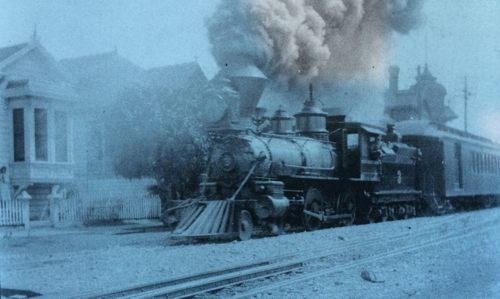
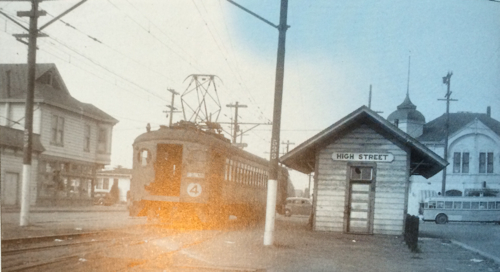
I picked up a book of old photographs last weekend that detailed Alameda’s railroad history. I had heard that the island where I live used to host a network of light rail lines that served the community but had no idea how extensive it was until I browsed the pages of Alameda by Rail this past weekend.
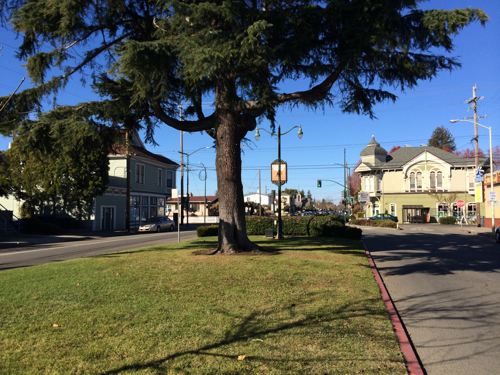
Each photo was meticulously documented with approximate location and year of the photo so I took it upon myself to locate some of the places where the photos were take to see if I could approximate what the view looks like today. The results are below.
Steam Locomotive on Encinal
Encinal Avenue today
Commuter train from the 40’s on corner of High and Encinal
High Street Station today
Having an awareness of what had once been gave me a whole new appreciation for the history of our neighborhood. Alameda today is a bit cut off from San Francisco as most drive (it takes about 30 minutes without traffic). The nearest light rail station is Fruitvale BART station which is about 10 minutes away on bicycle. Apparently trolleys raced back and forth across the stretch of the Island every 30 minutes and, if you wanted to go to the city, a ferry was waiting over on the West End that could take you directly downtown to San Francisco.
Imagine how different life would be if you could catch a train to the city by walking out your front door! Too bad the ripped up all the tracks – with the price of gas and parking today, it would be nice having those old trains back and less cars on the road.
UPDATE: If you want to try this poor man’s time travel trick but don’t have a book with old photos, check out WhatWasThere. The upload and overlay onto Google Street View is a bit finicky but if you get the alignment right, the effect is quite stunning.
In the late 80’s, while in university, my girlfriend and I took a backpacker trip to Central America. This was not a well-planned trip. We took an old copy of The People’s Guide to Mexico, a hammock, and a day pack to hold a few spare changes of clothes. Our plan was to travel clockwise from Mexico City, the Yucatan, Belize, Guatemala, and then back North.
We traveled on the cheap. Flying into Mexico City on a rainy Christmas Eve we caught an overnight bus down to the Yucatan peninsula on Christmas Day. I still remember the bus rocking back and forth violently trying to sleep as we careened down the mountains towards the coast. There was a plastic Jesus on the dashboard blinking from a series of LEDs along his arms and legs. I awoke early in the morning when the driver slammed on the brakes to roll slowly past the scene of a fatal car accident. A bus and a car had collided head on and there were bodies being dragged out on the shoulder – the fog was heavy, the vision was dreamlike.
Later, we hit the coast and got off somewhere to put our feet into the warm waters of the Gulf of Mexico. After so much rain, Northern California rain, Los Angeles rain, Mexico City rain, it was good to finally get some sun. We hit the tropics and shed raincoats and jeans for t-shirts, shorts, and huaraches.We bopped down the Eastern edge of the peninsula and then crossed over into Belize. We wanted to avoid the tourist traps so we stayed away from the beaches and headed inland towards the border with Guatemala.
Once in Guatemala, we traveled by colorfully painted secondhand school buses. These “chicken buses” (called such because they usually carried local farmers along with their livestock) were by far the cheapest (and most fun) way to get around. The buses traveled through the smaller towns, so there were more buses and routes removing the need to stick to any schedule or plan.
Bus in Guatemala
The roads were mostly dirt and I would spend many hours looking out the window at the passing landscape. Sometimes I could see the shadow of the kids riding up on top, some would be standing, arms outstretched, as if surfing. Occasionally the conductor would lean out the door and shout to those on the roof to watch their head, everyone would duck as we drove slowly under a tree branch.
Tikal was a must see. This ancient Mayan ruin is truly not to be missed. The photo in the header is from a day spent wandering the ruins with a guide who snuck off to spend a day with us, clambering up and down the pyramids, showing us secret passages, and memorably getting high and playing chess with us while we sat on top of on our very own 2,000 year old Mayan pyramid. It was only late in the day that we discovered that our friend was actually playing hooky. A shout from someone who clearly was his supervisor put a quick end to our fun and we were back on our own.
Following Tikal, we headed West a bit and got into a conversation with some British travelers who told us we absolutely had to visit Finka de Mike (Mike’s Ranch) near the town of Poptun. The bus we were on would take us there and arrive in the evening.
Arriving at Poptun, it was too late to ask the only business, a small restaurant, for directions to the ranch. It was closed. One of the farmers that got off the bus with us was kind enough to show us the way. Our limited Spanish figured out that he would take us to the ranch and that we only needed to follow him. We began to walk down a narrow path into the woods.
It was pitch black. There wasn’t any moon and it was overcast so the stars weren’t much of a help either. Our guide was walking at a brisk pace and we were getting deeper and deeper into the woods. Both Kathi and I started to hang back a bit and began to look for signs of an ambush or other foul play up ahead. I fingered a pocket knife in my pocket.
We must have walked a good couple of miles and I think it was close to 9pm. Just as we were beginning to get really concerned, the farmer turned to us and gestured to a set of lights on the other side of a field. “A que” he says pointing, “Finca de Mike” and before I could dig something out of my pack to thank him, he was gone. Back the way we came. He just walked four miles out of his way.
Kathi and I walked across the field and into what seemed like the main house. Candlelight lit the room dimly. After traveling native for a couple of weeks, surrounded by Spanish, it seemed strange to creek open a door and hear English conversation. We asked if there was someone to check in with and were told by the other guests that the Ranch was run on an honor system. There was a spiral bound notebook on the kitchen counter and guests would just write in what to took from the pantry or refrigerator and the total number of nights they stayed. This would all get totaled up by the owner upon departure.
It was very comfortable there. When we met Mike and Carol, the owners, we learned Finca de Mike covered 400 acres and we learned their story. Back in California they had the dream of owning a ranch but were unable to afford one. They sold everything they had and traveled south until they came to Guatemala in the late 60’s and bought the land for almost nothing.
Since then, they had turned the ranch into a self-sustaining farm. All the vegetables and meat were raised on site and all the guests worked together to cook the evening meal. Mike said that friends would often come down to visit and bring their friends. Before long, Finca de Mike became a regular stop for not only for friends of friends but soon, as word got around, new guests too. Mike devised the spiral notebook system as a way to defray some of their costs.
Two macaws flew freely around the ranch, heading off each morning and returning right around sunset, in time to hang out with everyone as we drank beer on the porch of the ranch’s beautiful, handmade pine wood house. The ranch was surrounded by curiously shaped hills until it dawned on me during that sunset that these were not hills at all but Mayan pyramids that had yet to be uncovered, overgrown with jungle to look like hills. We were staying on the grounds of an ancient Mayan city.
On the third or forth day I grew restless. People had spoken about a cave several hours walk to the East. As I asked around for others that might join me, someone suggested the “Cave Trip” advertised in the kitchen. I signed up Kathi and I on a simple sign-up sheet taped to the refridgerator. It said to show up by the main house at 6am to get ready.
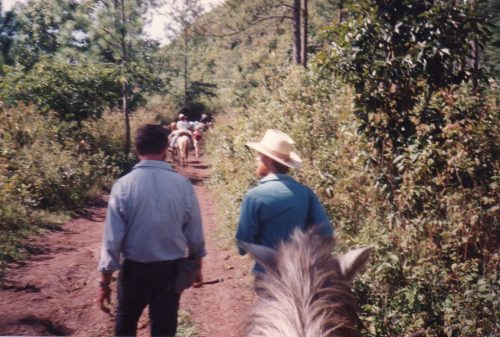
The next morning I walked up to see a convoy of pack horses getting saddled up with gear. I asked why so much gear was necessary and was told we were going to visit a new cave, one that had never been explored. But this one was two days ride away. Even better!
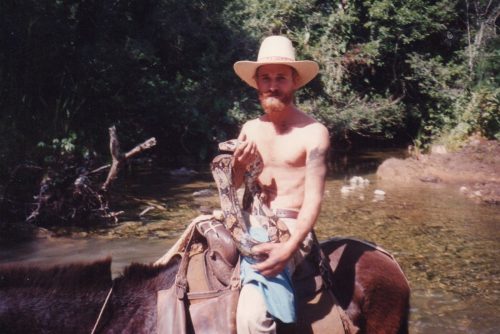
The only New Mexican I know
There were six or eight of us on the trip, including Mike and a guide to cut thru the jungle with a machete. We were traveling along a trail cut by the rubber farmers and we often passed trees with the telltale cross-hatching on them.
The first evening we spent in a shack for farmers that would hike to remote fields in the mountains and stay for several days as they farmed their crops. There was some dried corn available which our guide used to make fresh tortillas from scratch with nothing more than the top of an oil drum as a pan. In the cold, morning mist, I still remember these corn tortillas as the best I have ever tasted.
We explored several caves including one, its floor covered with pottery shards, that was later featured in National Geographic (which I now learn was Naj Tunich, a potential UNESCO World Heritage site). We arrived even before the explorers. I remember learning from Mike how to co-exist with the jungle. It was not the dark, scary place my urban mind was telling me it was. The Guatemalan people were amazing. The kind man who walked four miles out of his way to show us to the ranch, the guide at Tikal who played chess with us. Everyone we met had an inner light of goodness.
Guatemala was amazing and Finca de Mike was a highlight. Here was someone who was carving out life on his own terms and being the change he wanted to see.
Contrast this with the shock I felt when I read two years later in a Berkeley cafe that Mike DeVine, the owner of the ranch, was found brutally murdered – his head nearly severed clean. Suspicions about the motive were many including the story that he stumbled across a unit of the Guatemalan Army loading drugs for a shipment up North and the CIA-backed goons that were in on it murdered Mike to protect their business.
The ripples continued. Military aid by the US to Guatemala was cut off as a result of Mike’s murder and only recently, more than 20 years later, have relations improved. The motive of the murder is still shrouded but clues are starting to crop up, including a cryptic declassified government document.
Finca de Mike is still there. Known as Finca Ixobel, you can visit today and Carol Ann DeVine will be there to greet you where the memory of Mike lives on. I have never been back but would love to hear how things are today and if the region has recovered from this terrible tragedy.
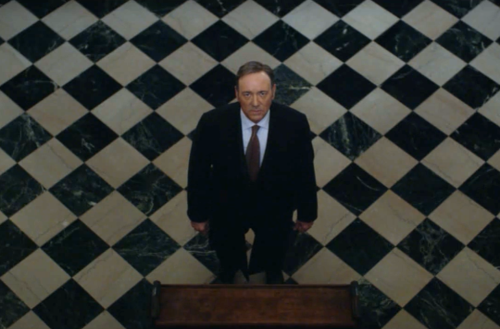
Just finished all 13 hours of the first season of the latest Netflix series, House of Cards. While I didn’t binge view as some of my colleagues did in the name of journalism, I did find myself staying up later than normal to watch “just one more episode” of this dark cousin to West Wing.
Apparently Netflix dropped $100 million to produce two 13 episode seasons. The result is a Season One that plays as a 13 hour movie about the dark, evil underbelly of Washington politics. Given such resources and space the characters are wonderfully developed and, if like most, you watch the series over a short span of time, you come to know them as an extension of your reality. The depth and detail of House of Cards makes the typical 2 hour feature film feel like a rough character sketch.
The series was shot with digital RED cameras which allowed them to shoot takes continually without stopping the camera.
Obviously, shooting digitally helps, [House of Cards was shot using the RED camera] because I never had to cut. I could say, ‘Go back out and come in again,’ and it’s amazing the pace you get. It’s a Frank Capra trick from way back. Because he could only print so many takes, he used to say, ‘Keep it rolling, go out and come in.’ What he found was people were more energized, and it gave this effervescence, and I ended up having to do that.
But the most interesting thing is that Netflix decided to release all 13 hours of the first season in one go. At first I was skeptical. Traditional television leaves you with cliff hangers that bring you back each week for what they used to call appointment television. Netflix knows a thing or two about “binge viewing” and based on their data, felt they could generate more buzz if they released everything at once. I agree. The coverage has been fantastic for Netflix and I’m sure it’s driven a spike in membership. Indeed, they are watching data on viewers to inform their next original series.
Playing with a New Deck – details about how multiple director’s filmed the series and were given freedoms not normally extended to directors of television series.
Yo La Tengo previewed a track off their upcoming album, Fade, on YouTube. The track in the video above is Ohm and features a tree from Overlook Park in Portland, Oregon that is also on the album’s cover. Fade will be released in January.
Yesterday, my 10 year-old daughter, discovered that the Tooth Fairy no longer exists. I was packing to return home from our vacation and was about to stow some bandages in my toilet bag when she caught a glimpse of her note and tooth that she had left for T.F. under her pillow several days ago. It was a real shock for her.
My son, who is older, was different. He likes to figures stuff out for himself. My wife and I knew he no longer believed but weren’t sure when he stopped believing. He was a good sport about it though and kept Julia in the dark for the past few years, playing along, saying nothing. Today I finally asked him when he was clued in. He looked up from an episode of MythBusters and said he figured it out when he lost a tooth but decided not to tell us. He put the tooth under the pillow and nothing happend the next morning, the tooth was still there. Eliminating the variables, he put it together.
As fat tears rolled down Julia’s cheeks, between sniffles, I could feel her ache of losing something magical, something bigger than herself, someone with whom she could keep secrets. With the fall of the Tooth Fairy, others soon would follow. She tugged at this loose spiritual thread and asked me point blank about Santa, the Easter Bunny, and so on. Knowing it was time to come clean, I lay down the cards for her. By mid-morning, not only had the Tooth Fairy ceased to exist but all the other childhood myths lay shattered in pieces.
I wonder how this will change her over the next year. She’s about to go into 5th grade, the last grade before she goes on to Middle School. Many of her classmates have been telling her that Santa and the others do not exist but she’s been resisting them, choosing to have faith. Now, with that dream broken, she’ll be on the other side of the fence. Those who know the existentialist truth of a world without the Tooth Fairy.
A father worries, what will become of that innocent smile?
While in Japan I ran across a bunch of scanned photos that I think my sister did last time she was there. I grabbed them and within the collection, I found one of my favorite old photos of my mom.
My father loves Japan. He moved there in the early Sixties when not too many Americans would venture to the “Far East” as they used to call it back then. The story goes is that he was in Amsterdam, working for a Dutch trading firm, when word went out that they were opening a branch office in Tokyo. He jumped at the opportunity. His job was to find interesting things for his company to import from Japan.
At that time the Japanese Yen was something like 330 JPY/USD. He had a flat in the tony suburb of Denenchofu, took taxis everywhere, had a maid, and basically lived like a king. He met my mom during this time, they hit it off and began dating.
My Japanese grandmother and grandfather were suspicious. They had heard of young GIs wooing away the young daughters of the village and then flying off to the US where they never saw them again.
My dad was different. He was not in Japan with the Army. He deeply respected the culture, took kendo, studied kanji, and planned to live in Japan for the rest of his life. It took my father a long time, he said a year or two, to convince my grandparents that he was not going to be one of those to steal away their eldest daughter.
If you know my dad, you know he has eclectic tastes. Apparently his nominations for lucrative exports (colorful koinobori flags for one) were not cutting it with the home office and after a time, they decided to shut down their Japanese operation which was not proving lucrative. At that time it was impossible for a foreigner to get a job in Japan unless you were there with the military. The English teacher route wasn’t an option, no one could afford one. My father had no choice but to return to the United States, specifically New York City, where he knew friends in the publishing industry that could get him a job.
My grandmother was not pleased.
The photo above is one of my favorites of my mom. Here she is, all dressed up to fly to New York. This is when people flew Pan Am or BAOC and they got all dressed up to fly. And look in the background, at my grandmother, dressed up as well in a kimono, to see her eldest daughter off to somewhere very, very far away. She’s scowling! I can imagine what’s going through her mind, “I knew this would happen, I knew this would happen!”
Flash-forward to several months later to the photo below. Dad now has a job in Manhattan and the two of them are living in a brownstone in Brooklyn. Life’s pretty good but my Mom’s trying to figure things out. My dad suggests a local Welcome Wagon event for recent immigrants – maybe she’ll meet someone there.
The Brooklyn Welcome Wagon (circa 1965)
And here is my 2nd favorite photo of my mom. She’s there trying her best to fit in. They’ve got some weird activity where you’re supposed to cut up some Dixie cups into stars and that’s the supposed to be this crafty thing. I guess this is folk art for a country that’s only 150 years old. You can see she’s trying her best to put on a smile for the camera but you can see that she’s thinking, “What the heck have I gotten myself into?”
Anyway, thanks for indulging me in this bit of family history. These two photos have been haunting me and I’ve told this story numerous times to friends and have referred to these photos and now I have a link that I can send them so they can see for themselves.
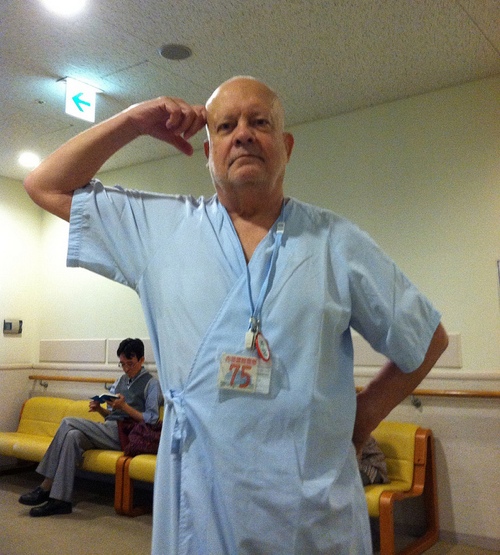
I’m in Japan this week to visit my father. He has colon cancer and just checked in for surgery.
This is not a total shock. He is getting old after all and I’ve come to accept a time when something like this would happen. He’s taking it well. He has openly embraced his body slowly falling apart like the owner of an old MG learns to deal with a tricky carburetor.
He could have gone in for check-ups and caught the cancer earlier and addressed it. Maybe he could have put some time between now and where we are today but that’s not Rick Kennedy’s style. He is not really a doctor kind of guy. He proudly tells the story of how, when diagnosed with a kidney stone he, “somehow managed to piss it right out.” I’m told that is extremely painful, most opt to dissolve it with drugs or other treatments. He has a high tolerance for pain and the cancer grew in him as an annoyance until it became something he couldn’t ignore. Let’s hope it’s not too late.
My father influenced me in many ways. As I am raising a son myself, I have an appreciation for how he was able to plant seeds of interest that lead me to take the path that I’ve chosen in life.
My early interest in cycling gave me love for the sport that I experience everyday as I ride to work. He was there in the late-70s with a fixie back before anyone heard of such a thing, an original hipster. I fondly remember watching grainy video tapes with him of European coverage of Paris-Roubaix and other European classic bike races as we learned about the sport together. Part of our weekly grime clean routine was to disassemble our chains, wash them off with an old toothbrush and kerosine, then dip them into a coffee can full of oil warmed up on the kitchen stove. My mom hated that. We were bike nerds.
My dad had a nose for the eccentric that would drive my mom nuts. For two years he somehow convinced my mom that we should live in a commune. It was fun for me and my sister because there were always lots of kids to play with but the shared chore list made my mom crazy because most people slacked off and she ended up having to do a lot of it. We moved out shortly after a lady named, Tomorrow nearly burned the house down after one particularly memorable party.
Dad was a writer. (Good Tokyo Restaurants, Little Adventures in Tokyo) Originally an editor at Random House, we moved to Japan when he convinced Sony they needed someone to help make their user manuals less laughable. He took great care to chose the right words and was quick to criticize sloppy use of the English language. To him, bad writing shows a carelessness that offends him.
We have an on-going debate about the craft of writing, often about the merits of print vs. online. He will never understand hashtags or data-journalism. “I’m just a print guy,” is his refrain. On his way into today’s operation, he insisted on carrying a copy of The Spectator and New Yorker to read just in case he got bored. The nurse had to remind him that he’ll be under while they operate on him. His books were his security blanket. He loves to read and has a hundreds of books he’s collected over the years at great expense. When I asked if I could bring him anything new from the US he declined, “Some people save up money for retirement, I’ve been saving books.” He has a stack of 15 books on the table next to his hospital bed and I’ve been asked to bring with me several more. AJ Liebling, Anthony Powell, Cyril Connolly.
Dad was incurably optimistic. To a fault perhaps. I remember seeing the book, “A lazy man’s guide to enlightenment” on his shelf. That was very much his philosophy. The secret to happiness is being at peace with what you have, not pushing for more that you might not get. He doesn’t like anyone to fuss over him but I think he is secretly enjoying his time in a Japanese hospital. The nurses are angels and are so gentle and kind. Japanese society is coddling to begin with so you can only imagine what this place is like.
I have no idea what to expect of Dad’s operation. As can be expected, he is brushing this off as an annoyance but also says things like, “It’ll be good to know you’re here,” which sounds ominous. My mom tends to suppress bad news by ignoring it and she hasn’t really been asking many questions. Keep your fingers crossed. We’re all hoping for the best.
Thanks to everyone who has already sent along their wishes. Thank you to all those at GigaOM who are filling in for me while I’m away. I am thankful to my managers who, when they learned of the news, told me to absolutely, without question, take as much time as I needed. Stand up folks at GigaOM they are, I feel your support and it means a lot.
I’ll update this post when I hear more. He should be getting out in a few hours.
UPDATE: All good! After five hours doctors where able to cut out about 20 cms of his colon and a big, ugly looking lump of evil. He’s resting in the ICU now and doctors say he’ll be wobbling about on his feet tomorrow. He’ll stay there for a week or more depending on how he heals. Luckily they were able to do the whole thing through a few tiny incisions so at least the outside will heal quickly.
The first thing he said? He wants a few more Anthony Powell books!
Cookie Consent
We use cookies to improve your experience on our site. By using our site, you consent to cookies.
ID used to identify users for 24 hours after last activity
24 hours
_gat
Used to monitor number of Google Analytics server requests when using Google Tag Manager
1 minute
_gac_
Contains information related to marketing campaigns of the user. These are shared with Google AdWords / Google Ads when the Google Ads and Google Analytics accounts are linked together.
90 days
__utma
ID used to identify users and sessions
2 years after last activity
__utmt
Used to monitor number of Google Analytics server requests
10 minutes
__utmb
Used to distinguish new sessions and visits. This cookie is set when the GA.js javascript library is loaded and there is no existing __utmb cookie. The cookie is updated every time data is sent to the Google Analytics server.
30 minutes after last activity
__utmc
Used only with old Urchin versions of Google Analytics and not with GA.js. Was used to distinguish between new sessions and visits at the end of a session.
End of session (browser)
__utmz
Contains information about the traffic source or campaign that directed user to the website. The cookie is set when the GA.js javascript is loaded and updated when data is sent to the Google Anaytics server
6 months after last activity
__utmv
Contains custom information set by the web developer via the _setCustomVar method in Google Analytics. This cookie is updated every time new data is sent to the Google Analytics server.
2 years after last activity
__utmx
Used to determine whether a user is included in an A / B or Multivariate test.
18 months
_ga
ID used to identify users
2 years
_gali
Used by Google Analytics to determine which links on a page are being clicked
30 seconds
_ga_
ID used to identify users
2 years
You can find more information in our About Me and .


 this past weekend.