Category: Home

  • David Lindley, the Prince of Polyester

    David Lindley, the Prince of Polyester

    The first time I heard David Lindley was when he came out on stage as the warm up act for Santana and The Grateful Dead in the Sierra foothills in California. It was a hot August day and it was still early afternoon so the sun was blazing down on the crowd. We had just watched an airshow above our heads with prop planes tearing up the skies above us so everyone’s face was hot and necks were sore. David came out on stage in a polyester body suit and went into a version of Twist and Shout (2nd track on the player below) that sounded like nothing I’d ever heard before.

    He was ripping it up and within minutes started sweating so much that his long hair immediately grew straggly and stuck to his face. I was worried he would spontaneously combust in the heat but Lindley and the band soldiered on and launched into fast ska version of Papa Was A Rolling Stone (5th track) that immediately got everyone on their feet. He jumped through several genres and also showed off his mastery of the slide guitar on Mercury Blues (10th track)

    I saw him again in Tokyo, many years later, as he toured with Ry Cooder and both their kids. I had heard that Lindley was playing the World Music scene with Henry Kaiser, capturing field recordings in Madagascar for A World Out of Time. When he came to Tokyo, Lindley and Cooder brought all sorts of instruments I had never heard before, explaining each before playing them. They played in a small theater in Gotanda and I felt lucky to see them.

    The final time I saw Lindley was at the invitation of a friend (thanks Rick!) who said he’d be playing at a birthday party in the Berkeley hills. As when I saw him in Tokyo, he was chatting up the crowd and explaining each of the instruments he had with him, their origins and he learned about them and where he got the one he was holding before us. Lindley was a musicologist (his bushy mutton chops accentuated his professorial air) but he played each of his instruments with a passion and soul that would make the instrument, designed for another type of music, sound new.

    Listen below to David play the old blues tune Minglewood Blues on a Middle-Eastern Oud. Playing an old American folk tune on an ancient instrument from Northern Africa connects the two cultures in a weird way that makes you rethink all your preconceptions of the song and rediscover its story in a new light. Then you look up and see the guy playing for you is in a Hawaiian shirt and is sporting yellow patent-leather loafers and you smile at the wonderfully diverse world around us that makes it all work.

    David Lindley passed away yesterday at 78.

  • Manhattan Tower of Terror

    Manhattan Tower of Terror

    Photo: NYC Department of Buildings

    A new hotel going up near Times Square is proposing putting one of those vertical-drop rides on the top of the building.

    In the request, Extell suggests that vertical-drop rides will pull in tourists as well as “a few jaded New Yorkers,” and pitches it as the next level for hoteliers who “must think flexibly in order to survive.”

    Skyscrapers, Now With More Terror

    Fun or Folly? Would you ride it?

  • Allen Ginsberg

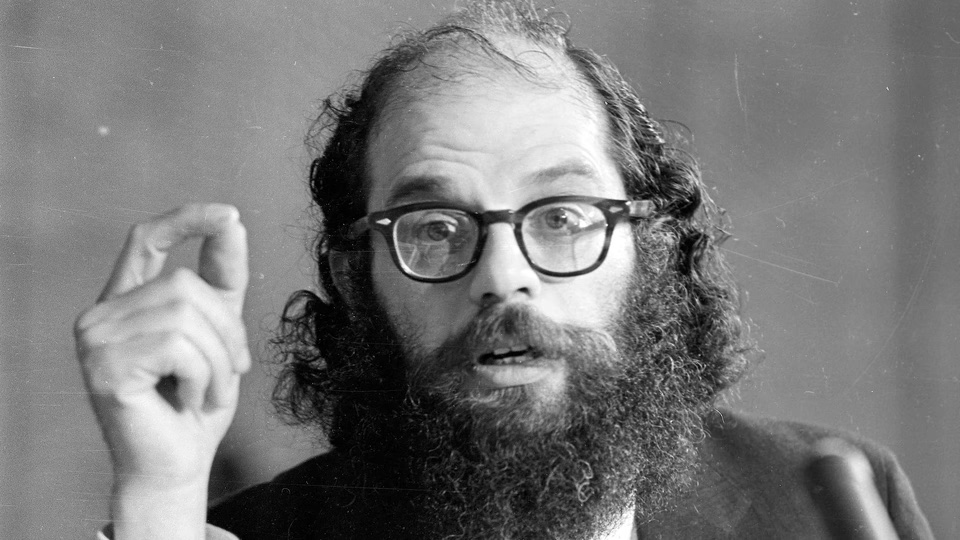
    Allen Ginsberg

    I recognized the font of the “Howl” on the front of his baseball cap. We struck up a conversation about City Lights bookstore, Ferlinghetti, the Beats and old San Francisco. Eric was his name. 

    Turns out he was an agent for some of Allen Ginsberg’s art and hung out at his apartment on the Lower East Side. “What was Ginsberg like, as a person?” I asked. 

    “He reminded me of a Jewish grandmother. He would lean over the front seat and give the cabbie very specific directions.”

  • American Food Mythology

    Let us remember the giants of American Cuisine.

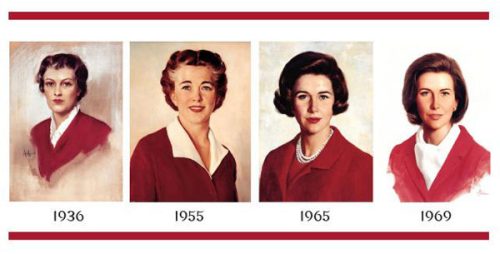
    Betty Crocker

    Betty Crocker isn’t actually a real person. She is the brainchild of an advertising campaign developed by the Washburn-Crosby Company, a flour milling company started in the late 1800s that eventually became General Mills.

    Who was Betty Crocker?
    Colonel Sanders

    Ironically, Colonel Harland Sanders cannot stand what his franchisees have done to his recipes. This from a 1970 New Yorker piece when KFC was still just getting started in NYC,

    During his travels on company business, he will occasionally pay an unexpected visit to a K.F.C. outlet in order to inspect the kitchen and sample the gravy. If the gravy meets his low expectations, he delivers one of his withering gravy critiques, sometimes emphasizing his points by banging his cane on whatever furniture is handy. Months or even years after these ordeals, franchisees wince at the memory of such a gravy judgment from the Colonel as “How do you serve this God-damned slop? With a straw?”

    Kentucky-Fried
    Duncan Hines

    Duncan Hines was, objectively speaking, a big deal: one of the country’s first food celebrities, beloved by millions. “Americans regarded his every word with the highest esteem,” but. . . Duncan Hines sounds like—how to put this?—a domineering, narcissistic jerk.

    Duncan Hines was a real guy
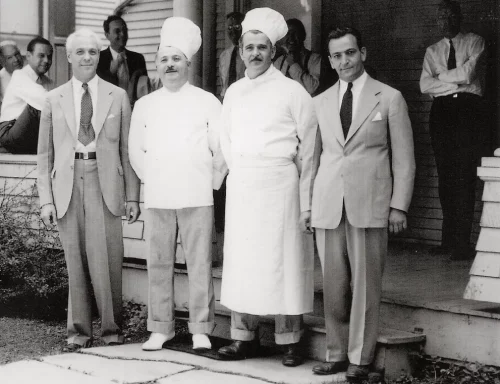
    Chef Boyardee

    Chef Boiardi’s Restaurant in Cleveland was a success, and customers expressed interest in learning how to make Italian dishes at home. So the Boiardis started sending people home with pasta, sauce and cheese and teaching them how to cook, heat and assemble the dishes themselves.

    The Man, The Can: Recipes Of The Real Chef Boyardee
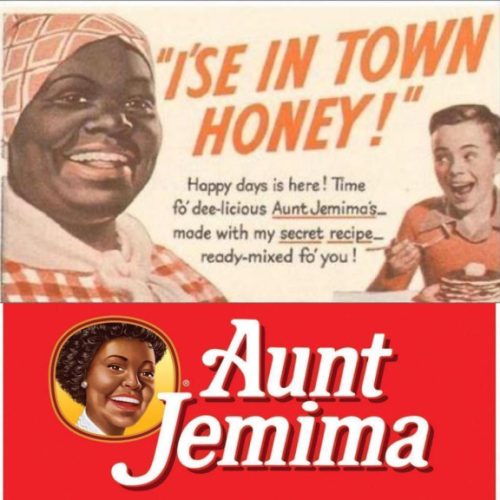
    Aunt Jemima

    Aunt Jemima’s appearance has evolved over time. The brand’s origin and logo is based off the song “Old Aunt Jemima” from a minstrel show performer and reportedly sung by slaves. The company’s website said the logo started in 1890 and was based on Nancy Green, a “storyteller, cook and missionary worker.” However, the website fails to mention Green was born into slavery.

    The Aunt Jemima brand, acknowledging its racist past, will be retired
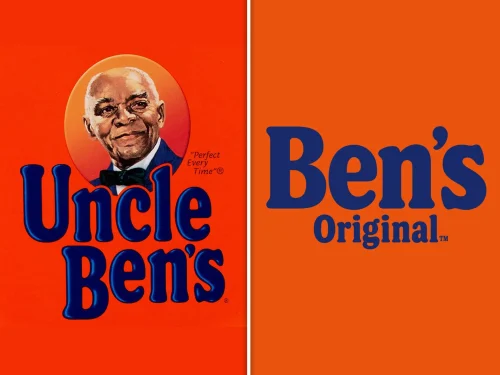
    Uncle Ben

    Uncle Ben’s was founded as Converted Brand Rice by co-founders Erich Huzenlaub and Gordon Harwell. The name “Uncle Ben’s” began being used in the 1940s after Harwell and his business partner discussed a famed Texas farmer, referred to as Uncle Ben, known for his rice. The image of the Black man on the box was modeled after Frank Brown, a waiter at the Chicago restaurant where Harwell had the idea.

    Uncle Ben’s to change brand as part of parent company’s stance against racism

    Honorable mention goes to La Choy that introduced Middle America to horrible-tasting frozen Chinese food with their earworm jingle, “La Choy makes Chinese food, swing American!”

  • suck.com – birth of snark

    suck.com – birth of snark

    I wanted to share something which I think is lost on today’s web, the art of the hyperlink. The decision to link to something using the web should be more than just informational. There are the basic points of style such as collapsing the sentence and using the verb as the link to more information

    You can find out more about the Roosevelt Island insane asylum by clicking this link here.

    to:

    You can find out more about the Roosevelt Island insane asylum.

    But using the link to make a point, tell an inside joke you don’t get until you click the link, is a lost art. The masters of the form were the crew behind the late-90s site, suck.com.

    The site is no longer online but (now replaced by an embarrassingly childish domain squatter) but I managed to pull down this passage which describes their “tertiary link” policy and what made it so engaging.

    HotWired had this crazy policy where they didn’t allow tertiary links, is what they called it. A tertiary link was when you linked to something that wasn’t explicitly referred to in the text. If I said, ‘Proctor & Gamble have a policy against suffocating infants,’ and I linked on ‘suffocating infants’ to the policy page on Proctor & Gamble, and it said, ‘All our products are tested for the risk of infant suffocation, and we have a strict policy,’ that’s a primary link. If I linked ‘suffocating infants’ to Dave Winer’s column, that would be a tertiary link. That was, by policy, not allowed at HotWired.” It was absurd, with a medium so new and unexplored, to establish such rules regarding what was and was not allowed. The lack of established rules was what made the web fun.

    Shit makes great fertilizer, but it takes a farmer to turn it into a meal. With that thought in mind, we present Suck, an experiment in provocation, mordant deconstructionism, and buzz-saw journalism. Cathode-addled netsurfers flock to shallow waters—Suck is the dirty syringe, hidden in the sand. You wanted feedback? Cover your ears and watch your back … it wants you too. But Suck is more than a media prank. Much more. At Suck, we abide by the principle which dictates that somebody will always position himself or herself to systematically harvest anything of value in this world for the sake of money, power and/or ego-fulfillment. We aim to be that somebody.

    In the absence of HotWired strictures, they turned “tertiary links” into signature stylistic components. “It’s important to understand that up until then, to the best of my knowledge, people had just used hyperlinks in a strictly informational sense, simply as online footnotes,” says Mark Dery, author of Escape Velocity. “With Suck, you wouldn’t get the joke until you punched through on the link. Then you found out that it set the keyword to which this new source was linked in an ironic light.” Writing for Suck, Steadman and Anuff were free to link “suffocating infants” to Dave Winer’s column, or “wet dream” or “negative energy”. “Whereas every other Web site conceived hypertext as a way of augmenting the reading experience,” wrote Steven Johnson in Interface Culture, “Suck saw it as an opportunity to withhold information, to keep the reader at bay.”

    The Big Fish

    Somewhat related: Here’s a suck.com column retrieved from the Wayback Machine where they linked to an earlier version of my Celebrity Sellouts site.

  • David Sheldon

    David Sheldon

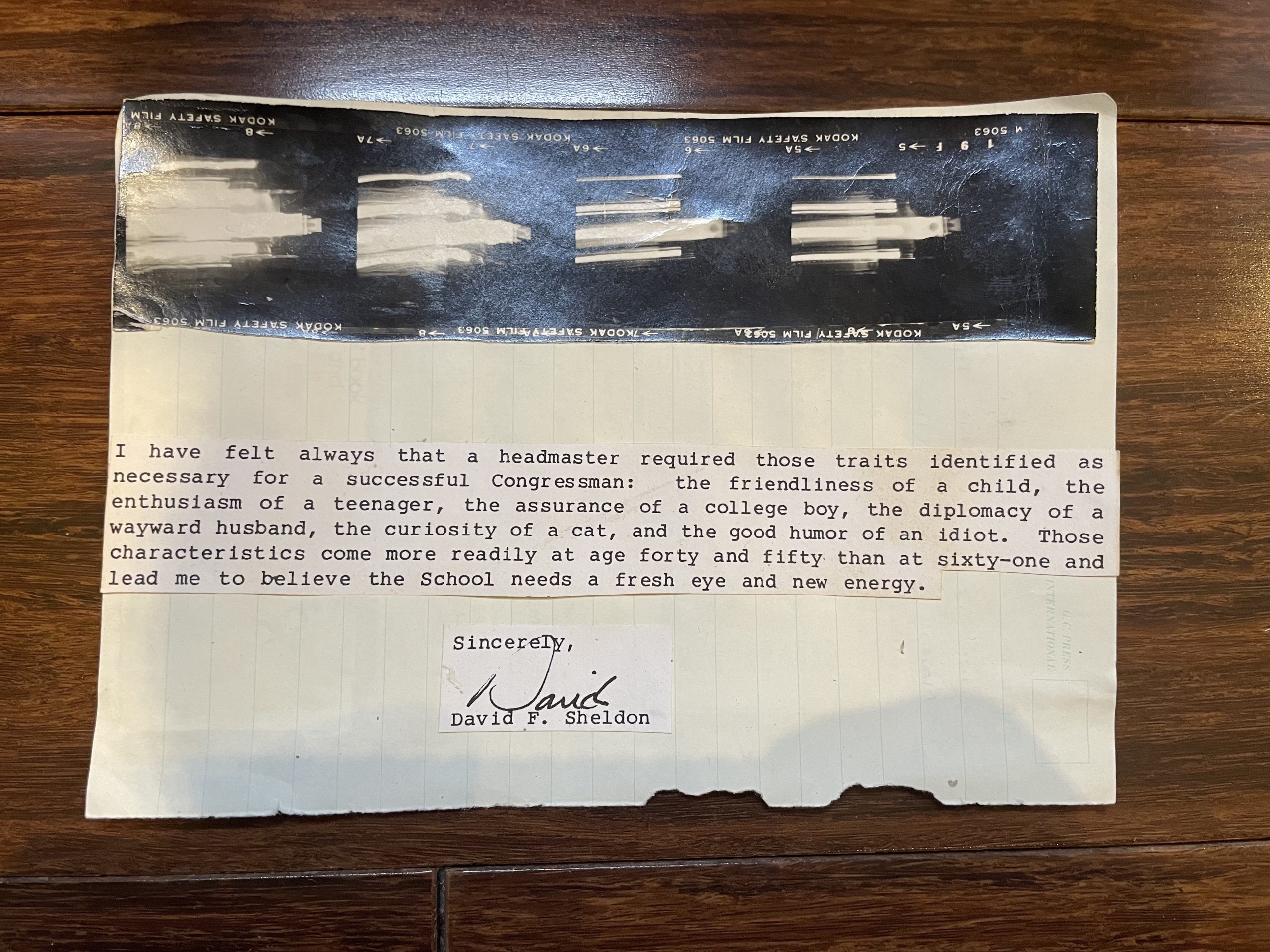
    My high school was a small boarding school in New England. David Sheldon was the headmaster during my years there. He recently passed away but I wanted to share this scrap I unearthed from an old notebook.

    I think it’s a snippet from a letter sent out when he was announcing his retirement. I was too young and restless to appreciate his wisdom and graciousness fully but this stuck with me enough to save it.

    I have felt always that a headmaster required those traits identified as necessary for a successful Congressman:

    • the friendliness of a child,
    • the enthusiasm of a teenager,
    • the assurance of a college boy,
    • the diplomacy of a wayward husband,
    • the curiosity of a cat,
    • and the good humor of an idiot.

    Those characteristics come more readily at age forty and fifty than at sixty-one and lead me to believe the School needs a fresh eye and new energy.

    David F. Sheldon

    Mr. Sheldon passed away at age 93 last June.

  • Funny thing about MetroNorth

    Funny thing about MetroNorth

    After catching an epic Phish concert at MSG on 12/29, I took the MetroNorth from Grand Central to meet my cousin to see Dark Star Orchestra at the famed Capitol Theater in Port Chester. I’ve never been to the Cap but have heard numerous tapes of legendary shows from this venue so I was looking forward to seeing it in person.

    The concert did not disappoint, the sound was amazing and the band played some of the songs even better than when I heard them played by the Grateful Dead. (DSO played a setlist from 12/27/78 from San Diego)

    Dark Star Orchestra at The Capitol Theater, December 30, 2022

    The Capitol Theater is just a block or two away from the Port Chester train station but, after 11pm, the train only comes once/hour so a bunch of us were keeping our eye on our watch just to make sure I got out in time to catch the 12:15am train.

    I stuck around to see what the encore would be and once I heard the open notes of US Blues, I figured it’s better to try and make the 12:15 rather than risk waiting around on a freezing platform for an hour so made my way outside and down to the station. Turns out I didn’t really miss the encore because you can hear it from the train platform!

    Anyway, there were about 20 people on the platform that did the same thing as I and were waiting for the 12:15 train. There was an electronic sign on the platform but it only listed the 1:15am train, no 12:15. Amidst much murmuring, I took out my phone to check the MTA TrainTime app to settle the debate.

    This is what I saw.

    We all couldn’t believe it so others downloaded the app to check for sure and debates started to break out, do you believe the sign on the platform, do you think the app is just flaky or is something else wrong? Groups formed into the believers and non-believers. Tempers flared a bit and one guy from Austria suggested that I stop refreshing the screen and turn off my phone when it shows a 12:15am train because, maybe my app had the power to summon the train itself.

    It came down to faith. Did you have faith in something you couldn’t see, classic epistemology, how do you know you know? One guy on the non-believer side was hedging his bets and noisily making alternative plans, asking his buddy with a car not to leave just in case the train didn’t show up. I joked with him for not believing and chastised him gently as a doubter and others joined me, “that’s right, you’re scaring the train away. . .” He gave us a look that said, “Yeah, whatever buddy, I don’t believe in that mumbo jumbo. I’m going to take care of me and my wife and get my ass home regardless.” He was firmly in the not believe category but when his wife leaned over to see if she could see the light of the train in the distance, he told her to get back away from the edge of the platform in case the train comes. “So you DO believe!” someone said and all of us had a laugh.

    The the train did show up. Right on schedule at 12:15am and we all hopped on to the warm train and we sank into our seats. I rolled into Grand Central about an hour later at 1:15am and popped out the side to walk up 43rd to my apartment but not before stopping by for a slice of pizza where the friendly proprietor wished me Happy New Year and gave me a cola at the “Happy New Year price”

    Satiated after two incredible nights of live music, I ambled home to a warm night’s slumber. Ready for a quiet New Year’s Eve, the way I like it.

  • Hunterisms

    Hunterisms

    In honor of tonight’s Dark Star Orchestra concert at the famous Capitol Theater in Port Chester, NY (which I’ll be visiting for the first time), here’s a list of Robert Hunter lyrics that I found in an old notebook.

    If you’ve listened to the Grateful Dead, you’ve heard these lines over and over again, embedded into their songs but taken out of context, can you guess which songs each of these lines are from?

    Comes a time when the blind man takes your hand, says “Don’t you see?”

    Without love in a dream, it will never come true.

    Sometimes the cards ain’t worth a dime if you don’t lay ’em down.

    Anyone who sings a tune so sweet, is passing by.

    The trouble with you is the trouble with me

    Must be getting early, clocks are running late

    Honest to the point of recklessness

    Thinking a lot about less and less

    You can’t close the door when the walls caved in

    Small wheel turning by the fire and rod, big wheel turning by the grace of God

    The grass ain’t greener, the wine ain’t sweeter, either side of the hill

    Once in a while you can get shown the light in the strangest of places if you look at it right.

    If all you have to live for, is what you left behind, get yourself a powder charge and seal that silver mine

  • New Yorkers Stick Together

    New Yorkers Stick Together

    New Yorkers face all sorts of hassles that come with living in the big city. Whether it’s the daily breakdown of the subway or a parade blocking your crosstown taxi, these is always some minor inconvenience that comes with living in a vibrant city. The day-in-and-day-out of millions of people rubbing shoulders, fulfilling their dreams is bound to result in some rough edges from time to time. We all know it happens, it’s a fact of life, we just roll with it and keep on, keeping on.

    But an injustice that New Yorkers will not tolerate is when a corporate or political bureaucracy picks on the individual. New Yorkers are quick to smell bullshit and will unify and rise up if they sense injustice thrown down from above. An attack on one is an attack on all.

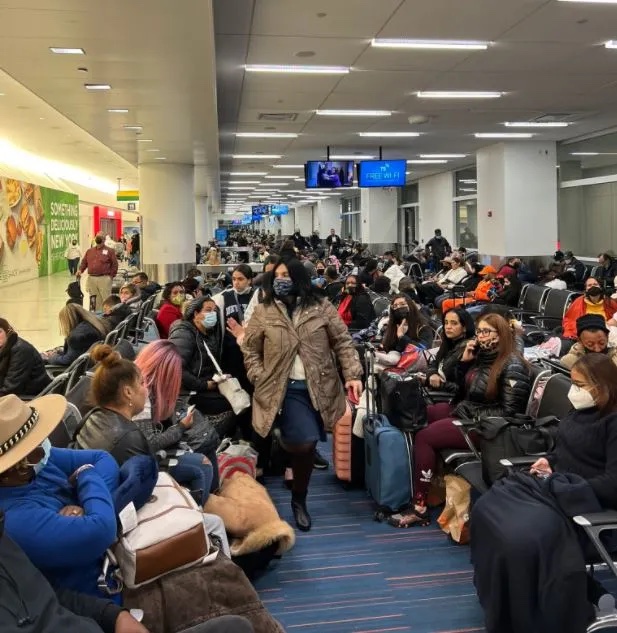
    This played itself out during the recent holiday travel disaster that played out in airports across the country with Southwest Airlines cancelling over 2,500 flights in a single day. When flights get cancelled, airlines need volunteers to give up their seats on overbooked flights. Usually the airlines can get people to give up their spot but in NYC, the people collectively came together to resist.

    99% of the time the chaos breaks people at the airport. 1% of the time the chaos creates an impromptu game show.

    At JFK. Guy behind the counter asks for a volunteer to give up a seat for $500. Nothing. “$550.” The crowd suddenly coalesces to shout “HIGHER!” like it was a game show. “$750” “HIGHER! “800!” “NOT IN NEW YORK! GO HIGHER!” They applauded the elderly woman who took it at $1100.

    I love New York City because it’s a place where a diverse group of people of different ages, beliefs, backgrounds, and experiences can come together as one if it means fucking with somebody else making them wait in line.

    @Mike Drucker

    Don’t mess with a New Yorker.