
Category: Work

  • Web 2.0

    Web 2.0

    I realize I’m getting liberal with the “Milestone” tag but it truly seems as if we are living in historic times. I just got off of an amazing three days in San Francisco where I saw history being made all around me at Web 2.0 in San Francisco. Maybe I’m still new to this industry but checking with others around me, they also shared my view that the mood of the crowd was upbeat and excited for the possibilities of the future. What was nice though is that despite the potential to go wild-eyed and overboard there were enough scarred veterans in the crowd to keep things realistic. Many of the things being discussed have been done before during the heady bubble days but this time it looks like we’ve got the platform to really make it happen.

    Remember moreover.com? RSS before anyone knew what to do with it. Geocities was like weblogs 1.0 but instead of letting people subscribe to an RSS feed, you had a small text entry box where you would ask for an email address so you could push out a notice when the page updated. One good line from Martin Nisenholtz of nytimes.com is that the promise of RSS is that he can now send content directly to the reader without having to cut bad deals with Biz Dev execs at portal companies. Web 2.0 is all about cutting right by the intermediary.

    There’s a lot of good coverage of the conference already but I’ll post on some personal tidbits and takeaways:

    I listened in on the interview behind this article with Google’s Peter Norvig in eWeek and later talked to him about sentiment analysis as it might apply to blog posts. He said that Google is applying techniques to skip over indexing spam comments such as “I really like your page, have you seen www.spampage.com?”

    I asked Jerry Yang if he had any advice for a software startup interested in going after the corporate market. Yahoo had an enterprise portal group that eventually threw in the towel and turned their customers over to Tibco. His advice was to stay away from corporate IT because they have a vested interest in avoiding the new and different.

    I witnessed as Brewster Kahle struck a deal with the folks from Morpheus to work together. “I’ve got this great archive of all this wonderful stuff and you’ve got this great mesh of a distribution network.” Ok, I egged them on a bit.

    The most inspirational talk was by Lawrence Lessig who railed against the specter of old world copyright law that threatened our ability and right to mix and mash digital content to express ourselves. Something’s not right when you can teach your kids to write creatively and encourage them to quote and incorporate styles & nuances but cannot teach them how to remix music or video to make a point, political or personal. Indeed. For an mp3 of the speech, click here.
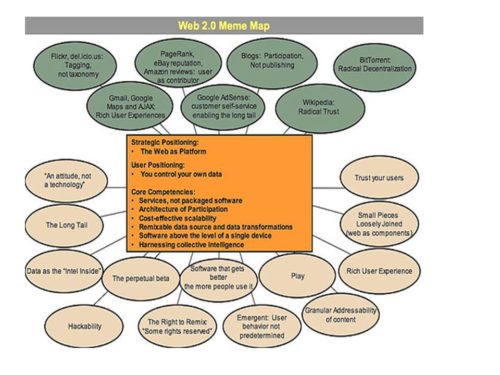
    The conference was organized by publisher Tim O’Reilly and MC’d by John Battelle who have been noodling over the theme of the Web as a Platform/Web as an OS theme for the past year or so. This conference brought together the best and brightest of that conversation and put them on stage for a number of interesting and insightful discussions.

  • How News Gets Made

    What a week!

    Amidst all the excitement of Web 2.0, Six Apart announced that we raised $10 million in funding. A couple of us went to Kokkari, a restaurant downtown, to celebrate when Mena realized that she forgot to post her perspective on the announcement. Ben fiddled with the Bluetooth connections on the phone and the laptop at one point juggling two Powerbooks until he got things working.

  • Snap.com

    At Web 2.0 this week and saw Idealab’s Bill Gross announce the release of snap.com – a new search engine designed to address comments that Google’s interface is looks like a command line.

    Based on the premise that search engines need to give control back to the user. You can change the focus of your results (with an integration of X1) in real-time and sort results on a number of parameters which change based upon your search query. Snap also believes at its core that it’s important to be transparent so it provides an interface to an area where you can see not only stats related to the top keywords and their related terms but also an area where you can view Snap’s revenues as well as performance reports on click throughs on keywords that you can specify.

    A number of examples showed how this is a different kind of fish.

    Search on “jaguar” then refine my typing in “os”

    Search on “camera” and you get a totally different set of results based on the assumption that you’re looking to purchase a camera. In the results, new widgets to sort on things like price, resolution. Refine the search by typing in “cannon” and see the list narrow itself to just the cameras made by Cannon.

    Search on “walmart” and you’ll see that the result set changes again. Bill explained that this was because they analyzed ISP traffic to determine popular clickstreams and saw that most people searching on “walmart” were either looking for the website, the company (news & quotes), the job page, or directions to the nearest store. The left hand column has these links ranked for easy access and other elements on this page provide shortcuts as well.

    Search on “cars” and you get yet another view which is like a dashboard to the most popular links yet in a different format. This time the screen is divided into four main categories into which most behavior following the search results fell. Here you see further drill down on to Buying, Research, Loans, and Insurance. The same concept applies for that other big ticket item, “real estate” but this time with yet another set of drill down choices.

    These innovations are all very cool and welcome but as I write about it, I realize that variations of each of these exist in some shape or form on Google and Yahoo. Snap’s presentation is so much more graphically rich than what is out there today giving a greater opportunity for advertisers to integrate their messages with the results in a much more meaningful way.

  • From Vivisimo comes, Clutsy the Search Engine

    From Vivisimo comes, Clutsy the search engine which has elicited guffaws over it’s name, coined to evoke a clustered set of search results but instead brings to mind a buck-toothed, all-thumbed version of the more refined Mr. Jeeves. The jury is still out for me on this as I’m so well-trained that I usually am able to throw enough contextual keywords into a query to get to what I’m looking for but Clutsy’s Clustering Engine (sound’s like a book I might read to my 5 year old) does shine when put to the “polish” test. Are you talking about the people, the sausage, the language, or something shiny? Clutsy will parse it out for you and give you several paths to try.

  • Blogs on Jeopardy

    As a self-titled weblog about the intersection of media, technology, and finance, the appearance of Blogs on Jeopardy cannot go ignored.

    I’m off to Web 2.0 tomorrow. Look me up if you’re there.

  • More ways to get there. A9 from Amazon

    Amazon’s A9 came out of beta with much fanfare and continues to get rave reviews because of a new feature which keeps track of your search history. This can be quite useful for those that are trying to retrace their steps to get at a vital piece of information. Bookmarks are single points of reference like an address. But the human brain doesn’t always work this way – sometimes it’s easier to remember how you got somewhere. A9’s Search History takes this geographical metaphor to the virtual world of clickstreams.

    I notice that Ask Jeeves has a similar feature on it’s My Jeeves which is currently in Beta.

    The other feature that I enjoy using is the image search which throws up images related to your search query right alongside and in context with the web hits. This is especially useful when doing searches on individuals. For those of you into vanity searches, it’s always a kick to scroll through all the people out there that share your name.

  • The uncertain future of Internet Explorer?

    It’s been three years since a significant update to IE. Has Microsoft abandoned IE?

    Microsoft’s last major browser release was in August 2001. The company in the summer of 2003 discontinued its browser for the Macintosh and said it would issue no more standalone versions of IE. Last month, the company released new IE security features in its Service Pack 2 (SP2) for the Windows XP operating system, but said only XP users would get those improvements.

    Rumors are now that the next version of IE will only be for those that upgrade to the next version of Windows (who says the two are not a bundled together?) but no one knows for certain. In the software business, a foggy roadmap for your developer community is as good as a kiss of death.

  • Google News Forever in Beta

    Why has Google News been in Beta for three years? Because as soon as they try and place ads on the Google News pages to monetize the traffic, they’ll be hit with a barrage of cease & desist letters from publishers around the world says Wired’s Adam Penenberg.

  • Improving RSS

    In response to the growing popularity of RSS and it’s increasing demands for bandwidth, Bloglines has announced a new web services API which they are making publicly available.

    In other news, the redesign of My Yahoo is all about leveraging RSS feeds as the preferred method of integrating content into the portal. With the daily promotion Editor’s RSS “Picks of the Day” it’s sounding like 1995 all over again.