Year: 2009

  • Lenovo’s Fashionable Netbook

    Lenovo’s Fashionable Netbook

    Lenovo Pocket Yoga

    Although still in concept (UPDATE: Lenovo now saying this is a two year mockup), this is the closest thing I’ve seen to a netbook as fashion accessory (note the burled walnut finish). The belt clasp also acts as a mouse, or so says the caption the the photo on the Lenovo picture feed, and the screen also flips around so that you can write on it with a stylus.

    It’s too big to really fit in your pocket or purse so it doesn’t really pass the test of a portable broadband device for me. It needs to be something I would take to the park with me when I go play with the kids. This is the size of the old Apple Newton which was just too big to be practical.

  • The Family Gathering

    1990gathering
    1995gathering
    1999gathering
    2001gathering
    2004gathering

    While everyone was down in Austin for the annual gathering of the tribes, I sorted through an old box of photos trying to streamline my memories. I don’t have many prints anymore so most of what I found was from the last century (love saying that!). It was nice to actually hold the prints in your hand and put the best ones into a nicely bound album which is now in our living room.  A book full of memories on the living room coffee table? There’s a line that’s been crossed somewhere, somehow that sounds significant.

    As I transformed a box full of random photos into piles that were roughly arranged by major life-events (pre-marriage, pre-first kid, pre-second kid), I noticed that at regular intervals there was a photo taken at my grandparent’s house in Yokohama where the family would gather for an annual feast. It’s cool to see how people have changed over time (check out my eraser-head hair doo in 1990!) and I love how we’re always hoisting the beers for the camera like we’re at a table in Munich.

    Grandpa is always at the end of the table and would preside over everyone – always making sure my glass was full and telling stories of the old days. He worked hard through his life, the post-war Japanese econmy was built by his generation. He’s gone now, died almost three years ago to the day. My grandmother now lives in a nursing home so we don’t get together as a large group anymore.

    Need to fix that next time I’m back home.

  • iPhone is internet 1997

    One of the things that just seems crazy to me is that the iPhone cannot run applications in the background. The iPhone developer site explains:

    If you are running an application such as AOL Instant Messenger on your iPhone, everytime you receive a call or browse away from the application you would be signed out, you would lose any unread messages, and your conversations would end.

    Watching Stephen Colbert last night, it hit me. The iPhone is the internet in 1997!

    The Colbert ReportMon – Thurs 11:30pm / 10:30c

  • AdSense, Self-Optimized

    google behavioral targeting options

    It’s obvious when you think about it. Instead of spending your energy throwing up hundreds of ads that dance around the edges in the hopes that one will magically trigger a random click of interest, why not ask your readers, “What do you want to see?”

    Google announced a new program which changes the way they pick which Adsense ads appear on the websites you visit. Instead of looking at the content on the page and simple IP-based geo-targeting, the new program looks at your browser history and targets advertising based on your browsing interests. It’s known in the industry as behavioral targeting but Google has re-labeled it “Interest-based advertising.”

    The system works using tracking cookies which is anonymous and tied to your browser so if you switch browsers or jump to another PC, your browsing history will not follow you (although technically it’s possible if they tied the cookies to your Google Account). Likewise, your browsing history is going to get muddled on shared PCs such as one you might find in a family room.

    The most interesting thing about this new program is that they are allowing you to edit your profile using a new Ad Preferences Manager. As you can see in the screenshot above, you can pick and chose from 20 major categories and 600 sub-categories that are interesting to you and begin to shape the type of ads that are served to you. There is an option to opt out completely in which case you’ll get the regular content matched advertisements we’ve been seeing all along but having the ability to customize what you see is a bold step forward in transparency.

    Arguments against such a system when I had brought it up in the past were that if you let everyone pick and chose your ads you run the risk of not serving a well-balanced mix of advertising, running dry in popular categories and having a glut of units from less popular categories. By putting direct user feedback into the equation, you could no longer tune your ad servers to optimize for maximum profit.

    My counter to that argument is that by putting your readers in charge of what they see, you stand a much better chance of not only having people look at your ads (to see what type of ads get served) but also getting a much better sense of what interests your readers.

    So here’s my crazy idea. Why not go a step further? Why not let people to search for ads directly? Every magazine has an Advertiser’s Index in the back, why isn’t there a web-based equivalent? It’s been done.

    For more detail and commentary, Barry Schwartz has an extensive write-up on this development over on Search Engine Land.

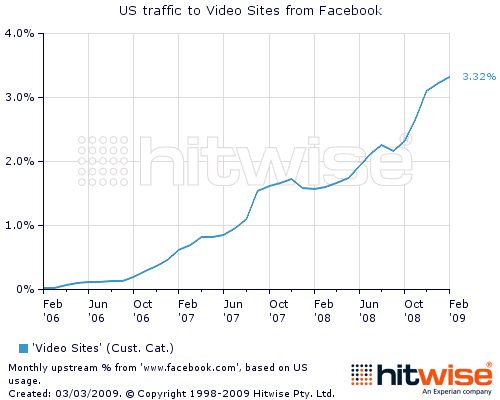
  • Facebook, Twitter send more traffic than Google

    Facebook, Twitter send more traffic than Google

    Liz Gannes posted that Perez Hilton is now seeing more traffic coming in via Facebook than Google.

    My colleague Udo Szabo at Nokia HQ in Finland has a theory that I call the Unified Theory of Interweb Economics. The theory goes something like this:

    1. Advertising is a function of your traffic volume, the more traffic that comes to your site, the higher rates you can charge.
    2. Social sites such as Facebook and Twitter have a lot of link sharing going on as friends post links to share them with each other.
    3. When Facebook and Twitter send more traffic than Google search referrals, advertising dollars will follow the source of that traffic.
    4. Google’s dominance in online advertising will be threatened.

    One would think we’re seeing the first hints of that with perezhilton.com and it will take a long time before we see this trend across the board. But in hindsight this is obvious and looking at my stats for the past month I find that 44% of my visitors are coming from search engines and 45% from referring sites with a vast majority coming from StumbleUpon, a social site for sharing links.

    The more you think about it, the shift in balance of power has already taken place.  SEO is still a big industry but now there are companies that will help you with SMO (“social media optimization”).  On twitter we’re starting to see scam artists try and insert themselves into the conversation just as they used to do with Splogs.

    And so the wheel turns round once again and there appears to be a new king of the hill – AOL Keyword > Yahoo Category Link  > Google Keyword Ranking > Social Site referral.

    The jury’s still out as to which social site will send you more links but it’s looking more and more like Facebook. We used to have the Digg effect but no one talks about that anymore. Twitter certainly has the ability to send you a bunch of traffic in short order but the audience is still mostly the early-adopter set and any traffic will most likely be short-lived as the re-tweets scroll into the past.

    Facebook, with 175 million users, certainly has the right broad-based distribution to broadcast a link and send back traffic. They have added new features such as FriendFeed’s “like” feature to make quick sharing easy. The Facebook Connect and Comments widgets also will help insert new links into Facebook for redistribution.

    But while it’s great to get an influx of new visitors via a social site, it’s no good if it’s not a lasting reference. Has the pendulum swung to far the other way? There are some searches that work great on the real-time web, the latest viral video comes to mind, but others such as the listing for your local plumber just don’t work on something like twitter. Not that it’s worth anything but I still get a regular influx of traffic because I’m the #2 listing for insulting british slang even though the post is over three years old.

    I think it’s fair to say that the social sites such as Facebook and Twitter will erode Google’s monopoly on online advertising. Google’s never been really good at building social sites and have shared in the growth of social networking in the past by providing the advertising engine for the most popular social sites. What happens with these sites start to go direct to the advertisers? Will Facebook advertising revenues come from traditional cost-per-click/auction model or is some other type of model required to succeed in a social networking site?

  • The Startup Scene in Helsinki

    The Startup Scene in Helsinki

    I was lucky my trip to Helsinki overlapped with a meeting of Arctic Startup, an occasional meeting of high-tech entreprenuers. The event was held in the Dubrovnik Lounge, a cozy event space in downtown Helsinki which had room for about 100.

    It reminded me of other Web 2.0 events that I’ve been to outside of silicon valley in Tokyo and on the East Coast of the US. A gathering of the faithful who spend their days virtually tapped in to what is going on in the valley come together face-to-face to compare notes and talk about the latest news and gossip. Everyone wants to know how things are in the Valley and if it’s really like what they’ve read. The organizers do a great job of bringing everyone together and encouraging people to help each other out and share stories of what works connecting people.

    The evening’s event centered around a panel discussion about the state of VC funding in Finland and I was suprised to learn how active the Finnish government is in helping get startups off the ground. It’s difficult for a nordic startup (there were visitors from Sweden and Estonia) to secure VC funding from overseas so their best bet is to use the University system to build a prototype and secure an grant from the “tekka” (I know I’m spelling this wrong) that has become more open to funding alternatives to the pure R&D projects they have traditionally funded.

    I met with Indrek Vainu from Estonia who implored me to let people I know that there’s government grants available for businesses that establish themselves in Estonia. As long as you can bring $2M to the table, the Estonian government will match that amount as a grant, doubling your runway. The application process takes some time but it’s worth it. Indrek consults on helping with the application process so if you’re interested in getting in touch, let me know and I’ll put you in touch.

    I also learned about the rather infamous case of Riot On, a mobile entertainment startup in early 2000 which famously swindled its investors and ended up giving startups a bad reputation that they’re still trying to overcome. There’s a great documentary about that crazy time and how it all went down. You can see the whole thing on Joost.

  • Certain Destruction

    From brutal field tests we now turn to an entertaining ways to get rid of unnecessary documents. Presenting, The Unloader!

    A better way

  • Nokia Phones, Survival of the Fittest

    Nokia prides itself on making a durable phone that can withstand daily wear and tear. The short video below gives you a look inside the test center where they drop, bend, and tumble the phones to see if they can stand up to whatever our customers can throw at it.

    But some tests can’t be simulated.  Someone recovered their phone from inside a cow and today The Sun reports that a fisherman recovered a phone that spent a week in the belly of a 25lb cod.

    For some more wincing field tests, be sure to check out what these crazy Russians have put their Nokia 5800 through.

    UPDATE: There’s more! Someone in Wisconsin found a Nokia in their bag of potato chips. No word on whether it was still working though.

  • Do Social Gestures a Business Model Make?

    Is twitter a directory or a utility? This is the question that Charles Hudson raises in his post The Database of Intentions is More Valuable than the Database of Musings. While investigating prospective business models, he raises good questions about the ability of a collection of “accumulated musings” to determine intent which is what is most valuable to advertisers.

    But maybe advertising  is not the great revenue driver of the next generation of startups after all, at least not advertising as we know it. Maybe it’s just me but I feel a need to make sense of all the stuff we share with each other. There seems to be value in tapping into the pulse of the “now web” but the methods of pulling meaning out of the noise seem crude. Keyword searches? Is that the best we can do?

    Something went wrong with the Intense Debate comments on last night’s post on Keywords and Meaning. It’s unfortunate because there were some really thoughtful responses to the post which I’ll repeat in this post because they are worth reading.

    Todd writes:

    Keyword extraction from Twitter could be cool, but may kill of serendipitous discovery, my favorite aspect of Twitter. If keywords or meta-categories are predetermined truly unique hawtness, unprecedented new things ( a Twitter specialty ) will just get deleted? That would be FAIL.

    I wonder if more of a “people with attributes” are really what’s needed. Example, I do want to know what’s going on with the latest developments for Symbian operating system, particularly activity streams and address book stuff. Rather than rely on keyword extraction, I could just assign an attribute to your tweets…

    twitteruser:iankennedy=novi

    …I can be fairly assured news filtered by real humans, THEN assigned an attribute of my choosing will bring me some good results. A tag cloud of all tweets containing “symbian, activity stream, address book” would be noisy ( pollute with people asking each other for tech support? ), difficult to pull meaning from while drinking beer at my favorite bar.

    Jonathan Strauss writes:

    The TechCrunch post you cite was inspired by John Borthwick’s very interesting essay on how Google’s approach to content filtering breaks in the realm of what he calls the ‘Now Web.’ Like you say above: “Google’s PageRank, while valueable in sorting out the reputation and tossing the hucksters, is no good when applied to real-time news which is too fresh to build up a linkmap.”

    In the (relatively) static web, the network nodes are pages and the endorsement actions are the links between them which are effectively permanent as well as public, and thus crawlable. In the Now Web, the network nodes are people and the endorsements are ephemeral share actions, the majority of which are not public or crawlable (i.e. email, IM, Facebook — what I call the ‘Deep Now Web’). And so, authority also takes on a different form from the aggregate view that PageRank provides to the personal measure of how much influence an individual has with her social network on a particular topic at a given moment.

    I agree that we need to have a means of systematically capturing the newly important metadata of share actions and that it needs to be done at the point of sharing (see Jeff Jonas). But, I believe the more easily adopted (and thus ultimately more useful) taxonomy will be one of contextual metadata (i.e. who/what/when/where/why/how) rather than the more personal folksonomy/tagging approach you suggest.

    There was also reactions via twitter from Kevin Marks:

    https://twitter.com/kevinmarks/status/1213846940

    The act of sharing links, photos, or other metadata on social networks is an action, to a certain extent, that gesture is more interesting than the actual data itself. The fact that my usually dormant cycle racing friends are now extremely active on twitter these past few days as the Tour of California is on is as much an indicator of interest as the actual substance of their conversation.

    Keywords are part of the picture – the complete context around who/when/where/why/how are just as important as the tidbit of data itself. The meta-data contains more clues than the data.

    The cellphone is a rich source of meta-data which can be captured at the source, the moment of sharing. Feeding contexts captured from the cell phone would be a great way to add context to any act of sharing.  There are privacy concerns and ownership questions. There needs to be a real value demonstrated to the potential user before they give up some of this privacy. But that’s a topic for another post.