Tag: hardware
-

Russian Tank Killer Drone
“A group of drones could operate in a fully autonomous mode – establishing a position and keeping to a designated route, and also interacting with other robotic complexes.” – RT News
You read that right. Fully Autonomous.
Shiver. -
Daniel Suarez Nightmare a Reality
I wrote back in June about Autonomous Robotic Weapons and the fear that SciFi writer Daniel Suarez had that these would one day be built and what could go wrong.
Looks like it’s real.
In a recruitment video, the Air Force invites future cadets to work with them on creating a network of autonomous quadroter that can work without human intervention.
“The objective of this project is to code a system that allows this quadroter to think and act autonomously.”
This is precisely what Daniel Suarez warned about. By designing drones that operate autonomously, you start down the road towards a world where the decision to cause war & violence are pushed away from humans. Daniel lists three powerful factors that cause this shift,
- The deluge of video footage will overwhelm ability for humans to analyse so that, “drones will tell humans what to look at.”
- Electromagnetic jamming by the enemy means that drones will be required to act on their own and not be piloted by humans. Drones will know their objective and react to external circumstances on their own, ignoring incoming radio signals, friendly or not.
- Plausible deniability because drones are made from commodity materials that can be procured by anyone, even a criminal gang.
Suarez’s latest book, Kill Decision is about this very topic and this latest news shows that his nightmare scenario is a very real possibility.
-
Internet of Things – What Things?
All joking aside, the internet of things is a technology looking for a use. The geek in us tells us that connecting devices together is a good thing. Networks are better than the sum of it’s parts. Choice is better than none at all.
Back in the day, I had a friend who set up a macro on his Palm V to wake up each morning and emulate his remote control and turn on and tune his TV to the morning news. Sure he had to remember to set his Palm on the coffee table each night so the IR sensor could reach his television but the combination of a simple cron entry and an IR emulator added value not only to the Palm but also to the TV which had a new purpose as an alarm clock.
Let’s run through some of the previously inanimate objects that now can be addressed by a network. I’m not including things such as a computer or the Arduino which is like the breadboard for the internet of things. I’m focused more on single purpose devices or sensors which can be networked. A partial list includes,
- Withings, the connected scale
- Nest, the connected thermostat
- Sonos, connected music and internet radio
- Dropcam, a connected camera
- Ube, the connected lightswitch
- Philips Hue, personal wireless lighting
- WeMo, plugs & switches
- Electric Imp, real world, meet the internet
- Cyber Rain, internet-enabled sprinkler system
- Liftmaster, internet-enabled garage door opener
- Lockitron, lock your door from anywhere in the world
- Ninjablocks, programmable, connected sensors
- Current Cost NetSmart, a connected power meter
- Radionode Data Logger, a connected temperature & humidity guage
What happens when we hook this stuff together in the cloud. What use cases can you imagine?
More reading:
GigaOM posts tagged Internet of Things
ReadWrite posts tagged Internet of Things
-

Mars Curiosity computer specs
Inside the Mars Curiosity Rover is basically an Apple G3 (PowerPC) computer with 256MB of DRAM, and 2GB of flash storage (see ExtremeTech for details). Note that this cpu is about 1/4 the speed of an iPhone half the RAM (512MB) and much less than the 64GB of storage memory. Oh, and the software? Some of it is available on the NASA GitHub.
For a comparison of the size of this most recent rover, take a look at the photo below showing it’s size next to the previous two Mars rovers.

-
Will Sony Get Back it’s Original Mojo?
When Steve Jobs first visited Sony, he had huge respect for the company and it’s founder. He emulated many aspects of the company and even tried to convince Apple employees in California to adopt Sony’s famous grey ripstop nylon vest uniforms.
On a trip to Japan in the early 1980s, Jobs asked Sony’s chairman Akio Morita why everyone in the company’s factories wore uniforms. He told Jobs that after the war, no one had any clothes, and companies like Sony had to give their workers something to wear each day. Over the years, the uniforms developed their own signatures styles, especially at companies such as Sony, and it became a way of bonding workers to the company. “I decided that I wanted that type of bonding for Apple,” Jobs recalled.
Sony today is not the company it was back then. I would argue that Sony’s ownership of Columbia records distracted them from focusing on the customer. I’m sure greedy music executives insisted on copy protection on Sony mp3 players in order to protect revenues and what resulted was a proprietary MagicGate DRM and Memory Stick technology that confounded users and drove the simple, welcoming arms of the Apple iPod. This was a market that was Sony’s to lose and they did.
There are other stories of a company tripping over itself. A Race to a New Machine
chronicles the race between Sony and Microsoft as they each were developing their next generation gaming consoles. Co-authors David Shippy and Mickie Phipps take us back to those days in 2001-2002 when Sony was developing the Playstation 3 and Microsoft their first version of the Xbox 360.
The tale is a painful one. Sony kicked off development of a next generation chip, investing $400 million and partnering with IBM and Toshiba with both Sony and Toshiba sending teams to live in Austin, Texas where they would work side-by-side with IBM engineers targeting to get the new chip ready for release in 2005.
In order to make the partnership compelling for the two other parties, Sony acquiesced to allowing the chip to be sold to other companies, even other console manufacturers. From a review of the the book in the Wall Street Journal,
But a funny thing happened along the way: A new “partner” entered the picture. In late 2002, Microsoft approached IBM about making the chip for Microsoft’s rival game console, the (as yet unnamed) Xbox 360. In 2003, IBM’s Adam Bennett showed Microsoft specs for the still-in-development Cell core. Microsoft was interested and contracted with IBM for their own chip, to be built around the core that IBM was still building with Sony.
All three of the original partners had agreed that IBM would eventually sell the Cell to other clients. But it does not seem to have occurred to Sony that IBM would sell key parts of the Cell before it was complete and to Sony’s primary videogame-console competitor. The result was that Sony’s R&D money was spent creating a component for Microsoft to use against it.
Mr. Shippy and Ms. Phipps detail the resulting absurdity: IBM employees hiding their work from Sony and Toshiba engineers in the cubicles next to them; the Xbox chip being tested a few floors above the Cell design teams. Mr. Shippy says that he felt “contaminated” as he sat down with the Microsoft engineers, helping them to sketch out their architectural requirements with lessons learned from his earlier work on Playstation.
While it’s bad enough that Microsoft was able to essentially “draft” off of Sony and Toshiba as they broke trail on a revolutionary new chip design, the salt in the wound came later when the Xbox 360 was able to launch almost a year earlier because of delays in Sony’s supply chain. Outflanked by Microsoft? Ouch.
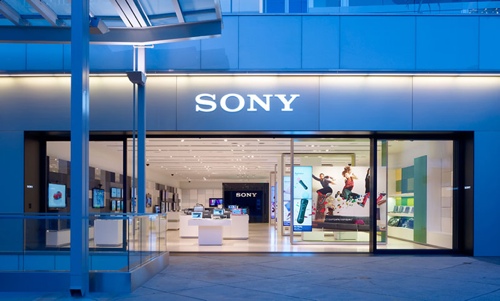
I’m happy to learn that Sony has announced a top to bottom re-organization that breaks down the barriers between the professional and consumer product divisions. The focus on core strengths in digital imaging and gaming is a welcome move and taking full control of the Sony-Ericsson mobile phone venture is a good first move. Sony has also put a renewed emphasis on UX which they’ll need as they have launched the Vita OS as a way to connect multiple screens and devices around the living room as Apple.
Taking on Apple is a huge undertaking but if anyone’s going to give it a shot, Sony’s in the best position to do so. Even if the new Sony Style stores popping up at a mall near you seem a tad derivative of the Apple Store experience, remember that what’s old is new and if that means the master is now learning from it’s disciple, that’s ok too.

-
Cloud Computing through the Ages
The Network is the Computer – Sun Microsystems – 1990s
The Network is the Computer Nothing but Web – Google – 2011
Two perspectives on an old idea, twenty years apart. For a humorous perspective on Silicon Valley spin, check out Larry Ellison’s schtick at the Churchill Club, “The Cloud is Water Vapor.”
-
The $8,000 dumb phone
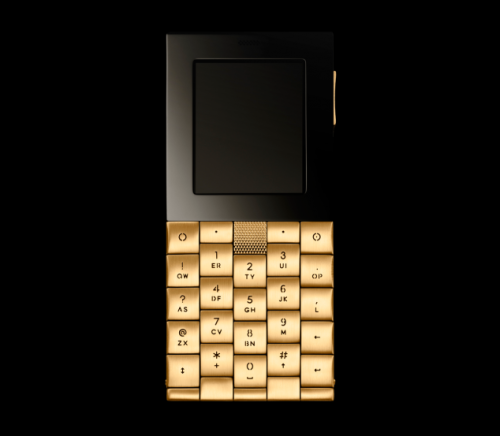
When you can afford a personal secretary to keep track of your every need, a mobile phone is basically a piece of jewelry, much like a wrist watch or pocket watch of by-gone days. These are single-purpose devices that are a fashion statement, more form than function. Taking this approach, focused on the voice aspects of mobile phones, Aesir, a design firm in Copenhagen, has designed the phone to go with your Rolex.
Fitted with a sapphire crystal, metallic-coated ceramic antenna, and keys that are individually screwed on by jewelers, designer Yves Béhar (his SF-based fuseproject firm designed the Jawbone headset) give you a phone as a work of art. No camera, no email, no internet browser, just a simple object of desire, purpose built to receive hush-toned murmurs from your Swiss banker or to whisper sweet nothings to your mistress in St. Tropez.
While they have stayed away from anything as gauche as a Facebook or Twitter client, you do get bespoke icons, original typeface, and ringtones composed by Vietnamese-Danish ‘master of the upright bass’ Chris Minh Doky.
Please pass the Grey Poupon.
