Tag: Milestone

  • Six Apart & Live Journal

    The internet has been on fire the past few days here at Six Apart sales with the announcement that we are acquiring Live Journal. I’ll be the lazy meta man and link to our very own Jay Allen who’s done a great job of pulling together the “must reads” on the topic.

    I will continue to plug Movable Type and TypePad as the best publishing tools for the corporate market because these products are best suited to achieve most business objectives that I hear about.

    Continue to contact me if you’re interested in:

    • Purchasing a custom license of Movable Type for a large number of seats
    • Hosting Movable Type as an ISP or Hosting partner

    Do not contact me for Live Journal partnership opportunities. Our intention is to do no more than touch it up a bit; smooth the edges & nothing more.

    LiveJournal is going to be a separate brand from the Six Apart products much like there are Mercurys and Mustangs in the Ford family. Six Apart makes publishing tools that can be used to broadcast a message out to the world at large, Live Journal makes a collaboration & communication tool best used to keep members of a group in touch with one another. Weblogs & Live Journal are as different in application as email and IM – yes, they both communicate in the broadest sense but if you use both, they difference in use morphs the “culture” built up around them.

    If anyone appreciates that, we do.

    The funny thing is, you can have a weblog and a LiveJournal. The fact that some of the funniest and smartest people I know have both only reaffirms that we shouldn’t limit ourselves to one sort of publishing/communication mode.

    Mena’s Corner
  • Web 2.0

    Web 2.0

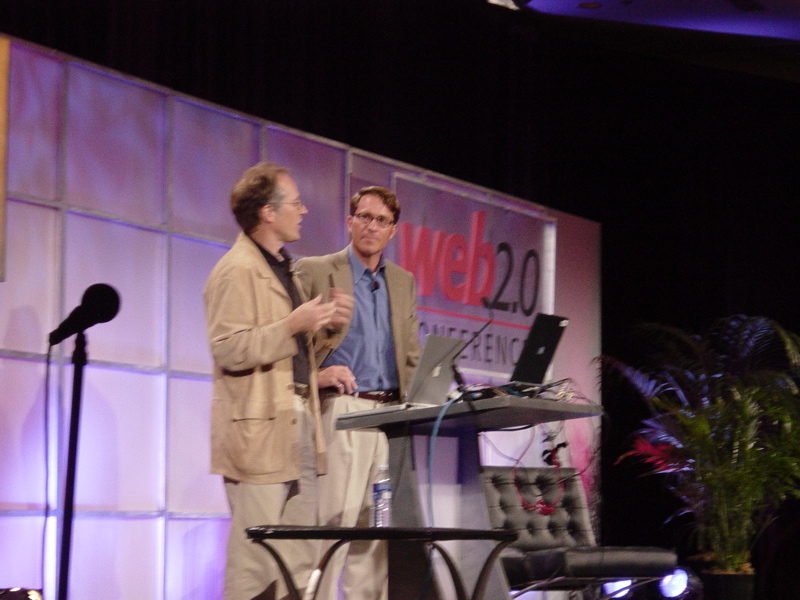
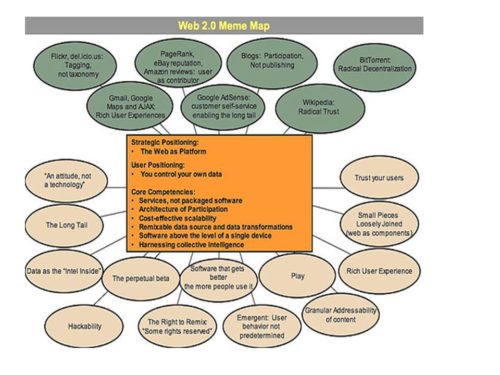
    I realize I’m getting liberal with the “Milestone” tag but it truly seems as if we are living in historic times. I just got off of an amazing three days in San Francisco where I saw history being made all around me at Web 2.0 in San Francisco. Maybe I’m still new to this industry but checking with others around me, they also shared my view that the mood of the crowd was upbeat and excited for the possibilities of the future. What was nice though is that despite the potential to go wild-eyed and overboard there were enough scarred veterans in the crowd to keep things realistic. Many of the things being discussed have been done before during the heady bubble days but this time it looks like we’ve got the platform to really make it happen.

    Remember moreover.com? RSS before anyone knew what to do with it. Geocities was like weblogs 1.0 but instead of letting people subscribe to an RSS feed, you had a small text entry box where you would ask for an email address so you could push out a notice when the page updated. One good line from Martin Nisenholtz of nytimes.com is that the promise of RSS is that he can now send content directly to the reader without having to cut bad deals with Biz Dev execs at portal companies. Web 2.0 is all about cutting right by the intermediary.

    There’s a lot of good coverage of the conference already but I’ll post on some personal tidbits and takeaways:

    I listened in on the interview behind this article with Google’s Peter Norvig in eWeek and later talked to him about sentiment analysis as it might apply to blog posts. He said that Google is applying techniques to skip over indexing spam comments such as “I really like your page, have you seen www.spampage.com?”

    I asked Jerry Yang if he had any advice for a software startup interested in going after the corporate market. Yahoo had an enterprise portal group that eventually threw in the towel and turned their customers over to Tibco. His advice was to stay away from corporate IT because they have a vested interest in avoiding the new and different.

    I witnessed as Brewster Kahle struck a deal with the folks from Morpheus to work together. “I’ve got this great archive of all this wonderful stuff and you’ve got this great mesh of a distribution network.” Ok, I egged them on a bit.

    The most inspirational talk was by Lawrence Lessig who railed against the specter of old world copyright law that threatened our ability and right to mix and mash digital content to express ourselves. Something’s not right when you can teach your kids to write creatively and encourage them to quote and incorporate styles & nuances but cannot teach them how to remix music or video to make a point, political or personal. Indeed. For an mp3 of the speech, click here.

    The conference was organized by publisher Tim O’Reilly and MC’d by John Battelle who have been noodling over the theme of the Web as a Platform/Web as an OS theme for the past year or so. This conference brought together the best and brightest of that conversation and put them on stage for a number of interesting and insightful discussions.

  • How News Gets Made

    What a week!

    Amidst all the excitement of Web 2.0, Six Apart announced that we raised $10 million in funding. A couple of us went to Kokkari, a restaurant downtown, to celebrate when Mena realized that she forgot to post her perspective on the announcement. Ben fiddled with the Bluetooth connections on the phone and the laptop at one point juggling two Powerbooks until he got things working.

  • Blogs on Jeopardy

    As a self-titled weblog about the intersection of media, technology, and finance, the appearance of Blogs on Jeopardy cannot go ignored.

    I’m off to Web 2.0 tomorrow. Look me up if you’re there.

  • This story has legs

    This week’s Time Magazine has Dan Rather on the cover with the title, "Who Owns the Truth" which should be a page-turner for anyone in the blogging industry. Previously and editor for The New Republic, now a brand name blogger, Andrew Sullivan writes a piece in which concludes that the ecosystem of old media and the "pajamahadeen" bloggers is really a beneficial one:

    Does this mean the old media is dead? Not at all. Blogs depend on the journalistic resources of big media to do the bulk of reporting and analysis. What blogs do is provide the best scrutiny of big media imaginable—ratcheting up the standards of the professionals, adding new voices, new perspectives and new facts every minute. The genius lies not so much in the bloggers themselves but in the transparent system they have created. In an era of polarized debate, the truth has never been more available. Thank the guys in the pajamas. And read them.

  • Rip-cord

    Today I announced my resignation from Factiva. I’ve been contemplating a move for several months now and the starts aligned in such a way to open up a door for me (thanks Mie!) at Six Apart, the folks who put out the software that allows me to create this site. I’ve had a good run with Factiva, starting in 1996 with a stint at Dow Jones based in Tokyo, the birth of a Factiva, relocation to the Princeton headquarters, and a two year run at managing the flagship product, Factiva.com. Everytime things got a little boring, Factiva always managed to find something interesting for me to sink my teeth into. A lot of thinking went into this decision and it’s become clear to me in this process that an incremental change of job title is not enough and it’s really time for me to shift gears and jump into a new company.

    I made the decision last night to accept Six Apart’s offer and while waiting for my boss to get off the phone so I could tell him of my decision, I strolled down to the credit union to close my account. I was grilled by the teller there for my reason’s to close down the account:

    “Why do you need to close your account?”

    “I’m transferring (me not wanting to break the news before telling my boss)”

    “A lot of people keep their accounts even if they are located elsewhere”

    “I’m, err, actually transferring to another company.”

    “That’s ok, you can even get your new company to deposit their paychecks here, I just want to inform you of your options.”

    “Um, that’s ok, I’m actually going to be quite far away.”

    “That’s not a problem, we have electronic. . .”

    “No, really, that’s not necessary. I just want to close out the account. . . “

    “OK then, but you know there’s a $5 charge to close your account. Good luck to you.”

    Today was a day of telling selective people the news – after the first few, it became easier and easier to broach the topic. I feel like a skydiver who has just pulled the rip-cord and now am reaching terminal velocity for what I hope will be a safe landing – GERONIMO!

  • Wall Street Journal picks up scent

    Front Page of yesterday’s Marketplace section has two stories, side-by-side, picking up on the meme of universal search with a graphic of two bloodhounds trying to get their way into a PC. One covers the announcement of the beta MSN search interface announced yesterday and the second looks at Apple’s Spotlight utility for desktop search. Both articles pose the theory that each of these companies are edging into the search space as a key differentiators. Microsoft’s approach is to create a better portal to the internet and Apple is working on getting an integrated desktop search out the door ahead of Microsoft’s Longhorn launch which promises better desktop searching.

    If Microsoft is launching a better internet search engine to couple to their improved desktop search tools launching with Longhorn, and Apple is bundling better desktop search with Spotlight, the only thing missing is Apple integrated with an internet search engine. Apple’s Safari browser already integrates Google without the need of a separate toolbar – wonder what will happen to Sherlock which was Apple’s first attempt to embed internet searching into the desktop? Will Apple build its own, partner with a partner like Google, or reach out to the developer community to add on to Spotlight internet search integration?

    Not exactly an admission, the article about Spotlight digs in to ask if either Google or Yahoo are looking at getting into the desktop search business themselves,

    Google, which has become synonymous with finding information on the Internet, is working on its own tool for searching a PC, according to people who have talked with the company. A Google spokesman declined to comment on any product plans. Analysts say Yahoo may also get into desktop search. “If we think that’s something we need to do, we’ll look at it,” a Yahoo spokeswoman says.

  • The Web as a Platform

    Today I’m starting a new weblog that will focus on a discussion that has been gaining momentum over the past two years. As web services gain favor and companies, customers, vendors, and providers begin to communicate via these standardized APIs, we all realize new economies of scale as well as lowered barriers to entry.

    My initial “aha” moment was during a trip to Redmond where a Program Manager walked us through a demonstration of the .NET version of Visual Basic and showed how in 30 minutes with something like 5 lines of code he was able to build a simple web application.

    The scenario was a CTO talking with his IT guy on a plane ride. The CTO asks the IT guy what all the bug-a-boo over web services is about. Jacking into the net via the seat back phone, he strings together three separate applications that pipe their results to each other to bring back a result that confirms the obvious.

    1. Input your flight number >
    2. Flight number acts as an input to geo-tracking service like Flight Tracker >
    3. GPS coordinates of flight act as an input service that translates GPS to Zip Code >
    4. Zip Code acts as input into weather tracking service for radar image of weather conditions.
    5. Look out your window and confirm weather conditions

    No jokes about Bob Dylan and not needing a weatherman for such an exercise, this was just an example to get the juices flowing. If you think about various web applications as something that can be negotiated with the http equivalents of “grep” and “|” then you’ll begin to appreciate the transformative (and one could say, disruptive) power of this model. Add RSS feeds to automate the connections and it’s like adding oil to the machine – everything starts to run even more smoothly.

    So, to kick off this discussion/weblog I’m pointing to Tim O’Reilly’s original posting that sums it up very nicely:

    Bit by bit, we’ll watch the transformation of the Web services wilderness. The first stage, the pioneer stage, is marked by screen scraping and “unauthorized” special purpose interfaces to database-backed Web sites. In the second stage, the Web sites themselves will offer more efficient, XML-based APIs. (This is starting to happen now.) In the third stage, the hodgepodge of individual services will be integrated into a true operating system layer, in which a single vendor (or a few competing vendors) will provide a comprehensive set of APIs that turns the Internet into a huge collection of program-callable components, and integrates those components into applications that are used every day by non-technical people.

    From Inventing the Future, April 9, 2002