Category: Current Events

  • The Joy of Happenstance

    The Joy of Happenstance

    John Battelle has a wonderful reminisce about what’s lost as information moves from analog to digital. He specifically writes about the college course catalog and what’s lost as these guides have moved online in Digital is Killing Serendipity. In the comments, I shared an experience I had with a printed catalog at the Edinburgh Festival Fringe and found there was more I wanted to share about that experience so here we are.

    In the ’90s, I toured Europe by bicycle and one evening rolled into Edinburgh, Scotland during a three week festival called Festival Fringe. I did not know it at the time (I had to ask why all the hostels were booked solid) but this is the largest performing arts festival in the world. For three weeks there are literally hundreds of performances of stand up comedy, theater, dance, musicals, opera, children’s plays, spoken word, circus acts, street performers and everything else.

    What inspired me to share this story is that my entry into the Fringe performances was via their printed catalog which was found in stacks around town. The guide was the size of a small phone book and had hundreds of entries with details of the where/what but also a few lines written (usually by the performer or producer) to entice people to come. As someone who has spent many long days solo, on the road, I was gobsmacked at the richness of what was on offer and overwhelmed with choice.

    Festival Fringe programme entry, 1994
    Festival Fringe programme entry, 1994

    I was in town for three days and I realized I had spend most of the morning of the first day just reading the guide. In some effort to give my days a rhythm and theme, I went to the index (which was also a wonder in its variety) and chose “Vincent Van Gogh.” Over the course of three days, I was going to see several plays about Vincent Van Gogh.

    Being a lone traveler it was easier to meet people and during those three days I had the chance to fall in with a group of Australian performers that had an excess of energy and talent. They were in town for a performance but they wanted to do something else on the side. The idea was they wanted to put on a cabaret to curate and showcase all the talent that was in town. One of them had a friend that had a space with a stage that was empty during the day so all we needed to do was line up some talent and we could sell tickets at the door.

    Each of us pulled in people we had met during our stay. One guy had his haircut by a barber that told hilarious jokes so he was invited, I invited a busker who was popular around town, others performed short bits from their plays or performances as teasers for their scheduled acts.

    I forgot what we called this extemporaneous cabaret show and couldn’t even tell you where the venue was but I do remember having the best time because the whole thing was totally chaotic in a wonderfully theatrical way. The audience was part of it, we all wanted to make it work. The show must go on! I remember a bunch of burly rugby guys were in the front row and getting antsy because the barber got stage fright and the punchlines to his jokes were falling flat. One of our group ran on stage and explained that he was actually really funny and, perhaps, if anyone would like to come up on stage to get their hair trimmed for free, it might calm the barber’s nerves so he could deliver his jokes. It worked brilliantly, the rugby team calmed down and someone got a free haircut.

    On another night, I was in a pub and the band didn’t show up or maybe the electricity went out. Anyway there was no music or entertainment. Somebody jumped into the fray and started reciting a sports commentary of an entire soccer match of as if it were live. I don’t know if he was reciting a famous match from memory or just making it up as he went but as he described the skillful blocks of the back line, pinpoint passes and near misses hitting the crossbar in such wonderful detail that the entire audience in the pub was right there with him, “oohing” an “ahhing” at each turn it up as we could all see in our collective mind exactly what he was describing. Somebody later borrowed a couple of spoons and made music for awhile and, of course, there was singing. It was a night to remember, one reminding me that humanity is always able to entertain itself.

    There were so many things I experienced during those three days in Edinburgh and the printed catalog was my trusty guide the whole time. There were things happening all around me and I loved the fact that I could thumb through the listings and immediately find something interesting. There’s something about the printed magazine form factor, rolled up in your back pocket but immediately available with calendars, listings, reviews of places to eat, maps, and other pages designed to quickly tell you what you need to know. The heft of the pages made you appreciate the expanse of the festival. I’m sure there’s an app that puts this all into a screen on your phone with drop down menus but it’s just not the same.

    Update: Looks like they are still printing the “programme” and you can even request one via mail. The festival also uploads all 350+ pages of each year’s guide into a PDF viewer so you can see what last year’s guide looks like and they even have an archive of all guides back to the festival I stumbled on in 1994. It’s nice to see they’ve recognized that print information design is sometimes better than online.


  • Video: Simon Willison on AI

    Video: Simon Willison on AI

    Simon Willison has been hacking on technology for years and blogging about it in his excellent blog where he posts on how to recreate his innovations and follow along on his adventures. He was a speaker at this year’s WordPress WordCamp US 2023 conference and gave a talk that I would highly recommend to anyone who wants to spend an hour to catch up on all the latest developments in the world of gen AI and LLM.

    Posting this here today because I expect that I’ll be sending this link to people for weeks to come.

    Large Language Models are the technology behind ChatGPT, Google’s Bard and more. They are weird and somewhat intimidating pieces of technology: we’re still trying to figure out how they work and what they can do, in a field that changes radically on an almost weekly basis.

    In this talk I’ll break down how they work, what they’re useful for, what you can build with them and how to dodge their many pitfalls.

    Making Large Language Models work for you
    Simon Willison on AI at WordCamp 2023

    If you’d rather just read Simon’s talk, he’s created an annotated version of his talk here.

  • Urban Downhill Racing

    Urban Downhill Racing

    How do you get a First Person View of Tomas Slavik as he races the Red Bull Valparaiso Cerro Abajo? Shot in 2022, Red Bull hired the best FPV drone pilots and set up some hovering signal relay drones to put together this amazing video all done in a single take.

    Insane.

  • Vampires in Waterloo

    Vampires in Waterloo

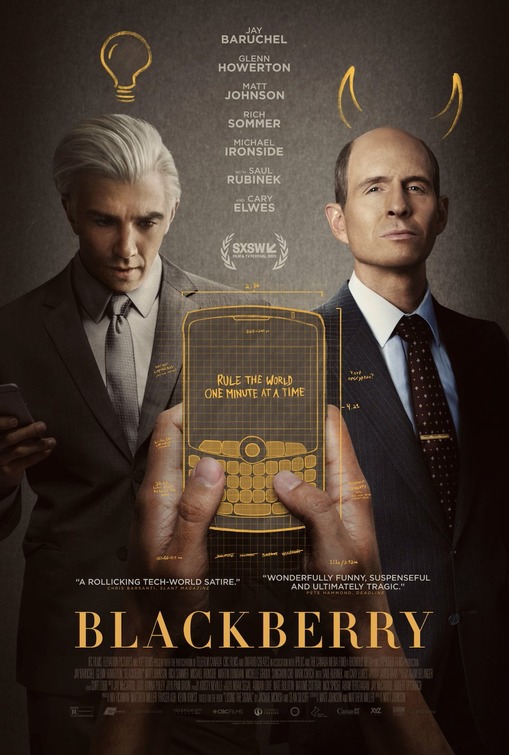
    There’s a scene in the BlackBerry movie (I rented it of Amazon) where Jim Balsillie, played by “It’s Always Sunny in Philadelphia” star Glenn Howerton, goes off on the NHL board over a decision he does not like.

    It’s a full-blown meltdown with a bizarre line thrown in there that sticks in the back of your mind because it’s so strange but not too out of character because it almost fits Howerton’s character to go off like that.

    “I’m from Waterloo, where the vampires hang out!!!”

    Tyler picked up on this line immediately as it was an easter egg referring to a video that went viral 11 years ago.

    The director was born and raised in Toronto, where this interview took place, so it was probably an in-joke as a wink to his fellow Canadians. So now you know.

  • Phish and Guy Forget

    Phish and Guy Forget

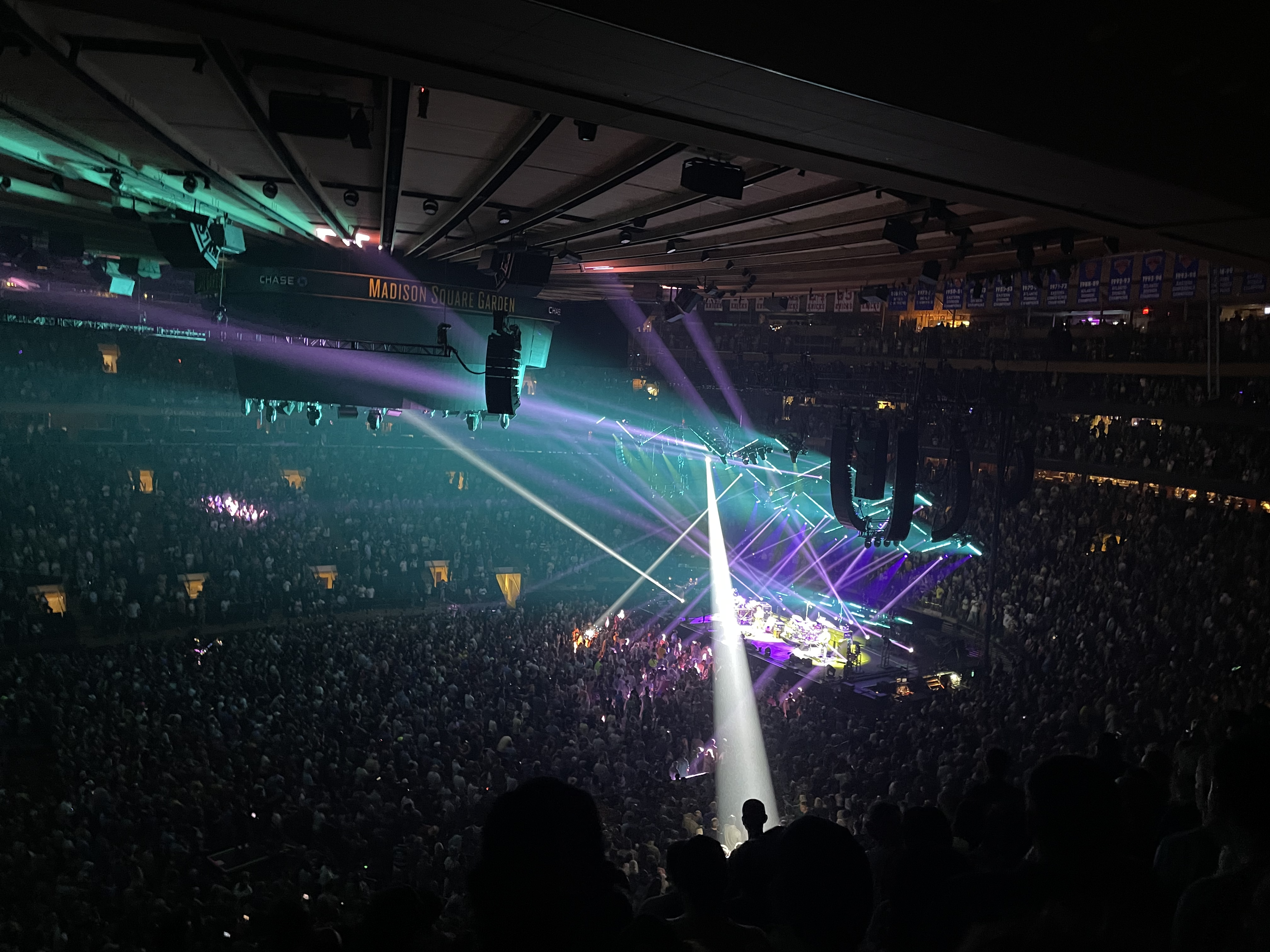
    The more I learn about this crazy band the deeper I sink into the mythology. I caught the last two nights of Phish’s seven day “residency” at Madison Square Garden last week. The usual superlatives apply about how the band is playing better than ever. The guy who does the lights even had a profile piece done on him in the New York Times. Phish has now played the Garden 88 times, surpassing Sir Elton John and only second to Billy Joel (who probably sleeps in the tunnels below).

    Phish’s 13-night run at the Garden in 2017, what is known as The Baker’s Dozen, was the stuff of legend and, like all feats remarkable that take place in this city, endeared them to New Yorkers, fans or not.

    Across 13 nights — from July 21 to August 6, 2017 — the Vermont jam band performed 237 distinct songs without repetition, with each night taking on a specific donut-flavored theme. With a run time of around 34-and-a-half hours across 26 sets, the group served up 176 originals, 61 covers, 19 debuts and 23 bust outs (with a gap of 50 shows or more). To fans, Baker’s Dozen marked one of the band’s finest runs since the late-1990s. However, the run earned recognition from the outside world as well, with the quartet earning a banner in the rafters of MSG for their record-breaking residency.

    A Look Back At The Phish Baker’s Dozen Residency

    This most recent run did not disappoint. There was outstanding improvisation from all five members of the band (I’m including Kuroda, the lighting guy) performing at the peak of their talent. But let me talk about Guy Forget (pronounced, in French as “gee-forjet”)

    On the seventh and final night, in the middle of a long jam out of a song called Tweezer, Trey starts singing the line,

    “I’ve never met a man that I could not forget except for Guy Forget”

    I had no idea what I was hearing and I had to tug on this thread later to find out what that was all about. As I suspected, there was a story there and I sure wasn’t disappointed.

    This is a band delights playing with words. They turned the phrase “moment ends” into Moma Dance and swapped the word “mangled” for mangos to nonsensical effect. So who was Guy Forget? A Moroccan-born pro tennis player who played in France during the 80s. Why is he the subject of a Phish song? Why not?

    Of course there was much controversy within the Phish nerd-verse over exactly where “Guy Forget” ended and the Tweezer jam begin. People wanted to make sure to set the historical record straight.

    I just love the fact this band can drop a one-liner, inside joke into the middle of a song and their fanbase knows exactly what is going on. It’s a privilege to have such a dedicated following and this band has certainly earned it.

  • MonsterTrack

    MonsterTrack

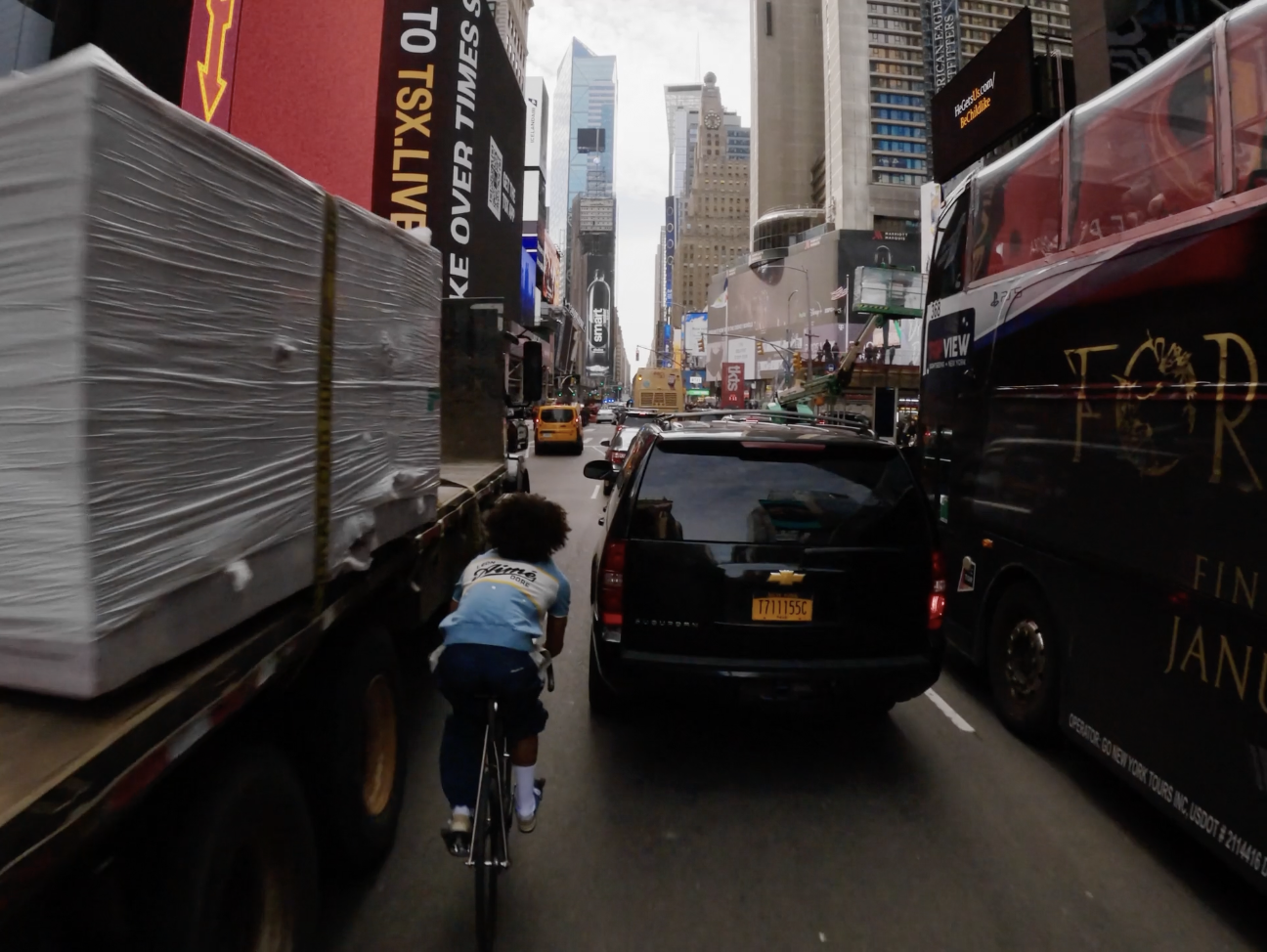
    I fell down a rabbit hole the other night watching cyclists on fixed gear bikes ride like maniacs thru busy urban streets. It all started when I ran across this viral video promoting designer Aimé Leon Dore by putting their Knit Cycling Jersey on the back of a rider navigating the busy streets of Manhattan.

    12-minutes from Times Square to the Brooklyn Bridge, no stops, one take.

    I later learned that the rider in that video was Toni Rodriguez (@shogun.toro) and that he rides in these events called alleycat races, the biggest being the MonsterTrack which is a race around NYC that he won last year.

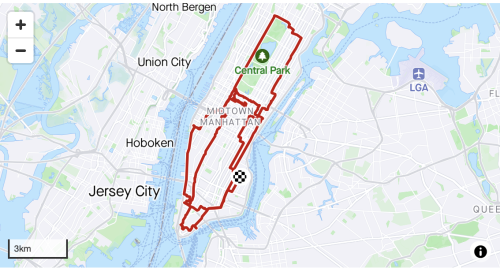
    MonsterTrack 2023 is a 34-mile race around Manhattan.

    I also learned that the camera work for Toni’s Brooklyn Bridge ride was done by this guy Terry Barentsen, a Brooklyn-based videographer who is takes these amazingly stable videos with a GoPro rig on his head.

    THEN I found that TerryB filmed the last MonsterTrack race in a heart-thumping, can’t turn my eyes away, hour-and-a-half long video. The mic is on so you can hear the screams of people yelling at them from all the near misses and the breathless dialog as the riders try and work out the quickest way to get from point A to point B.

    I will say that I in no way condone this behavior. Racing recklessly through a busy, urban environment on a bike with no brakes is a danger not only to the rider but to everyone on the road. There are several near misses and even a full on collision (scrub forward to about 12:30 in the video) with a cab. A couple of years back, someone died during a race in Chicago.

    Don’t try this at home.

  • Happy ‘merican Day

    Happy ‘merican Day

    Have a Happy (and safe) Forth of July!

    In case you’re wondering if everyone made it out ok, including the Honda Odyssey in the driveway, they’re fine, if a little chastened by their unexpected fame.

    Echos of the 2012 San Diego fiasco when an entire evening’s worth of fireworks went off all at once.

  • Raw Power

    Raw Power

    As we head into the 4th of July weekend, let me share a celebration of a uniquely American pastime, drag racing. What could be more ‘merican than putting the biggest engine you can think of on top of the lightest, spindly chassis that can hold this bundle of power just long enough to make it down the track? No need for finesse, no need for handling, just keep ‘er straight and don’t fly off the track.

    Drag racing embodies the spirit of American automotive culture, where raw power and speed reign supreme. It’s the ultimate embodiment of American engineering prowess and a testament to the unrelenting pursuit of speed. The thunderous roar of the engines, the smell of burning rubber, and the adrenaline pumping through your veins – these are the sensations that define the drag racing experience. It’s an exhilarating display of sheer horsepower and a reminder of the boundless possibilities that await those brave enough to push the limits.

    And for something even faster, there’s Top Fuel drag racing. The track is shorter, the speeds are faster, and the engines louder.

    The engine of a Top Fuel dragster generates around 150 dB of sound at full throttle, enough to cause physical pain or even permanent damage. Before a run, race announcers usually advise spectators to cover or plug their ears. Ear plugs and even earmuffs are often handed out to fans at the entrance of a Top Fuel event.

    Top Fuel, Wikipedia

    Here’s some impressive data points from a Facebook post making the rounds.

    This is what 11,000 horsepower does to a top fuel dragster tire at launch!
    This is what 11,000 horsepower does to a top fuel dragster tire at launch!
    • One Top Fuel dragster 500 cubic-inch Hemi engine makes more horsepower (11,000 HP) than the first 5 rows at the Daytona 500.
    • Under full throttle, a dragster engine consumes 1.2-1.5 gallons of nitromethane per second; a fully loaded 747 consumes jet fuel at the same rate with 25% less energy being produced.
    • With 3000 CFM of air being rammed in by the supercharger on overdrive, the fuel mixture is compressed into a near-solid form before ignition. Cylinders run on the verge of hydraulic lock at full throttle.
    • At the stoichiometric 1.7:1 air/fuel mixture for nitromethane the flame front temperature measures 7050 degrees F.
    • Nitromethane burns yellow. The spectacular white flame seen above the stacks at night is raw burning hydrogen, dissociated from atmospheric water vapor by the searing exhaust gasses.
    • Dual magnetos supply 44 amps to each spark plug. This is the output of an arc welder in each cylinder.
    • If spark momentarily fails early in the run, unburned nitro builds up in the affected cylinders and then explodes with sufficient force to blow cylinder heads off the block in pieces or split the block in half.
    • Dragsters reach over 300 MPH before you have completed reading this sentence.
    • In order to exceed 300 MPH in 4.5 seconds, dragsters must accelerate an average of over 4 G’s.
    • In order to reach 200 MPH well before half-track, the launch acceleration approaches 8 G’s.0 to 100 MPH in .8 seconds (the first 60 feet of the run)
    • 0 to 200 MPH in 2.2 seconds (the first 350 feet of the run)
    • 6 g-forces at the starting line (nothing accelerates faster on land)
    • 6 negative g-forces upon deployment of twin chutes at 300 MPH An NHRA Top Fuel
    • Dragster accelerates quicker than any other land vehicle on earth . . quicker than a jet fighter plane . . . quicker than the space shuttle.
    • THE BOTTOM LINE: Assuming all the equipment is paid off, the crew worked for free, & for once, NOTHING BLOWS UP, each run costs an estimated $1,000 per second.

    Happy Fourth of July.

  • Notes from the (media) party

    Notes from the (media) party

    A couple of weeks ago, I had the good fortune to attend the Media Party conference in Chicago. As with previous, early-stage “what is this technology?” conferences, I found the three days in Chicago a great way to connect with others who are also stumbling around and learning about Generative AI (genAI), Large Language Models (LLMs) and other AI-based technologies and techniques that are poised to forever change the way we work and communicate.

    The biggest takeaway from the conference for me is that we are all still learning the practical applications of genAI and that no one is an expert. Most of the subject matter experts do not have experience in real world applications and those of use working at the intersection of media and technology are only now beginning to understand the complexities of building production-ready genAI systems (how do you QA unexpected results?)

    There were no dumb questions – everyone had something to add to the conversation so, in that sense, the conversations were refreshingly equitable. I mentioned to more than a few people that the collaborative atmosphere at the conference (there were about 100-150 of us there) reminded me of the BloggerCon conferences from the early-2000s when blogging was getting started.

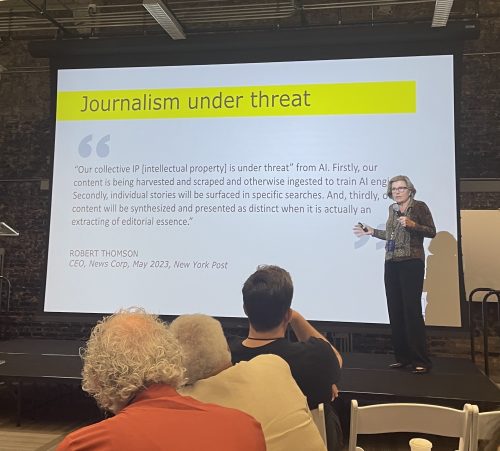
    While there were the expected skeptics that were tolling the bell of caution that genAI was going to steamroll journalists out of existence,

    Martha Williams, World News Media Network

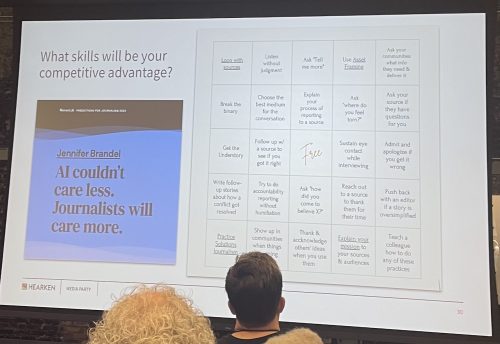
    there was also a faction of proponents that ranged from the embrace-or-become-extinct clan to the this-tech-will-give-me-superpowers crowd. The message that had the most resonance with me was from Jennifer Brandel who coined the term AE (Actual Experience) as the thing that journalists, particularly local news journalists, bring to the table that is often forgotten.

    Jennifer Brandel’s AE bingo card

    Indeed, what people are craving, particularly post-Covid, is human connection to a community. As information sources, local News organizations are well-positioned to be the focal point of their community in a way that an AI can never replicate. This past weekend, I took a long bike ride through the side streets in Brooklyn and Queens and saw pick-up basketball games complete with DJs and announcers, “uh oh, looks like the eighth graders are here to play!”) that showed off the best of community in action.

    Maybe we are at the tail end of an old model of journalism that is heading for “hospice” The new genAI systems have trained and perfected how to more efficiently deliver commoditized “news” so the new type of journalism that is only now organizing itself will be one that is resistant to automation.

    What follows are some unstructured notes and a collection of shared links that I found useful.

    Word Embeddings & LLM – an update to concepts I first learned about in 2015 when I learned about the concept of Word2Vec

    The Practical Guides for Lange Language Models – besides a continually updated table of LLMs, their license restrictions and what corpus of data was used in the training set, this guide also references this cool, evolutionary tree of LLMs.

    Beginner’s prompt handbook: ChatGPT for local news publishers – an excellent place to get started. Also Using GPT on Library Collections

    Mike Reilley from the Journalist’s Toolbox put together this toolkit on AI in the Newsroom

    Media Party Chicago schedule – list of all speakers and sessions.

    Thank you to everyone that put this event together. It’s particularly valuable to collaboratively learn about a new technology together. There is another Media Party event taking place in Buenos Aires in October, if you are in the area and interested in the intersection of AI and Journalism, it’s worth checking out.