
I love Japanese design, everything was looking great about this latest concept model from Sharp. The concept was really cool (you can read more about it on WirelessWatch Japan) until I heard the name. What’s that in your pocket again?
Year: 2011
-
Nike Cosplay in Akihabara
When it comes to Japan, they just do things different here. The video below is actually several years old but is a brilliant piece of advertising. Produced for Nike iD to promote their custom design shoe line.
-

Mobile in Japan – ON FIRE!

comScore released their Mobile Year in Review report for 2010 which, for some reason, includes Japan for the first time this year. Japan has been years ahead of other markets for some time now and their findings, summarized in the graph above, confirm that. In their words, Japan is, “perhaps one of the most mature and sophisticated mobile markests int he world.” Other highlights:
- In December 2010 (that’s just 31 days folks!) 9.8 million users in Japan made a purchase using their mobile wallet software embedded in their phone. 9.8 million!
- 76.8% used “connected media” vs. 46 % in the US and 41% in the EU. I have a tweet into @comscore to get details on how they define “connected media” and will update when I hear back.
I clearly have to figure out how to get my butt over to Japan.
Update : I never did hear back from ComScore but Rudy De Waele of @mtrends helpfully defines connected media as “browsed, accessed applications, or downloaded content” which basically means email, games, streaming video, and any application that pulls down bits from the network. Makes me wonder what the remaining 59% in the EU and 54% in US are doing on their phone. Voice, SMS, and Snake?
-

Japanese Train Infographics
Japanese trains are the paragon of efficiency. During peak rush hour, 11-car commuter trains rumble in and out of stations at 90-second intervals. There is no room for error. Everyone needs to know where to go.
So, when the trains were fitted with interactive displays, on the inside, over each doorway, information designers set to work jamming them with useful information for their captive audience.

Yamanote Line Infographic In the graphic above, which switches between Japanese and English, you see the following pieces of information:
- Destination of train and next stop.
- Car number.
- Location of stairs, escalators, and elevators in relation to your car and which exit they lead to.
- Which side doors will open at the next station (important if you need to start squeezing your way through the crowd to get out).
- Name of other train lines served by the next station.
That’s a lot of information to absorb. The efficiency of information design has caught the eye of a blogger at Sun as well. A couple more examples below.

Showing destination and car number. 
Showing destination and minutes to next station 
Showing next station and minutes to each station on the line. 
Showing which side doors open at the next station. -
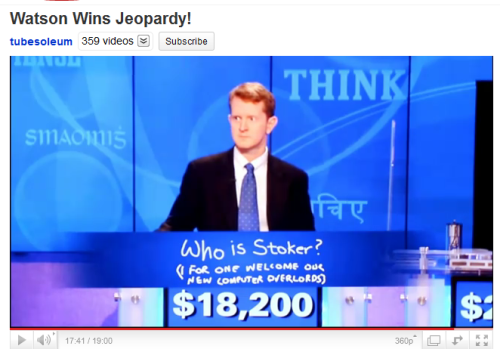
Watson Wins Jeopardy

Ken Jennings graciously concedes losing to IBM’s Watson computer on the final day of the three day Jeopardy tournament. More details on the research behind the experiment on my earlier post.
-
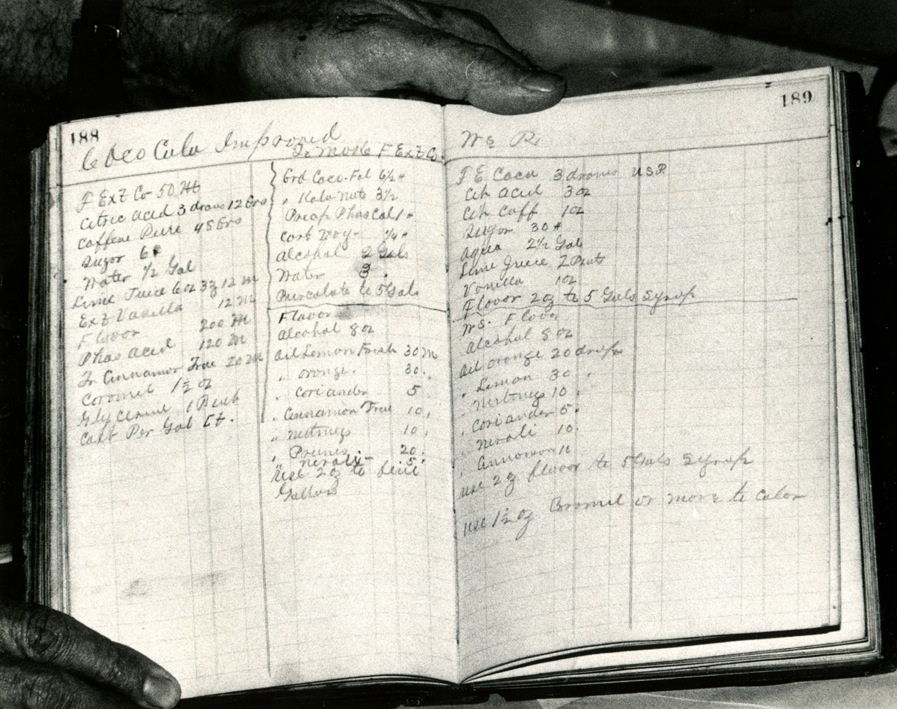
Coca-Cola’s Secret Recipe
Could this be Coca-Cola’s secret recipe? NPR’s weekly radio, This American Life, show dusts off an old newspaper article from 1979 which featured the photo scanned below.
Could this be the Coca-Cola recipe? On the episode (podcast), Ira Glass works with the folks at Jones Soda and tries to recreate the original recipe which includes things such as coriander and neroli oil. Fast Company has a post by the son of Charles Salter, the Georgia Rambler, who filed the original story and took the photo above for the Atlanta Journal-Constitution, The Secret Coke Recipe on “This American Life?” My Dad Found That.
-
IBM Watson on Jeopardy
In a brilliant piece of PR, IBM Research stormed back on the scene matching their artificial intelligence computer, Watson, against top contestants of the popular American game show, Jeopardy. On February 14, 15, and 16 Watson’s competes against two humans on live television.
According a piece on Wired’s Epicenter blog, 25 IBM scientists spent four years building Watson. “Powered by 90 IBM Power 750 servers, Watson uses 15 terabytes of RAM, 2,880 processor cores and can operate at 80 teraflops, or 80 trillion operations per second” The database of content upon which Watson draws its “knowledge” is from over 200 million pages from reference texts, movie scripts, entire encyclopedias, as well as, Wikipedia.
How did Watson do?
After the first day, Watson is tied with Ken Jennings for the lead at $5,000, beating out Brad Rutter who has $2,000. For details on the game and some behind the scenes of what was going on, listen to the interview with Stephen Baker on Arik Hesseldahl’s post on All Things Digital.
Footage from a practice round back in January below.
More details at the IBM Watson mini-site and a documentary on Nova, Smartest Machine on Earth.
-
Push Button Social Networking
HTC announced two phones with dedicated buttons for Facebook. The touchscreen Salsa and ChaCha (pictured below).
 Running Android Gingerbread 2.3.3, HTC modified the Sense UI to integrate the Facebook into the experience. According to the HTC press release,
The Facebook button on HTC ChaCha and HTC Salsa is context-aware, gently pulsing with light whenever there is an opportunity to share content or updates through Facebook. With a single press of the button, you can update your status, upload a photo, share a Website, post what song you are listening to, ‘check in’ to a location and more. For example, you can take a photograph of friends on your phone and upload it instantly to Facebook by simply pressing the button. Or let your friends know what song you’re listening to by pressing the button while listening to music on the phone. The track is automatically identified and shared on Facebook.
Dedicated hardware keys are nothing new (see Yahoo button on Japanese feature phone below) but HTC has taken advantage of the phone sensors and software to give this button multiple uses, as long as your preferred social network is Facebook.

Shipping in Q2 2011 across Europe and Asia and launching exclusively with AT&T “later this year.”
-
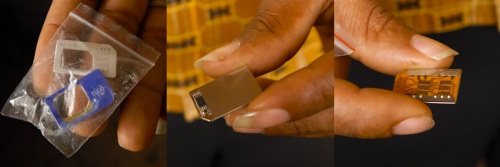
Dual SIM is Better Than One
Nokia Researcher Younghee Jung has an fascinating two-part post about how people are hacking their phones to support multiple phone numbers.
We found a service offered by a local mobile phone dealer (Mobile Phone People, one of the Nokia authorized dealers) in Ghana. It costs 15 euros to have the two SIM cards combined into one. There is an even more advanced operation, which requires a special SIM card imported from Finland. This card can host up to 16 SIM cards into one, but costs 40 euroes. Either of these operations costs considerably high for the market, as it is more than purchasing a mobile phone. Therefore the clientele is mostly business people who do need to have two or more numbers but do not want to go through the inconvenience of switching SIM cards or carrying multiple phones.
I did a little research and it turns out the 16 in 1 SIM cards are no longer available but you can still pick up a 6 in 1 backup kit for $50 and clone your existing SIMs onto a single chip. Features include:
- Fast number switching, normally takes less than 30 seconds (phone dependence)
- Dual speed (9600/19200bps) USB SIM reader/writer, allow scanning old SIM card which can’t be scanned with high speed.
- Allow to edit SIM card name for easy identification of which SIM is being used
- Allow to show either SIM name, operator name or SIM + operator name on the phone. (phone dependence)
- Super large phone book capacity with 250 contacts and 50 SMS
- Supports English, Traditional and Simplified Chinese user interface
- Manage SMS and contacts in PC with “SIM Editor”
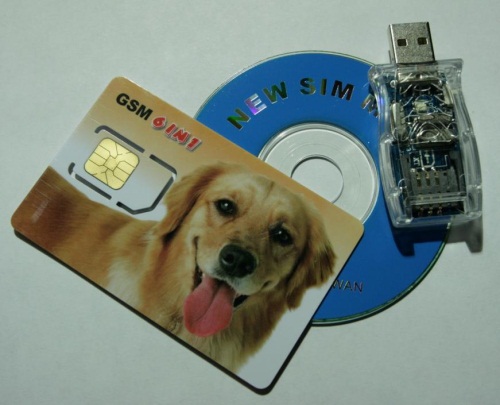
6 in 1 SIM chip *It should go without saying, that cloning your SIM most likely violates your agreement with your mobile provider.