Year: 2011

  • Matt, meet Andy

    I love hyperbolic prose. Especially when it’s used to sell something. Better yet when it’s pitching you or something you do.

    The Sarasota Herald-Tribune is hiring and Matthew Doig penned what is perhaps the all-time best Want Ad ever. It reads more like a call to arms than a job spec.

    We want to add some talent to the Sarasota Herald-Tribune investigative team. Every serious candidate should have a proven track record of conceiving, reporting and writing stellar investigative pieces that provoke change. However, our ideal candidate has also cursed out an editor, had spokespeople hang up on them in anger and threatened to resign at least once because some fool wanted to screw around with their perfect lede.

    We do a mix of quick hit investigative work when events call for it and mini-projects that might run for a few days. But every year we like to put together a project way too ambitious for a paper our size because we dream that one day Walt Bogdanich will have to say: “I can’t believe the Sarasota Whatever-Tribune cost me my 20th Pulitzer.” As many of you already know, those kinds of projects can be hellish, soul-sucking, doubt-inducing affairs. But if you’re the type of sicko who likes holing up in a tiny, closed  office with reporters of questionable hygiene to build databases from scratch by hand-entering thousands of pages of documents to take on powerful people and institutions that wish you were dead, all for the glorious reward of having readers pick up the paper and glance at your potential prize-winning epic as they flip their way to the Jumble… well, if that sounds like journalism Heaven, then you’re our kind of sicko.

    For those unaware of Florida’s reputation, it’s arguably the best news state in the country and not just because of the great public records laws. We have all kinds of corruption, violence and scumbaggery. The 9/11 terrorists trained here. Bush read My Pet Goat here. Our elections are colossal clusterfucks. Our new governor once ran a health care company that got hit with a record fine because of rampant Medicare fraud. We have hurricanes, wildfires, tar balls, bedbugs, diseased citrus trees and an entire town overrun by giant roaches (only one of those things is made up). And we have Disney World and beaches, so bring the whole family.

    Interested? Click through to apply. I bet you this is a job Friendster Andy could handle.

  • Tony Conrad on TWIST

    I’m an occasional listener to Jason Calacanis’ podcast, This Week in Start Ups. The guests really make the show and this episode from a few weeks back with Tony Conrad, a partner at True Ventures, is killer. Tony didn’t get too much time to talk about his latest product, about.me but he did share a lot about his thinking behind investing, advising, and building product in Silicon Valley.

    Great snippets about the early days of WordPress, entrepreneur pitches, and Yuri Milner and his new investment strategy.

  • PowerKiss, Wireless Charging from Finland

    PowerKiss, Wireless Charging from Finland

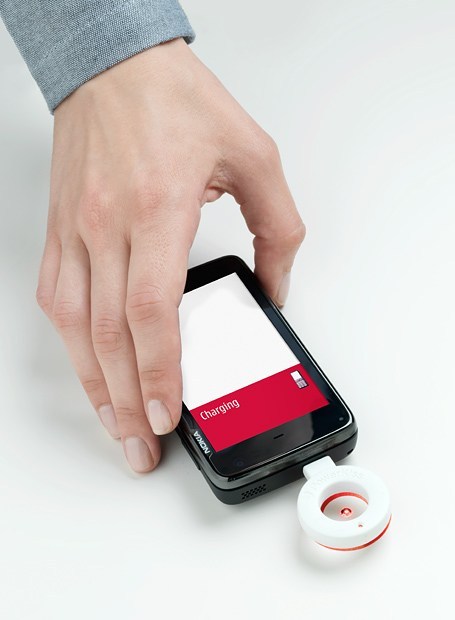
    Wireless charging technology has been around since Nikola Tesla came up with the idea. In that sense, Finland startup PowerKiss is no different. Put the receiver (the Ring) into your phone and then place it on top of the power transmitter (the Heart) which is designed to be attached or built into furniture.

    But unlike Powermat, which markets itself as an end-to-end solution that you buy for yourself and keep in your home, the folks at PowerKiss are marketing themselves to cafes, hotels, and airline lounges as a service that they can offer their customers. Power as a service, elegant battery top-up as a value add.

    The idea is that the traveler borrows a receiver from the business when they walk in (the receivers cost about 10 EUR each) and plugs it into their mobile device and places it on a table that has the transmitter built in. No wires to trip up other customers, no crouching around looking for a spare outlet.

    Clean, elegant, utterly Finnish. The PowerKiss chargers currently support Nokia phone 2mm jack, the microUSB, and the iPhone/iPad format too. Their site also says they have a laptop charger in the works.

    Launched last year, the company now has 15 employees in Helsinki situated in the Aalto design factory. Here’s a video interview with the founder, Maija Itkonen.

  • Update from Tokyo

    Following up on last week’s letter, here’s an update from my father who lives in Tokyo.

    –The New York Times says just short of half a million people are now in “shelters,” which in most cases means living on a blanket spread out on the floor of a high-school gymnasium. Most of these rural people have lost everything, even their money, which they did not keep in the local bank but in the top drawer of their bureau, which has been swept away.

    –Most recent addition to the shelters are a young boy and an 80-year-old woman rescued after eight days under rubble.

    –Shibuya crossing in front of Shibuya Station is known for its people jams, in which 600 people can step off the curb when the light changes. These days, however, it’s more like fifty people.

    –One fashionably dressed lady in the train this morning was wearing a highly polished helmet.

    –In the stations, escalators going up are operating, but people are expected to descend to the platform on their own. Elevators are kept operating, though, for people who genuinely have difficulty climbing stairs.

    –Although many stores in Tokyo are closed or at least partially shut down, the cosmetics counters on the first floor of department stores, where some of Tokyo’s most attractive ladies man the stands, are open for business. A morale booster, clearly.

    –Gasoline is being rationed, which everyone understands. By lining up early in the morning at the stand at the bottom of the hill, we were able to get 12 liters–maybe four gallons. But in Tokyo the trains take us wherever we want. In the rural disaster area, people can’t get anywhere without a car. They may have to drive 30 kilometers for gasoline.

    –We have heard of a family living uncomfortably close to the endangered power plants evacuating to Yokohama. A family of eight in a car driving 150 miles.

    –We learned a few days ago that radiation has been detected in shipments of spinach. In its determination to provide everyone with as much information as possible, NHK shows a map of the ten prefectures in question, with the precise level of radiation one could expect in the spinach from each prefecture.

    –“Foreigners” seeing videos of residents of Tokyo wearing white face masks might think they are protection against radiation. No, it’s protection against hay-fever pollen.

    –There are far fewer ads in the trains and stations than usual, although beer ads celebrating the coming of spring (tra la) are plentiful.

    My mother adds that she had to give up on getting milk at the local grocery store because the line was too long. Milk supplies are down because radiation contamination has impacted the supply. The local department store was only open from 4pm until 7pm as they were trying to save on electricity and she recently had to line up at 6am to get gasoline for the family car which is being rationed out to just 10 liters/car.

    —– 0 —–

    Meanwhile, I read in local press that the Finns have moved the seven staff in their Tokyo office down south with the Danes in their Hiroshima offices. This move was prompted, in a historic twist of irony, to avoid potential nuclear fallout from the reactors in Fukushima.

  • Three Days of Terror at Pinboard

    Pinboard has a three-day trial period, and I was now having nightmare visions of spending the next ten days sitting in front of the abysmally slow PayPal site, clicking the ‘refund’ button and sniffling into a hankie.

    Anatomy of a Crushing

    In the middle of the great del.icio.us exodus of 2010, the small bookmarking site Pinboard faced a crushing influx of new users. Co-founder Maciej Ceglowski writes in detail about how he and Peter Gadjokov kept the site running and lessons learned along the way.

    "Senior Vice President for Bad Decisions at Yahoo had decided to give us a little help."

    Yes. I’m a pinboarder too.

  • Letter from Tokyo

    My father just sent an email yesterday to my sister and I describing the situation in Tokyo. Knowing how everything runs like clockwork in that city, it’s even more striking how the country adapts when they have to improvise.

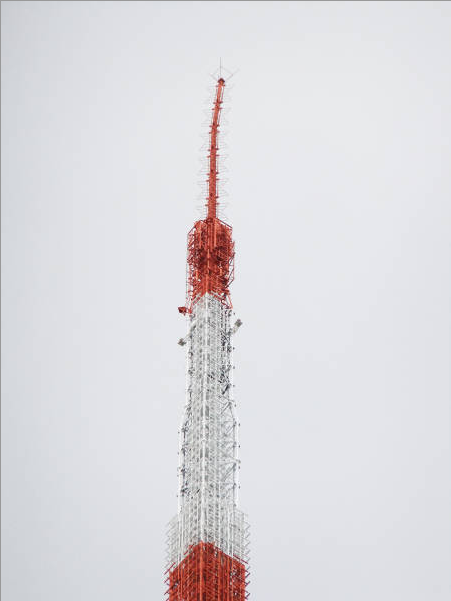
    Tokyo Tower, bent following earthquake

    Four days after the quake we are still feeling aftershocks. We’ve received over sixy aftershocks so far and clearly there are more to come. We have learned another is on the way when the hanging drawer-pulls of the bureau begin to tinkle. But you know, after a while it all begins to lapse into a routine, especially as no one here ever gets excited and the Japanese instinct to rally round is inbred.

    Mikie and I are a couple hundred kilometers south of the scenes of devastation you’ve seen on TV and we’re on a hill, so we’re pretty safe, I guess. We are told, though, that we should expect another follow-up quake and the ensuing tsunami.

    There has been little damage in Tokyo, although the radio aerial at the tip of Tokyo Tower was bent. A number of multi-story stores in downtown Tokyo have closed to make sure their structure has not been damaged, although their (disposable?) clerks behind the information counter on the first floor remain on duty to apologize to customers for the inconvenience.

    Because the nuclear power complex in the stricken area has been closed down, electricity is being rationed and this has brought home to everyone just how dependent a city like Tokyo is on electric power. No electricity means no trains, no traffic lights, no doors opening automatically on your approach, no pumping of gas, no automatic bottom-washing in toilets.

    The trains, usually punctual to the minute, are no longer posting any schedule at all. To conserve electricity, lights in stations have been dimmed and escalators and elevators have been shut down. There is a palpable commeraderie among people now forced to ascend a long stairway to the street or to descend to the platform. We used to be able to go through station turnstiles by swiping our wallet across a reader, but now we have to endure the inconvenience of actually showing our pass to the station attendant, who shrugs his shoulders and rolls his eyes.

    The evening the quake hit, all trains were immediately stopped because it wasn’t certain that the tracks had not been bent, so thousands of office workers couldn’t get home. A sense of commeraderie flowered then, too, as people found refuge in the back room of their favorite little drinking spot, or in one of the temples that opened for the occasion, or on a park bench, or just on the street.

    With the trains running now, although to an irregular schedule, we seem to be inching back to a regular routine, but coming home on the train last night, the train stopped because Train Control had warned the driver that an aftershock was expected (better notice that the drawer-pulls of our bureau) and in fact after a minute the train rolled gently from side to side. The conductor apologized.

    It may be worth noting that the Financial Times reported that when the quake struck, ten minutes before the Tokyo Stock Exchange closed, the trading floor was shaken, which brought about a feverish selling of the yen and of Japanese stock generally–a testament to the brutal efficiency of Capitalism.

  • Order out of Chaos

    From tweet aggregator site, prayforjapan.jp

    As people begin to pick up the pieces following the terrible earthquake and tsunami in Japan we’re hearing stories of how people are helping each other. Stories that warm the heart and give you hope that Japan will actually grow stronger from this disaster.

    CNN has a story about the calm social order that has remained despite the surrounding chaos.

    The communitarian spirit at the foundation of Japanese culture seems to function even more efficiently under the stress of disaster.

    And this from the Los Angeles Times,

    She was elderly and alone, injured and in pain. When the massive earthquake struck, a heavy bookshelf toppled onto Hiroko Yamashita, pinning her down and shattering her ankle.

    When paramedics finally reached her, agonizing hours later, Yamashita did what she said any “normal” person would do, her son-in-law recounted later: She apologized to them for the inconvenience, and asked if there weren’t others they should be attending to first.

    This is a time of incredible stress but also a time for Japanese society to re-evaluate who they are and what makes them special. I have great hope and optimism for the people of Japan.

  • Japan, how to help

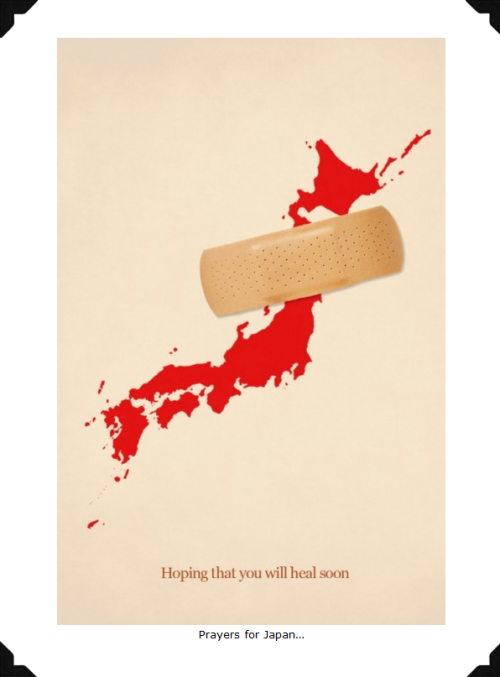
    Prayers via Thought Pool

    Meta

  • Japan Earthquake – Useful Links

    Japan Earthquake – Useful Links

    At 2:46 pm today, an 8.9 earthquake hit off the coast of Japan in the afternoon local time. It was the largest earthquake in Japan in 300 years and the 6th largest recorded earthquake in history. A quick call to my parents and inlaws and thankfully everyone is OK.

    I’ve collected a few links where you can get more information and will update as I learn more.

    Video

    Photo Galleries

    Coverage

    • New York Times The Lede is live-blogging the latest developments.
    • Wikipedia has a developing reference page.
    • TWIMPACT is a realtime twitter analysis site translating Japanese tweets into multiple languages.

    Resources

    • Google Crisis Response page – links to telecom bulletin boards, transportation info, and utility info.
    • Google Map showing location of emergency shelters.
    • Google Person Finder – if you’re looking for someone or want to let someone know you’re ok.
    • TimeOut Japan resource page has sections listing public shelters and emergency messaging services.
    • Bic Camera and Apple Stores are offering a free re-charge on your cell phone.
    • If you need water, Suntory vending machines have emergency levers beneath a sticker on the upper-right corners. Pull the sticker off, pull the lever firmly and you’ll get free drinks.
    • Free Wifi from Softbank, Livedoor, and FON
    • OLIVE, Survive Japan wiki – survival tips and making do with what you have

    How you can help

    I am collecting a list over on another post.

    Depreciated