Year: 2021

  • TWTW in 2021

    TWTW in 2021

    We made it! 2021 was a journey for all of us – even if you stayed in one place, hunkered down, as events of the world swirled around you. 

    For the final post of the year I dug into the click data for all the TWTW posts and newsletter issues to bring you the annual The Week That Was rundown of the most popular stories of the year.

    I started The Week That Was as a distraction, a place to collect the amusing stories that I ran across each week during the course of my work. As the news grew more alarming and dire, I began to look forward to the weekend when I pulled together the best of the week and wrote a sentence or two about each story – it was more than a distraction, it helped level-set me.

    In a year that started with an insurrection at the Capitol and ended with 800,000 Americans dead from Covid, doggedly sending out “quirky stories from the week prior” felt defiant. If some of these stories made you smile, we connected, it was worth it.

    Here are the most popular stories that you collectively tapped or clicked on during 2021.

    • Mayhem ensues after thousands show up for fake Daft Punk concert in Belgium – New York Post
    • Mystery tree beast turns out to be croissant – BBC
    • We spoke to the New Yorker who found a whole apartment behind her bathroom mirror – Curbed
    • Mysterious car parked on same Italian street for 47 years becomes tourist attraction – Mirror
    • Wearing socks with sandals is officially cool forever – Vice
    • Oakley’s new reusable tactical face mask won’t fog your glasses – Maxim
    • A section of Trump border wall in South Texas cost $27 million a mile. It’s being foiled by $5 ladders – Texas Monthly
    • ‘Solved’: the mystery of the ‘slut’ scrawled on The Grapes of Wrath manuscript – The Guardian
    • Nearly 100 guests forced to leave Florida hotel after being told it was sold – Fox 35 Orlando

    Have a wonderful New Year. Take stock of what we’ve  all been though with a countdown of your own. See you 2022 with fresh eyes, living for the new now.

    Thank you for reading!

  • The week that was

    The week that was

    3,837 people accused of witchcraft may be pardoned posthumously centuries after the fact under a new bill put forward in the Scottish parliament.

    A global study of the plastic-degrading potential of bacteria found that one in four organisms analysed carried an enzyme that could naturally digest plastic.

    The Sami, indigenous people of Northern Norway, famously have 100 different words for the different types of snow. But global warming has brought a new type of freezing rain for which they have no words.

    Over 80 died when their overloaded boat sank miles off the coast of northeastern Madagascar. The head of the national police force almost lost his life when his helicopter, which had been investigating the sinking, crashed into the sea. General Serge Gellé and another passenger, swam 12 hours back to shore.

    If you’re looking to withdraw from society and wait out the Omicron wave, there’s a opening for a caretaker on small island off the coast of England that might interest you.

    Dutch authorities have halted the sale of anti-5G necklaces and bracelets that have been found to be radioactive.

    If you always felt the 1960s TV special Rudolph the Red-Nosed Reindeer was a bit off, Caitlin Flanagan sticks the knife in and twists. “Santa presides over a nonunion shop where underproducing elves are deprived of breaks and humiliated.”

  • The week that was

    The week that was

    The US is imposing new sanctions on Chinese biotech and surveillance companies involved in the biometric surveillance and tracking of Uyghur Muslims.

    The Iranian government vowed to impose sanctions against American entities and individuals involved in police brutality against Black people.

    Everybody was reading Renay Mandel Corren’s obituary.

    Cracks appeared in Meta’s “warm and fuzzy” depiction of virtual reality as one beta tester reported being groped by a stranger.

    Jeff Garlin, an actor in the TV series The Goldbergs, was kicked off the set after HR complaints about his abusive behavior. Garlin’s body double will take his place while Garlin’s face will be digitally superimposed in post-production.

    Eric Clapton successfully sued a 55-year old German widow for listing one of her late-husband’s bootleg CDs for $11.

    In order to prevent smash-and-grab looting raids, The Grove, a high-end shopping mall in Los Angeles, added fencing that resembles barbed wire to its outdoor decor. “The coil wire is a reasonably new technology in retail crime prevention”

    Due to a “lapse of concentration” a trader listed a Bored Ape NFT for a tenth of its market value. The lucky buyer sniped it for the equivalent of $40k and re-listed it for $248k.

    Former First Lady Melania Trump proudly listed an NFT that is a watercolor of Melania Trump’s icy glare encoded with an audio recording of Mrs. Trump reciting “a message of hope.” Each piece is available for 1 SOL ($180).

    Russian economists have concluded that investing in Lego is more lucrative than investing in gold.

  • The week that was

    The week that was

    A Beijing University shared that Chinese authorities successfully controlled the weather with extensive cloud-seeding operations prior ceremonies commemorating the founding of the Communist Party to “ensure clear skies and low air pollution.”

    A Brooklyn neighborhood is at peace again after the source of the high-pitched ‘chirp’ was tracked down to a resident who set up an animal repellent device on his balcony and left town for a couple of weeks.

    Amazon’s AWS data center in Virginia was knocked offline for several hours taking down major sites across the internet including everyones Roomba.

    The supply chain woes hit the cream cheese market and New Yorkers are freaking out.

    Food Guinness World records were broken by an 850-pound pot brownie and, just in case you get the munchies, a 350-pound vegan burger.

  • NYC Restaurant Streeteries

    NYC Restaurant Streeteries

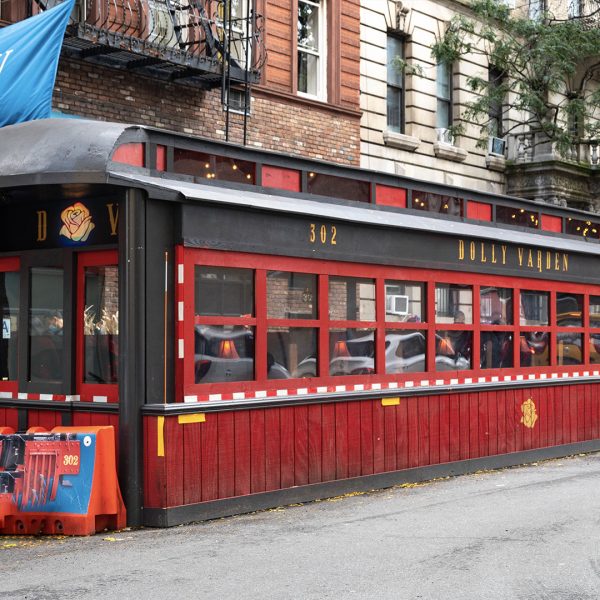
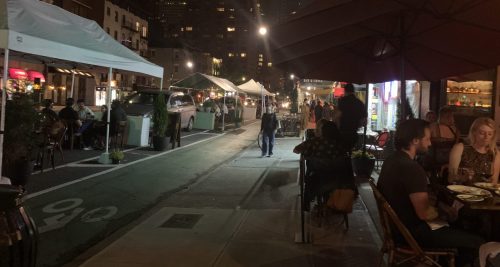
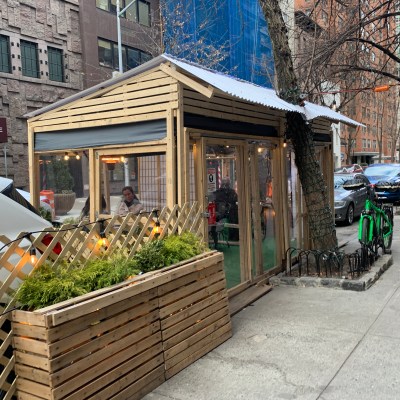
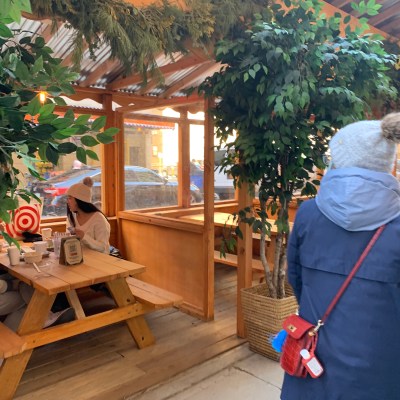
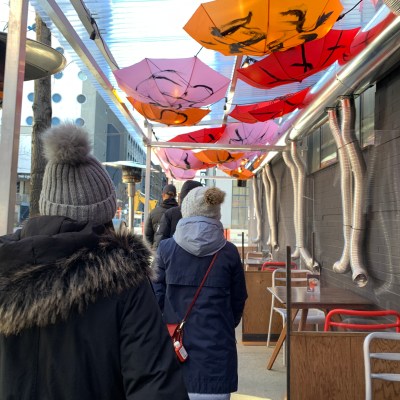
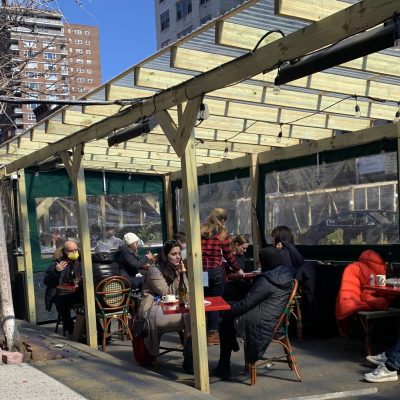
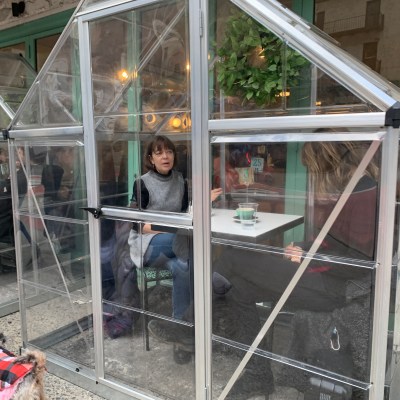
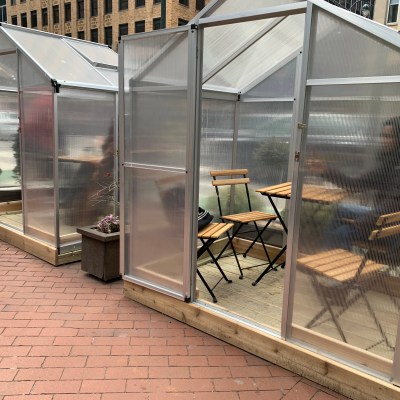
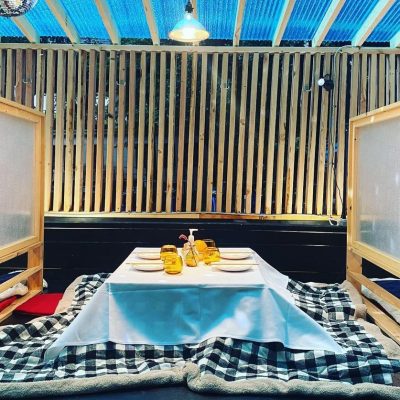
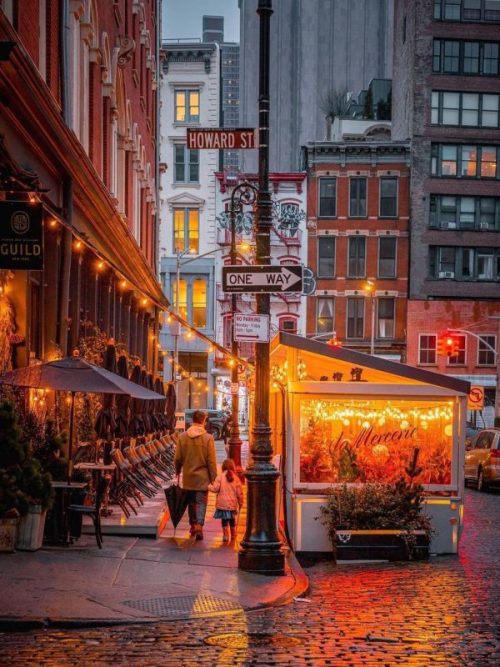
    Back in March, I wrote a post for the SmartNews intranet explaining to my colleagues in Japan the temporary sheds you see on the street outside of restaurants. In San Francisco they were called parklets, here in NYC they are called streeteries. They were built so restaurants could comply with Covid restrictions on indoor dining.

    As we head into the winter and perhaps another wave, we may start to use these again.


    Restaurants are the lifeblood of any city but in New York they are vital as in, “important for life.” When Lockdown began, people were not able to leave their apartments to meet face-to-face for conversation. 

    I have only been here for a couple of months but I can already appreciate how social New Yorkers are compared to people in other cities. One cannot walk down the street without having a short exchange with the people you meet. As a shark has to swim to run water across their gills, New Yorkers must talk to survive. Even for a short ride in an elevator, silence is awkward. I was not here when the shuttering of restaurants was announced but I can imagine that the inability to meet with friends and clients for dinner or weekend brunch was a shock to the system, almost unbearable.

    But New York City is famous for its workarounds. Like water flowing downhill, supply adjusts to meet demand. By mid-summer City Hall announced the Open Restaurants program to allow patrons to be served safely, outside.

    It must have felt like the Gold Rush as restaurants spilled on to the street to secure room for their patrons to keep their businesses running. By the time we arrived here in late-September, Izumi and I were shocked at how many of these “streeteries” were open and how vibrant it felt compared to the San Francisco we just left.

    Just a few days earlier, the Mayor announced that the Open Restaurants initiative would become permanent. This allowed restaurants to not only shore up their temporary setup but also spurred an investment in sturdier structures for the colder months ahead. What followed was a flurry of construction as restaurants added walls to block the wind and heaters to keep customers warm.

    New Yorkers famously kept supporting their favorite restaurants as they continued to serve their customers, even during snowstorms. Architectural innovations evolved over those months and we now have a number of “hacks” to what became known as “bubble dinning” that I’d like to share with you today.

    Notice how walking the sidewalk feels like walking through a shared room. When you walk the city this way, you often overhear snippets of conversation. It’s intimate and a great way to pick up a sense of how everyone is feeling and coping with the pandemic.

    As with other innovations from its past, New York has made the sidewalk restaurant structures its own and woven it into the fabric of the city. With warmer days ahead I look forward to seeing more people dining outside, in the open. The pleasant side effect of these now permanent structures is that there is less space for cars to park. Add this to the dramatic expansion of bike lanes and anticipated congestion pricing under the Biden administration and we may see even less traffic on city streets.

    It can only get better from here.

  • The week that was

    The week that was

    America’s deadly love-affair with guns was in the news again as a 15-year old took a pistol gifted by his parents to school and shot up his classmates. I normally avoid curating violence but the river of avoidable tragedy was just too much to bear:

    Clearly we need to change the culture around gun ownership. For a contrast, here’s what it takes to own a gun in Japan.

    In other news:

    Officers in Beaverton, Oregon corralled a hamster and took the animal into “protective custody” after pulling over a driver, the hamster’s owner, and arresting her for driving under the influence.

    Scotty Thomas, a dump truck driver in Fayetteville, NC, bought a lottery ticket online. Later, forgetting he already bought a ticket, he bought another, with the same numbers. Confused at first when he received two emails saying he had won $25,000/year for life he then realized he bought two tickets that both won.

    Twenty years ago Gladys from Florida called Mike in Rhode Island looking for her daughter who lives in Maryland. She was dialing area code 401, instead of 410 and, over the years, as she kept making the mistake, Mike and Gladys struck up a friendship. This year, Mike paid Gladys a visit.

    Merriam-Webster selected vaccine as the most popular word of the year. Last year’s most popular word? Pandemic.

    A Hong Kong metal band that broke up five years ago has found new popularity. The band’s name is Omicron.

    On Friday, a group of 60+ fans gathered at the Tan Hill Inn in Yorkshire, England to hear their favorite Oasis tribute band. During the evening, a blizzard dumped over three feet of snow and kept the whole lot at the Tan Hill Inn overnight and through the weekend.

    In Denmark, 25 employees and six customers at an IKEA were forced to spend the night at the store after a snowstorm. The local TV station covering the story shared photos of the “stranded Danes drinking beer and coffee and noshing on cinnamon rolls as they watched soccer together.” No mention of Swedish Meatballs.

    IKEA in Tokyo is renting out a “Tiny Home” apartment for the equivalent of $1 USD/month. The 107-square-foot apartment, completely kitted out with IKEA furniture, makes “good use of vertical space.”

    Car thieves are using Apple AirTags to track cars they wish to steal. Scoping out desirable cars in a mall parking lot, they slap the AirTag on the car and track them late at night when they can break in under cover of darkness. The article about this trend helpfully advertises a deal on AirTags from Best Buy.

    Lawyers representing a company that goes by the name of Bong LLC are suing their NoHo building tenant, a host of underground, semi-commercial parties, because of complaints of “marijuana smoke.”

    “Nobody was hurt in the blaze and the status of the snakes remains a mystery” says a report about someone who burned down their house while trying to smoke out a snake infestation.

    Making lemonade out lemons, Trump’s former personal attorney, Michael Cohen, is minting NFTs out of his federal prison badge and putting them up for sale at Miami’s Art Basel.

  • The week that was

    The week that was

    Army cadets, eager to one-up their rival Navy before the big game, kidnapped Navy’s billy goat mascot but FUBAR’d the mission and made off with the wrong goat.

    It was so cold at a Canadian football match (18 F, -8 C) that the sideline Gatorade froze solid.

    As gasoline prices spiked, President Biden released 50 million barrels from the strategic oil reserves. Due to a shortage of maple syrup, the Quebec Maple Syrup Producers released 50 million pounds of its strategic maple syrup reserves.

    Crypto-currencies swooned on fears of Omicron, a new coronavirus variant. The group of crypto-investors that raised over $45 million to buy a physical copy of the US Constitution lost their bid to a hedge fund investor. A new “decentralized autonomous organization” (DAO) was founded to raise funds to purchase an NBA team.

    Mr. Goxx, the internet-famous hamster speculator passed away peacefully on Wednesday.

    After testing prices last summer, the Dollar Store officially rolled out its $1.25 pricing.

    While driving down Interstate 5 outside San Diego a door on an armored car flew open and bags of money hit the road and broke open, scattering bills everywhere. Chaos ensued.

    “Christmas is not canceled” proclaimed billionaire Ty Warner, inventor of Beanie Babies. Chartering more than 150 flights from airports across China Warner flew inventory to eager collectors in the United States, bypassing the container ship logjam.

    A man who was caught smuggling copies of Netflix’s dystopian series, Squid Games, into North Korea has been sentenced to death by firing squad.

    For the first time, the United States was added to a list of “backsliding democracies.”

    The expansion of the UK’s recognition of animals as sentient beings with certain legal rights expanded from pets and farm animals to lobsters, octopus, and crabs.

  • The week that was

    The week that was

    A Japan Railways train driver sued JR West for ¥56 which was deducted from his paycheck over a one-minute delay which he is contesting. New York City’s subway on-time performance (defined as “within 5 minutes”) improved to 83.2% last month.

    A Michigan woman pled guilty to attempting to hire someone to murder her husband after she was confronted with a “service request form” she filled out on rentahitman.com. The site was actually a cyber-security test site, not an e-commerce site for assassins.

    Scientists have confirmed what many of us had suspected. The human brain is getting smaller.

    The number of new COVID cases in Minnesota overwhelmed the state’s capacity to verify and log new data.

    The flooding from torrential rains were so bad in Northwest Canada that farmers had to use jet skis to ride out to the fields and lead their cattle to safety.

    A few days after the COP26 environmental summit where President Biden told world leaders that his administration is committed to slowing climate change with “action, and not words,” his Interior Department oversaw one of the largest oil and gas lease sales in American history.

    Work began on America’s first major offshore wind farm. The facility, Vineyard Wind 1, is about 15 miles from Martha’s Vineyard, near Cape Cod.

    A nightclub in Scotland is partnering with a geothermal energy company to harness the heat from dancers, storing it as renewable energy.

    For a brief moment, the United States had its first female president when Joe Biden signed over his presidential powers to Kamala Harris before going under for his colonoscopy.

    The Staples Center in Los Angeles sold its naming rights and will be called Crypto.com Arena starting from December 25 when the LA Lakers host the Brooklyn Nets.

    A group of crypto-currency investors that raised $47 million in a failed attempt to buy a physical copy of the US Constitution will now collectively have to decide where to deploy their capital in a true test of distributed finance.

    A Frida Kahlo self-portrait sold for $34.9 million, the highest price ever for a piece of Latin American art sold at an auction.

    Marty McFly’s hoverboard from Back to the Future II sold for $500,000.

    Tesla drivers that relied on the app to unlock their cars were left out in the cold for several hours when the app stopped responding due to network trouble.

    The California State Fair will feature more than just pies and pigs this year. There will be an official cannabis category which will measure CBD, THC, and each strain’s unique terpene profiles.

    Heinz and Hunt are battling it out on limited edition versions of their ketchup attempting to mimic what it would taste like if the tomatoes were grown on Mars.

  • The week that was

    The week that was

    A working Apple-1 computer in a rare wooden case was sold at an auction for half a million dollars. The 44-year old computer was purchased for $650.

    Angelo Fregolent parked his Lancia Fulvia 1962 in 1974 and left the car there for 47 years. It has since become a local landmark.

    Glen de Vries, who recently blasted off into space with William Shatner died in a small plane accident in Sussex County, New Jersey.

    105-year-old Julia ‘Hurricane’ Hawkins set a new track-and-field record for the 100-meter and is set to go against her rival, Diane “Flash” Friedman. Heather Hann ran a 10k in 40:04 to break the Guinness World Record for running while pushing a stroller. Alyssa Clark broke a Guinness World Record by running 95 marathons in 95 consecutive days.

    A woman visiting the Bronx Zoo climbed over the barrier near the lion exhibit, threw money in the air and exclaimed, “King, I love you, I came back for you.”

    Arby’s is coming out with a curly fries-flavored vodka.