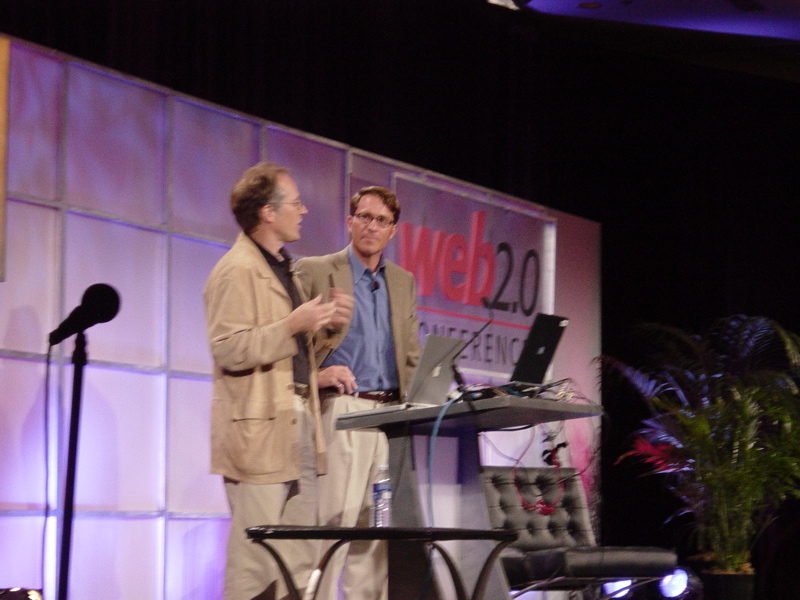
I realize I’m getting liberal with the “Milestone” tag but it truly seems as if we are living in historic times. I just got off of an amazing three days in San Francisco where I saw history being made all around me at Web 2.0 in San Francisco. Maybe I’m still new to this industry but checking with others around me, they also shared my view that the mood of the crowd was upbeat and excited for the possibilities of the future. What was nice though is that despite the potential to go wild-eyed and overboard there were enough scarred veterans in the crowd to keep things realistic. Many of the things being discussed have been done before during the heady bubble days but this time it looks like we’ve got the platform to really make it happen.
Remember moreover.com? RSS before anyone knew what to do with it. Geocities was like weblogs 1.0 but instead of letting people subscribe to an RSS feed, you had a small text entry box where you would ask for an email address so you could push out a notice when the page updated. One good line from Martin Nisenholtz of nytimes.com is that the promise of RSS is that he can now send content directly to the reader without having to cut bad deals with Biz Dev execs at portal companies. Web 2.0 is all about cutting right by the intermediary.
There’s a lot of good coverage of the conference already but I’ll post on some personal tidbits and takeaways:
I listened in on the interview behind this article with Google’s Peter Norvig in eWeek and later talked to him about sentiment analysis as it might apply to blog posts. He said that Google is applying techniques to skip over indexing spam comments such as “I really like your page, have you seen www.spampage.com?”
I asked Jerry Yang if he had any advice for a software startup interested in going after the corporate market. Yahoo had an enterprise portal group that eventually threw in the towel and turned their customers over to Tibco. His advice was to stay away from corporate IT because they have a vested interest in avoiding the new and different.
I witnessed as Brewster Kahle struck a deal with the folks from Morpheus to work together. “I’ve got this great archive of all this wonderful stuff and you’ve got this great mesh of a distribution network.” Ok, I egged them on a bit.
The most inspirational talk was by Lawrence Lessig who railed against the specter of old world copyright law that threatened our ability and right to mix and mash digital content to express ourselves. Something’s not right when you can teach your kids to write creatively and encourage them to quote and incorporate styles & nuances but cannot teach them how to remix music or video to make a point, political or personal. Indeed. For an mp3 of the speech, click here.
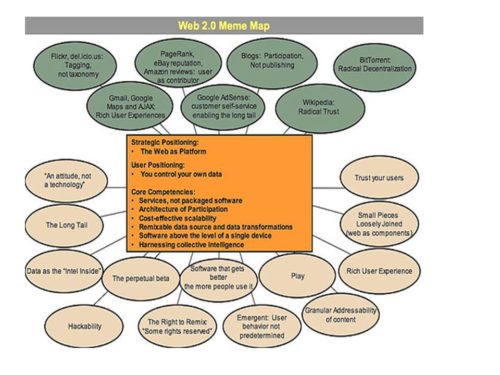
The conference was organized by publisher Tim O’Reilly and MC’d by John Battelle who have been noodling over the theme of the Web as a Platform/Web as an OS theme for the past year or so. This conference brought together the best and brightest of that conversation and put them on stage for a number of interesting and insightful discussions.