Tag: advertising

  • My Favorite Super Bowl Ad

    It’s a different experience when you’re a world away. I watched the commercials on the special YouTube channel but the spot for the Late Show featuring Jay Leno, Oprah Winfrey, and Dave Letterman was my favorite.

    Backstory on how it all came together was written up in the New York Times.

    – via Laughing Squid

  • Physical and Virtual Spaces

    Outside Yodobashi Camera

    I just returned from a year-end holiday in Tokyo. As always, the city never ceases to amaze me.

    The people in the photo above are all standing outside Yodobashi Camera, an electronics store in Akihabara. The store offers free wifi for anyone with a Nintendo DS and on that network they can get access to free games and unique characters for games they already own.

    In a similar type of cross-promition, my son walked into a McDonald’s and switched on his DS and downloaded a free Pokemon character for a new game he bought. In a clever cross promotion between Nintendo, Game Freak (the game publisher), and McDonald’s, the character was only available via wifi at McDonald’s. After giving your name, age, and email address, the character is downloaded to a specific location in the game.

    Tyler has been spending the last week making his way through the game to reach the in-game location so he can interact with the character. Brilliant way to combine physical and virtual location around brands and maintain engagement.

    Reblog this post [with Zemanta]
  • Location, Location, Location

    Great article in Ad Age about the significance of location-aware phones made the rounds yesterday. It’s not about the ‘text a Starbucks coupon when you walk by” type use case, it’s about engagement and brand utility.

    “Everybody’s got a website, but nobody has a mobile experience right now,” he said. “Next year, probably the end of next year, if you pull your phone out and you’re in the Hilton hotel and it doesn’t tell you information about the Hilton, either your phone is broken or the Hilton’s broken. If you, as a business, own a location, you’ve got an interesting shot at reaching your customer.”

    and

    The promise lies in the realization that mobile isn’t just an ad play but an extension of the services and products businesses already offer. And location is one of the most important contextual clues a mobile phone can provide. “Mobile marketing will move beyond promotions and advertising,” said Kenneth Parks, senior VP-managing director at Digitas in Stanford, Conn. “It’ll be about mobile services that might be marketing but they’ll feel like services.”

    and my favorite, from Dennis Crowley of Foursquare,

    “There’s no such thing as information overload but filter failure,” said Mr. Crowley. “Location is one of those big filters we’ve been missing in a lot of stuff.”

    Effective filters are topic near and dear to my heart and location is gearing up to be one of the best vectors we have to making this social/mobile web thing work.

  • Rental Cars as Advertising

    o2 Media CarWhen we moved to Finland, we decided to leave our two car, suburban lifestyle behind and live life in the center of Helsinki. We walk everywhere and take trolleys, buses, and trains when it’s too far to walk.

    It’s really not a big deal. Helsinki has an excellent public transportation system and the infrastructure is set up to make it really easy to get around without a car.

    There are times though, when a car is going to come in handy. Trips to Ikea, or a weekly run up to the big shopping center come to mind. It’s possible to huff it back with 30 pounds of goods in your rucksack but a car would just make it easier.

    I’ve already signed up for Helsinki’s equivalent of Zip Car (City Car Club, they’ve been around longer than Zip) where you can order up a car via SMS but today our savior, Pirjo Koskivirta at Finland Relocation, sent me a pointer to o2 media, an advertising company disguised as a car rental firm.

    I didn’t get it at first. They rent out these cute little Smart Cars for 5 euros/day. The deal is, you need to drive at least 30kms, otherwise they charge extra. I had this image of people driving laps around Töölönlahti just trying to turn over the odometer.

    By now you figured it out right? I’m a little slow and it’s late. The value prop here is they just need people to drive around and get impressions for their advertisers on their fancy-wrapped cars. Why pay college interns to do it when they can charge people instead. It’s more environmentally friendly, the renters get a car for cheap, and the advertisers get their message taken into real world situations.

    Brilliant!

  • Traffic Sources and Attention

    There’s been good debate around how the source of traffic to sites is changing, shifting from the search engines to social sites such as Facebook and Twitter. I confirmed that I too am seeing a greater percentage of traffic come in via links shared on social sites and shared a colleague’s theory about what this would mean for Google’s advertising revenues. Fred Wilson also posted about this topic here and here.

    What about attention? How does the average visitor from a social site compare to someone from a search engine? Niall Kennedy tweeted the following stats from his referral logs:

    • Twitter: 7 seconds
    • Digg: 20 seconds
    • StumbleUpon: 40 seconds
    • Facebook: 52 seconds
    • Delicious: 82 seconds

    timespent

    Here are my stats for the past year:

    • StumbleUpon: 40 seconds
    • Digg: 42 seconds
    • FriendFeed: 53 seconds
    • Facebook: 60 seconds
    • Twitter: 86 seconds*
    • Delicious: 110 seconds
    • Techmeme: 114
    • MyBlogLog: 176 seconds

    Compared to the attention span of those coming from the major search engines we get:

    • Live.com (MSFT): 21 seconds
    • Yahoo: 35 seconds
    • Google : 40 seconds
    • Ask: 46 seconds

    It would be interesting to see figures from other sites, especially online shopping sites which are the ones most interested in getting (and therefore likely to pay for) traffic. While it’s clear that visitors from social sites are more engaged with my blog because they tend to hang around a bit longer, that may not be the case with a shopping site where there is less intent to purchase than if they come from a search engine but Mark Essel thinks otherwise.

    Increasingly, the flow of web links is being made between individuals via social media sites.  Your good fishing buddy who knows the Bay area, shares a link to his favorite supply store.  As focused communities become populated across geographic barriers, local quality referrals become more likely.  But what if you want to know what store fishermen prefer in San Francisco?  You could simply use twitter search for fishing san francisco.  In real time you could send a message to several individuals who are interested in fishing in that region.

    Shared links are compelling but they need to be matched with impulse buying or discoverable when you’re looking for it. I’m thinking of O’Reilly’s flash discount shared via twitter (44% off to celebrate the 44th president) which was effective in bumping registration at the recent Web 2.0 Expo. The other way to generate business via shared links is to make them searchable so you can find what you need when you want it – but then we’re right back at sending traffic via search again.  Yes, you can search twitter but you can find this stuff on Google too.

    The jury’s still out as I think this will be a slow shift of behavior that will take a long time to impact existing business models. The real prize is back to social search which would combine the best of the recommendation trusts of social networks with the ability to find what you need when you’re looking for it.

    Facebook recommendations married to Google ‘s structure and ranking? That’s the subject of another post.

    —o—

    * I dug into the Twitter figures because they’re so out of whack with what Niall is seeing and it looks like there are a few visitors that hung out for a long time that are pushing that average higher than it should be.

    Reblog this post [with Zemanta]
  • Calacanis on Value of twitter

    twitter-logoJason Calacanis expands upon his offer to pay twitter to get his Mahalo account onto twitter’s suggested user page. It’s the distribution channel and potential click-thru traffic he’s looking for, and click-thrus to his site equals registered users and a lifetime relationship with Mahalo that can be monetized over time.

    The top 20 slots on Twitter are actually worth–to some people–2-10x what I offered. If Southwest, Amazon, eBay or Zappos were to get their hands on one of these accounts, they could easily make one uber-compelling tweet a week. 50 tweets from Amazon with things like “Top 100 Science Fiction Movies of All Time–as rated by George Lucas” would garner a two to 10% CTR. A Zappos tweet with “Back to school: Buy two pairs of shoes get one free” would get a huge response on August 20th.

    A JetBlue daily notice saying “The first 1,000 folks to respond to this alert get $25 off their next flight” would mean never having another empty seat.

    The point is that Twitter has the ability to unleash a direct marketing business the likes of which the world has NEVER seen. I predict they will, and when they do, they will make the Twitter nay-sayers look like the donkeys they really are. (Note: you ever notice the folks who have the most to say about making money are the ones who’ve never made any? Exactly.)

    Direct marketing by mail changed retail forever, as did the Web and email.

    Twitter will take that to an entirely new level. Why? Because people *live* inside of Twitter like they have never lived inside of a product before. We have NBA stars twittering about their performance at half-time and a president who leveraged the service to get elected.

    It doesn’t take a genius to understand that there is something disruptive going on here.

    Wasn’t this the promise of SMS? A direct channel to which consumers could sign up and get notifications of local deals in their area?

  • Facebook Business Model – Public Profiles

    With over 175M users, Facebook has famously opened up for distribution of marketing messages from businesses, brands, and celebrities. My wife Tivo’d an appearence by Mark Zuckerberg on Oprah introducing it to its mainstream audience and most surely to any brand marketer interested in reaching Oprah’s audience. If Jason Calcanis puts the value of a slot on twitter’s suggested users at $250,000, then a slot on any Facebook featured user page has got to be multiples of that.

    If you hit Facebook in a logged out state, look for the, “To create a page for a celebrity, band or business, click here.” link and this is what you’ll see. No more fan pages – social influence is now officially reserved and will most likely be for sale.

    Facebook Business Model

  • AdSense, Self-Optimized

    google behavioral targeting options

    It’s obvious when you think about it. Instead of spending your energy throwing up hundreds of ads that dance around the edges in the hopes that one will magically trigger a random click of interest, why not ask your readers, “What do you want to see?”

    Google announced a new program which changes the way they pick which Adsense ads appear on the websites you visit. Instead of looking at the content on the page and simple IP-based geo-targeting, the new program looks at your browser history and targets advertising based on your browsing interests. It’s known in the industry as behavioral targeting but Google has re-labeled it “Interest-based advertising.”

    The system works using tracking cookies which is anonymous and tied to your browser so if you switch browsers or jump to another PC, your browsing history will not follow you (although technically it’s possible if they tied the cookies to your Google Account). Likewise, your browsing history is going to get muddled on shared PCs such as one you might find in a family room.

    The most interesting thing about this new program is that they are allowing you to edit your profile using a new Ad Preferences Manager. As you can see in the screenshot above, you can pick and chose from 20 major categories and 600 sub-categories that are interesting to you and begin to shape the type of ads that are served to you. There is an option to opt out completely in which case you’ll get the regular content matched advertisements we’ve been seeing all along but having the ability to customize what you see is a bold step forward in transparency.

    Arguments against such a system when I had brought it up in the past were that if you let everyone pick and chose your ads you run the risk of not serving a well-balanced mix of advertising, running dry in popular categories and having a glut of units from less popular categories. By putting direct user feedback into the equation, you could no longer tune your ad servers to optimize for maximum profit.

    My counter to that argument is that by putting your readers in charge of what they see, you stand a much better chance of not only having people look at your ads (to see what type of ads get served) but also getting a much better sense of what interests your readers.

    So here’s my crazy idea. Why not go a step further? Why not let people to search for ads directly? Every magazine has an Advertiser’s Index in the back, why isn’t there a web-based equivalent? It’s been done.

    For more detail and commentary, Barry Schwartz has an extensive write-up on this development over on Search Engine Land.

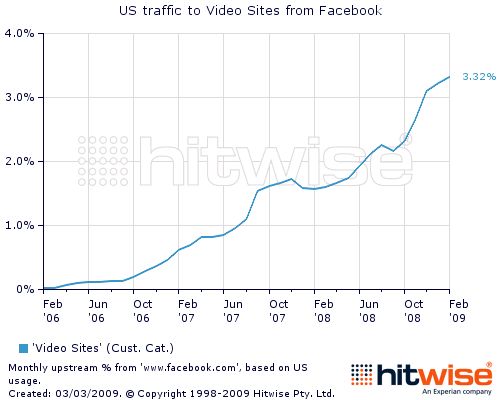
  • Facebook, Twitter send more traffic than Google

    Facebook, Twitter send more traffic than Google

    Liz Gannes posted that Perez Hilton is now seeing more traffic coming in via Facebook than Google.

    My colleague Udo Szabo at Nokia HQ in Finland has a theory that I call the Unified Theory of Interweb Economics. The theory goes something like this:

    1. Advertising is a function of your traffic volume, the more traffic that comes to your site, the higher rates you can charge.
    2. Social sites such as Facebook and Twitter have a lot of link sharing going on as friends post links to share them with each other.
    3. When Facebook and Twitter send more traffic than Google search referrals, advertising dollars will follow the source of that traffic.
    4. Google’s dominance in online advertising will be threatened.

    One would think we’re seeing the first hints of that with perezhilton.com and it will take a long time before we see this trend across the board. But in hindsight this is obvious and looking at my stats for the past month I find that 44% of my visitors are coming from search engines and 45% from referring sites with a vast majority coming from StumbleUpon, a social site for sharing links.

    The more you think about it, the shift in balance of power has already taken place.  SEO is still a big industry but now there are companies that will help you with SMO (“social media optimization”).  On twitter we’re starting to see scam artists try and insert themselves into the conversation just as they used to do with Splogs.

    And so the wheel turns round once again and there appears to be a new king of the hill – AOL Keyword > Yahoo Category Link  > Google Keyword Ranking > Social Site referral.

    The jury’s still out as to which social site will send you more links but it’s looking more and more like Facebook. We used to have the Digg effect but no one talks about that anymore. Twitter certainly has the ability to send you a bunch of traffic in short order but the audience is still mostly the early-adopter set and any traffic will most likely be short-lived as the re-tweets scroll into the past.

    Facebook, with 175 million users, certainly has the right broad-based distribution to broadcast a link and send back traffic. They have added new features such as FriendFeed’s “like” feature to make quick sharing easy. The Facebook Connect and Comments widgets also will help insert new links into Facebook for redistribution.

    But while it’s great to get an influx of new visitors via a social site, it’s no good if it’s not a lasting reference. Has the pendulum swung to far the other way? There are some searches that work great on the real-time web, the latest viral video comes to mind, but others such as the listing for your local plumber just don’t work on something like twitter. Not that it’s worth anything but I still get a regular influx of traffic because I’m the #2 listing for insulting british slang even though the post is over three years old.

    I think it’s fair to say that the social sites such as Facebook and Twitter will erode Google’s monopoly on online advertising. Google’s never been really good at building social sites and have shared in the growth of social networking in the past by providing the advertising engine for the most popular social sites. What happens with these sites start to go direct to the advertisers? Will Facebook advertising revenues come from traditional cost-per-click/auction model or is some other type of model required to succeed in a social networking site?